
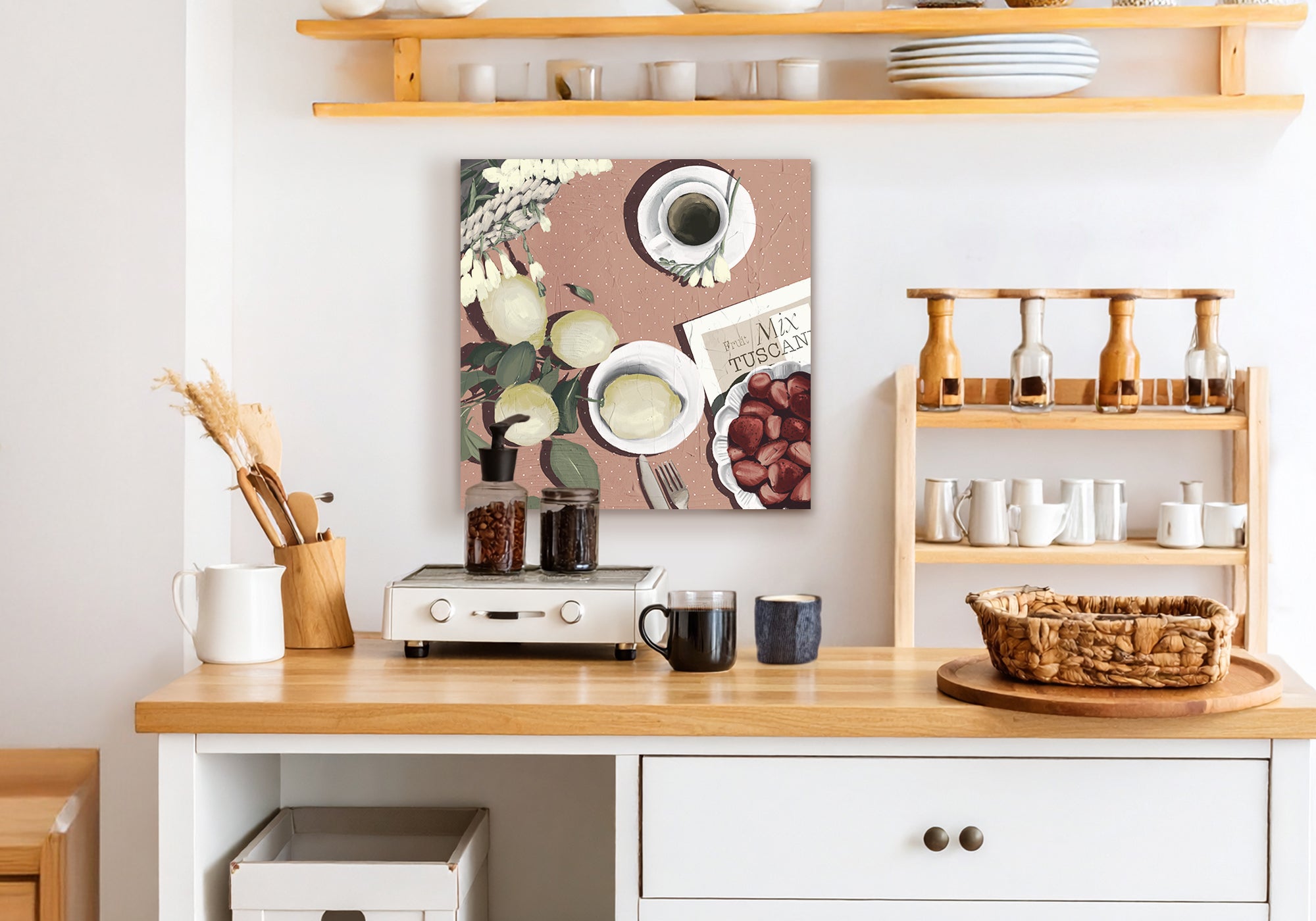
Food & Beverage Wall Art for the Kitchen
Food and beverage art belongs in a kitchen more naturally than anywhere else — but only when you choose it for the picture, not the label. A painterly study of lemons, a single glass catching the light, a quiet market scene: those reward the second glance you steal while the kettle boils. A "But First, Coffee" sign just tells you what you already know. Pick the image you'd want to look at for years, hang it where the room pauses, and let the fact that it's food be the bonus — not the reason.
At Fine Art Canvas, every piece is designed in California and hand-made to order — we've been making canvas art since 1989, and each canvas is hand-stretched before it ships with free U.S. shipping over $100, free 90-day returns, and a 1-year warranty. Food and drink is the most-requested kitchen subject we make, which is exactly why it's worth choosing carefully: the difference between a piece that feels considered and one that feels like signage is entirely in the image.

Food & Beverage — At a Glance
- Best for: Coffee and bar stations, dining-adjacent walls, and neutral kitchens that want a little warmth and appetite.
- The feeling: Warmth and wit, without the cliché.
- Palette: Flexible — pull the image's strongest color to echo your room.
- Watch out for: Literal signs and typography; over-theming a wall into a diner.
- The key: Choose the image first, the subject second — if you wouldn't hang it were it not "food," keep looking.
When Food & Beverage Is the Right Answer
This is the style for the cook who wants the kitchen's art to belong to the kitchen — not a generic abstract that could hang in any room of the house. It earns its place when you have a genuine pause point for it: a coffee station you visit every morning, a bar or drinks area, or a wall near the table where a warm still life sets the tone for a meal. And it's the easiest way to bring warmth into a kitchen that's gone a little cool and neutral — a single ripe image does the work of a whole color scheme.
How to Recognize It
Food and beverage art is representational and warm: still lifes of fruit and produce, coffee and cocktail studies, market and café scenes, wine and spirits imagery. The best of it is painterly rather than graphic — closer to a small painting than a poster. If a piece would still be worth hanging with the subject swapped out, it's the kind that lasts.
Is This Style Right for Your Kitchen?
It's for You If
- You want art that nods to the room without spelling it out
- You have a coffee, bar, or dining-adjacent wall to fill
- Your kitchen is fairly neutral and could use warmth
- You're drawn to painterly, representational images
Look Elsewhere If
- Your kitchen is sleek and minimal — try Clean Contemporary
- You want calm, watery restraint — try Coastal Nautical
- You want Old-World romance over the table — try European Style
How to Use It Well
Choose the image first, the subject second. If you wouldn't hang it were it not "food," keep looking. Match the piece to the pause — a coffee study at the coffee station, a wine or market scene by the table, a single bold fruit where you want a pop. Echo one color from the image into the room — a warm yellow, a deep red — so the piece reads as intentional, not stuck on.
Scale to the spot: aim for about two-thirds the width of the wall or the furniture beneath it, and go vertical to fill the gap between two cabinets. Keep it out of the splash zone — three to four feet from the cooktop, clear of the sink, range hood running while you cook.
For a coffee or bar station, one vertical piece at eye level reads best; over a nook, use one piece about two-thirds to three-quarters the table width, hung a little lower for seated viewing. When in doubt, our Wall Art Size Guide has the full breakdown.
Every piece is made to order, so it's worth getting the choice right. Take your time, picture it in the actual spot, and remember it's backed by free U.S. shipping over $100, free 90-day returns, and a 1-year warranty — room to live with your decision.
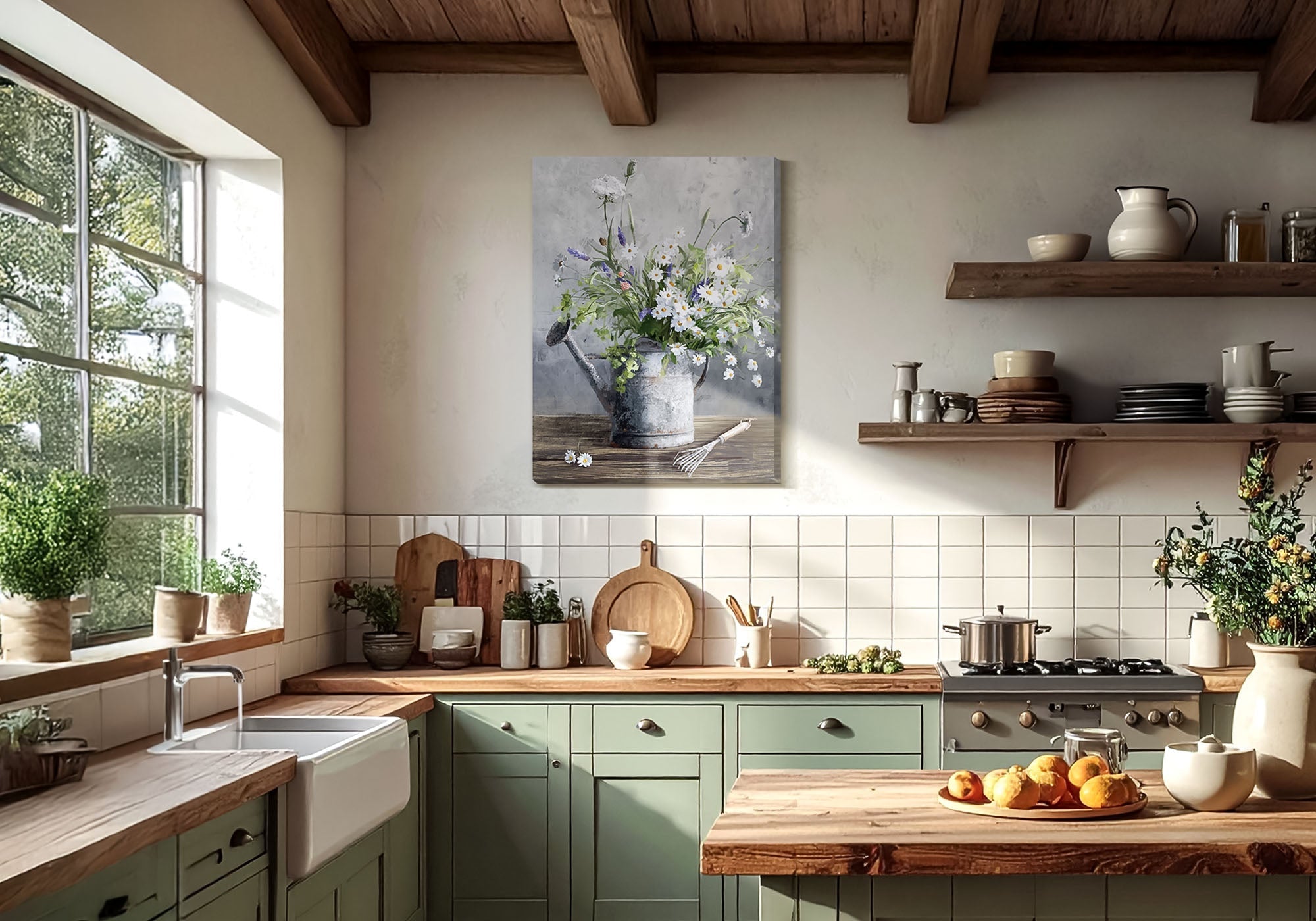
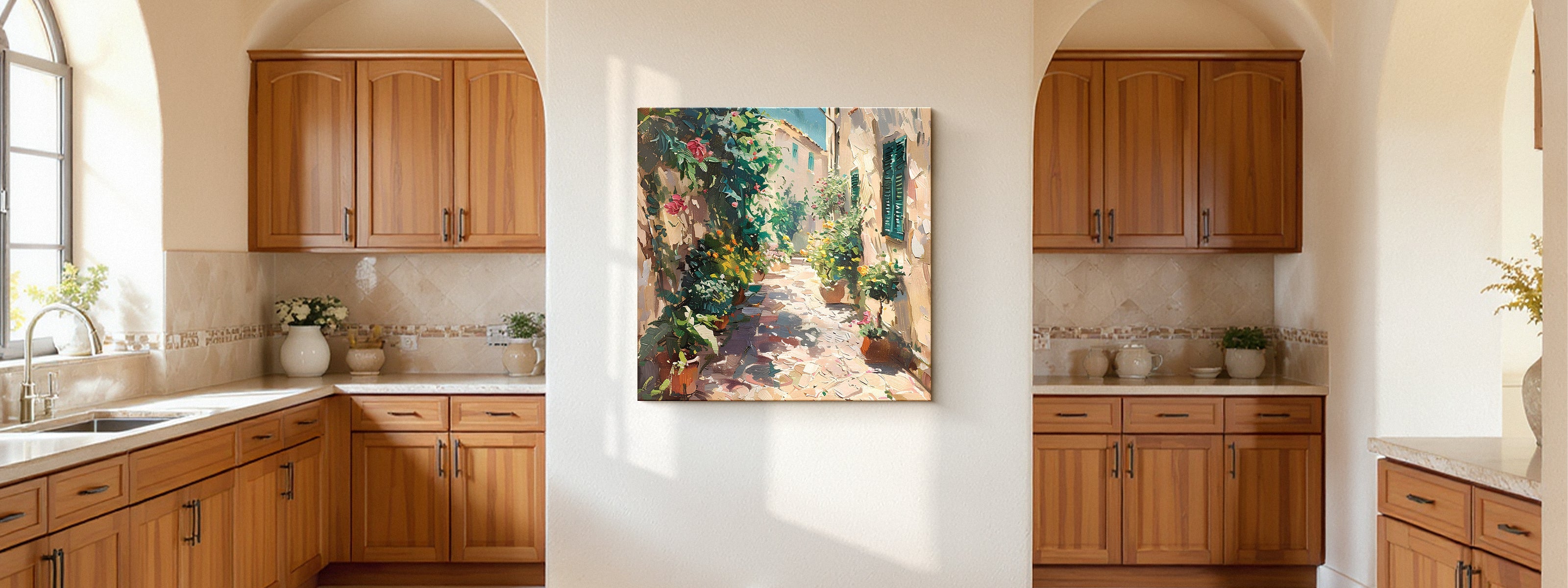
Why These Six Pieces Work


Prefer to browse the rest yourself? See the full Food & Beverage collection.
Ready to find the right piece? Browse the full Food & Beverage collection — every piece is made to order, with free U.S. shipping over $100.
Shop Food & BeverageCommon Mistakes (and the Fix)
Buying the slogan. "But First, Coffee" tells you nothing you don't already know in your own kitchen. Choose an image instead.
Over-theming. A whole wall of food signs reads as a theme restaurant. One strong piece almost always wins.
Hanging it in the splash zone because "that's the food area." Keep it clear of the cooktop and sink.
Matching the fruit to the fruit bowl. Echo one color from the image; don't replicate the room back at itself.
Going too small. A little print floats on a big wall. Scale to the spot, not to the budget.
Food & Beverage Kitchen Art Questions, Answered
Is food and beverage art too cliché for a kitchen?
Only when it's chosen as a label rather than an image. A "coffee" or "eat" sign is a cliché because it states the obvious. A painterly still life, a market scene, or a single ripe fruit is simply good art that happens to suit the room. The fix is to choose a piece you'd want to look at even if the subject were something else — then the fact that it's food becomes a bonus, not the whole point.
What food or drink art works best in a kitchen?
Representational, painterly pieces tend to wear best: produce and fruit still lifes, coffee and cocktail studies, and market or café scenes. Match the subject to the spot — coffee imagery at the coffee station, wine or a market scene near the table, a bold single fruit where you want a pop of color. Skip the typographic signs.
Where should I hang food and beverage art in the kitchen?
Where the room naturally pauses and away from heat and water: a coffee or bar station, a dining-adjacent wall, or the end of a cabinet run. Keep any piece about three to four feet from the cooktop and out of the sink's splash line, and run your range hood while you cook.
What size should kitchen food art be?
Aim for about two-thirds the width of the wall or the furniture beneath it. Go vertical to fill the space between two cabinets; over a breakfast nook, use one piece about two-thirds to three-quarters the table width. Center it around 60 inches where you stand, a little lower over a seated nook.
Can I hang these canvases near the stove or sink?
Near, but not in the direct splash zone. A hand-stretched canvas wipes clean and holds up well in a kitchen as long as it sits a few feet from the cooktop and clear of the sink. For a spot within about a metre of the hob, choose something small and refreshable, or a framed piece under glass.
How do I keep food art from looking like a theme restaurant?
Restraint. One considered piece beats a cluster of signs every time. Let the image be painterly rather than graphic, echo just one color into the room, and resist the urge to repeat the subject across multiple frames.
In the kitchen, let the image earn the wall — that it happens to be food is the bonus, not the reason.


Leave a comment
This site is protected by hCaptcha and the hCaptcha Privacy Policy and Terms of Service apply.