
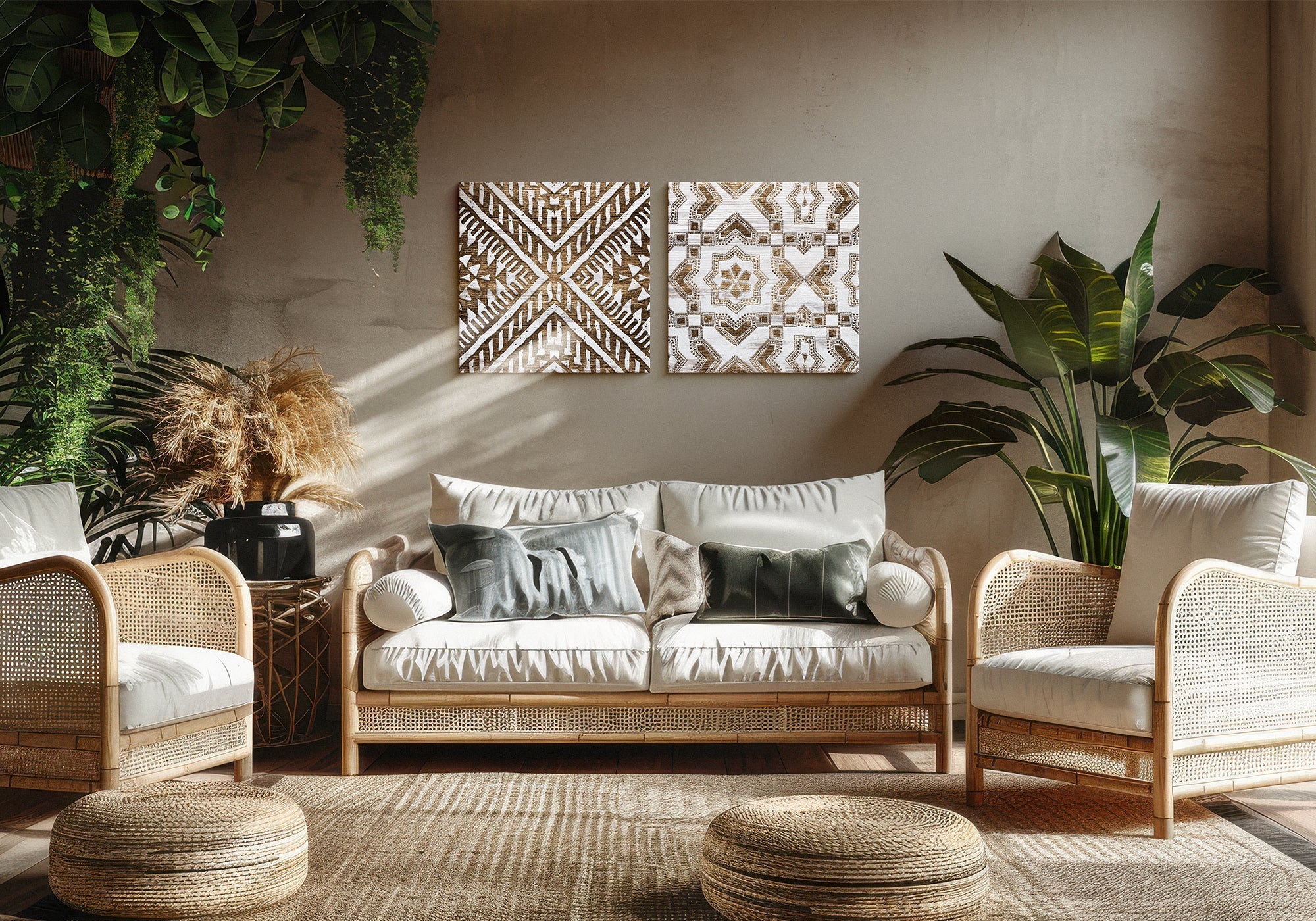
Rustic Warmth Wall Art - Warmth That Gathers a Room
The best rustic warmth wall art makes a family room feel like a place people want to stay. Warmth here is not a rustic texture or a farmhouse look — it is a temperature. Choose art with warm light and natural, unhurried scenes, and the room quietly invites the whole household to settle in together. Warmth is a welcome, not a style.
Some rooms you pass through. A family room, when it is working, is one you sink into — and warmth is what does that. It is the difference between a room that looks finished and a room that pulls people in and keeps them there on a Sunday afternoon. Wall art plays a real part in that pull. The right warm scene lowers the temperature of the day the moment you walk in.
It is easy to mistake “rustic warmth” for a decorating style — barn wood, farmhouse signs, a particular set of props. But the warmth that makes a shared room inviting is not a texture you add. It is a feeling the art carries: warm light, natural scenes, an unhurried mood that tells everyone in the house they can slow down here. That is what gathers a family into a room and makes them want to stay.
Everything here is Designed in California and hand-made to order by Fine Art Canvas — making canvas art since 1989, with free 90-day returns and a 1-year warranty on every piece.

Rustic Warmth at a Glance
- What it is really about: Temperature — warm, inviting art that makes a shared room feel like a place to settle in
- Works best in: The family room or den — the everyday space the whole household actually gathers in
- The core decision: Warmth as a welcome that gathers people vs. “rustic” as a decorating look you copy
- What to look for: Warm light, natural and unhurried scenes — meadows, warm dawns, quiet woods, soft impressionist color
- What to avoid: Chasing a farmhouse trend for its own sake; cool, sharp, or high-drama pieces that hold a room at arm’s length
Warmth Is a Welcome, Not a Texture
The common mistake with warm family room art is to treat “rustic warmth” as a shopping list of textures — reclaimed wood, burlap tones, a barn or two — and assume that assembling the look produces the feeling. Sometimes it does. Often it produces a room that reads as a style rather than a place, warm to look at but not warm to be in.
Real warmth works on the room’s temperature, not its props. A scene bathed in warm light does something to a space that no amount of rustic styling can fake: it makes people want to stay. That is the job warm art actually does in a family room — it gathers. It turns a room you tidy into a room you linger in, together.
A rustic look answers “does this match a farmhouse style?” Warmth answers a better question: “does this make people want to stay in the room?” The first is decoration. The second is what actually makes a shared space feel like the heart of the house. You can have warmth without a single rustic prop — and you can have every rustic prop and still feel none of it.
How to Recognize Warmth That Gathers a Room
The tell is light. Warm art carries a temperature you can feel across the room — golden hour, soft morning, the last hour of afternoon sun. Cool blues and stark contrast can be beautiful, but they tend to hold a room at a respectful distance. Warmth closes that distance. It invites.
Subject matters less than mood. A meadow, a quiet stretch of water, a warm-lit stand of trees, an impressionist field — these read as unhurried, and an unhurried scene gives everyone in the room permission to slow down too. That permission is the whole point. A family room is where the household exhales, and warm natural scenes are how the walls say so.
Judge a warm piece by the light, not the subject. Squint at it: if the overall glow reads warm and soft rather than cool and sharp, it will make the room more inviting — whether it pictures a barn, a beach, or a field of poppies. Temperature is the thing that gathers people. Everything else is subject.
When Rustic Warmth Is the Right Direction
This is the right direction when you want the family room to feel like the place everyone drifts toward — warm, easy, and unpretentious. It suits the everyday register of a shared room better than cooler or more formal art, because the goal is not to impress anyone. The goal is to make the whole household want to be in the same room.
✓ Works Well When
- You want the family room to feel like a place people settle into and stay
- The room already leans warm — wood tones, warm neutrals, soft lighting — and you want the art to belong to it
- You are drawn to natural, unhurried scenes over bold graphics or high contrast
- You want warmth that welcomes the whole household, not a look that photographs well but feels cool in person
- The room is genuinely shared and lived in every day
✗ Consider Something Else If
- You want the room to make a strong visual statement — Bold Statements is built for impact
- You are after clean, cool, contemporary polish — see Modern Chic
- You want art tied to a specific shared memory or place, more than a general warmth — see Family Memories; and for art that sets an easy hosting mood, Cozy Entertainment
Five Moves That Work
The practical decisions that turn warmth from a look into a room the whole family wants to be in.
1. Choose for light before subject
Start with the temperature of the piece, not what it pictures. A warm-lit meadow and a warm-lit coastline do the same job for the room — they make it inviting. Let the glow decide, and the subject follow. The warmest room is not the most rustic one; it is the one lit like late afternoon.
2. Let the art agree with the room’s temperature
A family room usually already has a warmth to it — wood floors, a soft sofa, warm lamplight. Choose art that agrees with that rather than fighting it. Warmth compounds: warm art in a warm room reads as one calm, gathered space, where a cool, sharp piece can quietly break the spell.
3. Size it to gather the room
Warmth needs room to work. Over a sofa or the family room’s main wall, art should span roughly two-thirds to three-quarters of the furniture width, centered about 57 to 60 inches from the floor. A warm scene at generous scale wraps the seating area; the same scene hung small just floats. See the Wall Art Size Guide for full sizing by wall and furniture.
4. Keep it unhurried
The scenes that make a room most inviting are the calm ones — a quiet field, still water, soft first light. Busy, high-drama pieces can be striking, but they keep the eye working, and a family room is where you want the eye to rest. Choose the scene that lets everyone slow down.
5. Let warmth carry the wall without the props
You do not need barn wood and farmhouse signage to make a room warm. One well-chosen warm scene does more than a wall of rustic decoration. Trust the temperature of the art to do the work, and let the room stay uncluttered — warm, not staged.
Six Pieces That Warm a Room
Every piece below is hand-made to order from the Rustic Warmth collection — chosen for the warmth they bring to a shared room rather than for a rustic look. Each is available as gallery-wrapped canvas, framed canvas, or framed print, with pricing live at each product page.


Common Mistakes and the Fix
Assembling barn wood, farmhouse signs, and burlap tones can produce a room that reads as a style but does not feel warm to sit in. Fix: choose for the temperature of the art — warm light, soft natural scenes — and let the warmth make the room inviting. The feeling matters more than the props.
A cool-toned, high-contrast piece can quietly cancel a room’s warmth, even when everything else is warm. Fix: let the art agree with the room’s temperature. In a warm family room, warm art compounds the effect; a cool statement piece works against it.
A small warm scene over a large sofa floats and loses its pull. Fix: size to the wall — roughly two-thirds to three-quarters of the furniture width — so the warmth reaches across the whole seating area and actually wraps the room.
High-drama, highly detailed pieces can be striking, but they keep the eye moving in a room meant for rest. Fix: choose unhurried, calm scenes. In a family room, the art’s job is to help everyone slow down, not to demand attention.
Bring the Warmth In
Browse the full Rustic Warmth collection — hand-made to order, Designed in California, with free 90-day returns on every piece.
Shop Rustic Warmth Wall ArtFrequently Asked Questions
What is rustic warmth wall art?
Rustic warmth wall art is art chosen for the warmth it brings to a room rather than for a rustic or farmhouse look. In a family room, the point is temperature: warm-lit, unhurried natural scenes — meadows, warm dawns, quiet woods, soft impressionist color — that make the space feel inviting and make the whole household want to settle in. Warmth is a welcome, not a set of props.
How do I make a family room feel warm and inviting with art?
Choose art for its light before its subject. Warm-toned scenes — golden hour, soft morning, warm afternoon — raise the felt temperature of a room and invite people to stay. Let the art agree with the room’s existing warmth, hang it at generous scale so it reaches across the seating area, and keep the scenes calm and unhurried so the eye can rest.
Does rustic warmth mean farmhouse style?
Not necessarily. Farmhouse is one look that can feel warm, but warmth itself is a temperature, not a style. A warm-lit meadow, a quiet lake, or an impressionist field can make a room every bit as inviting as reclaimed wood and barn imagery — often more so, because the warmth comes from the art rather than from staged props. Choose the feeling, not the trend.
What colors make a family room feel warm?
Warm light and warm tones — golden, amber, soft green, warm neutrals — read as inviting and help a room feel gathered. Cool blues and stark high-contrast pieces can be beautiful but tend to hold a room at a distance. In a shared family room, lean warm so the art pulls people in rather than keeping them at arm’s length.
What size should warm wall art be in a family room?
Size to the wall so the warmth can gather the room. Over a sofa or the main wall, art should span roughly two-thirds to three-quarters of the furniture width, centered about 57 to 60 inches from the floor. A warm scene at generous scale wraps the seating area; hung too small, it floats and loses its pull. For full guidance, see the Wall Art Size Guide.
How is rustic warmth different from family memories art?
They do different jobs in the same room. Rustic warmth is about temperature — warm, inviting art that makes the room a place to settle in. Family Memories is about shared meaning — a scene the whole household connects to a place or feeling. A warm piece makes the room inviting; a family-memories piece makes it feel like yours. Many rooms want a little of both.
Warmth is not a texture you add to a room — it is a temperature the art carries. Choose the piece that makes people want to stay, and the family room becomes the place everyone drifts toward.


Leave a comment
This site is protected by hCaptcha and the hCaptcha Privacy Policy and Terms of Service apply.