
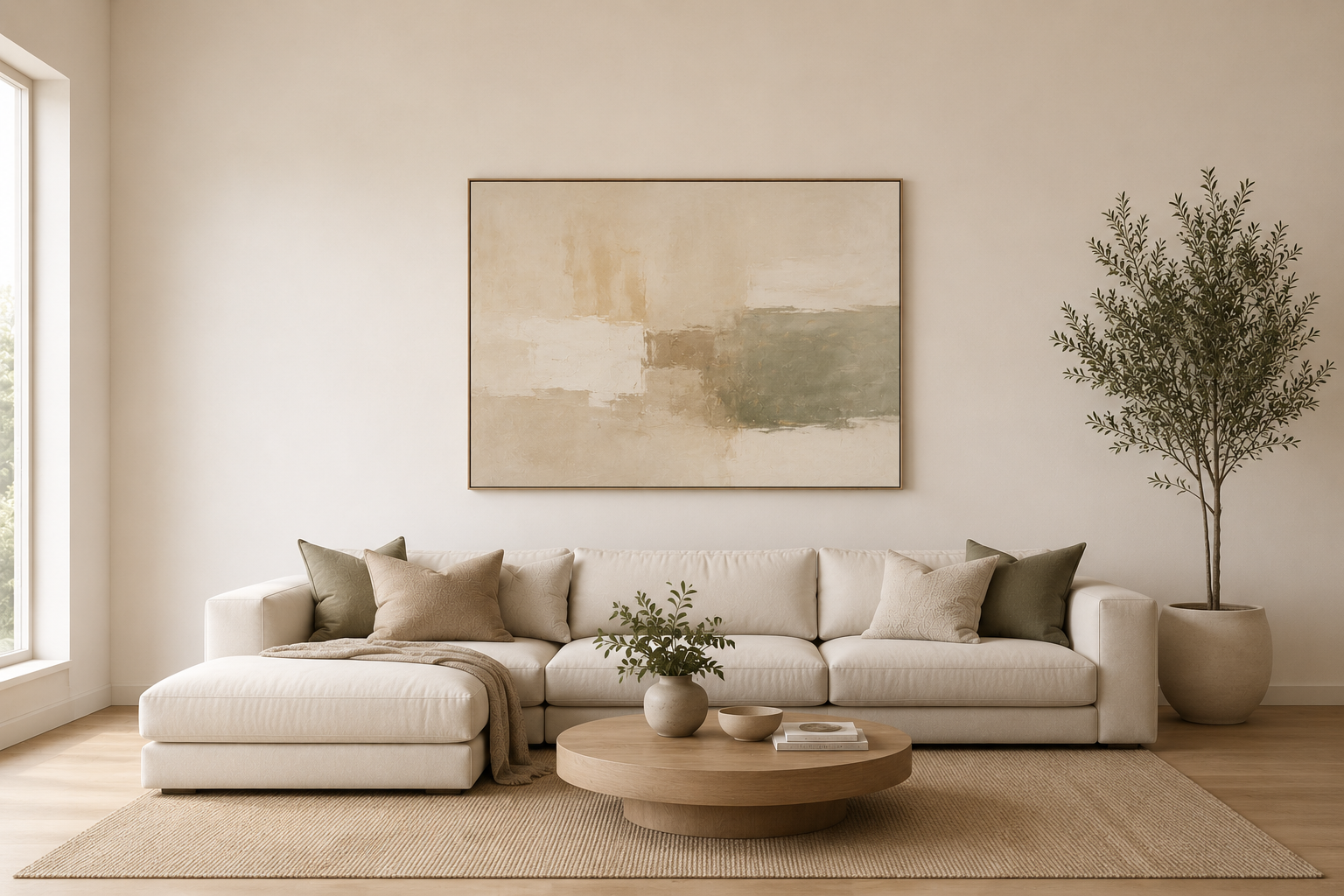
Wall Art Size Guide: What Size Canvas for Every Room
The simplest rule for sizing wall art: choose a piece that spans 60–75% of the width of the furniture below it, hung 6 to 12 inches above the top of that furniture, with the center around eye level — roughly 57 to 60 inches from the floor. For a standard 72-inch sofa, that means a 48×32 canvas; over a queen bed, a 48×32; above a 42-inch console, a 30×20. Everything else on this page is that one rule, applied room by room.
Getting the size right is the difference between art that anchors a room and art that floats on the wall looking lost — and it is the most common decorating mistake there is. Every size below is available across all four formats: canvas, framed canvas, rolled print, and framed print. Each one is handcrafted and made-to-order, designed in California. Our team has been making canvas art since 1989, with 90-day free returns and a 1-year peace-of-mind warranty, so you can size up with confidence.
How to size art over furniture
Almost every sizing question comes down to one measurement: the width of the furniture the art will hang above. Take that width, aim for 60 to 75% of it, and you have your art width. A 72-inch sofa wants art about 43 to 54 inches wide — so a 48-inch-wide canvas is the sweet spot. Hang it 6 to 12 inches above the sofa back, center near eye level, and you're done.
Here is the quick reference for the furniture people ask about most.
| Furniture (typical width) | Recommended canvas | Roughly spans |
|---|---|---|
| Standard sofa (72″) | 48×32 | ~65% of the sofa |
| Large or sectional sofa (84″+) | 60×40 | Anchors the wall |
| Loveseat / small sofa (under 60″) | 36×24 | Proportioned, not heavy |
| Queen bed (60″ headboard) | 48×32 | ~80% of the headboard |
| King bed (76″) | 60×40 | Commanding and balanced |
| Console / sofa table (42″) | 30×20 | ~70% of the console |
| Dining table (60–72″) | 48×32 | ~70% of the table |
| Buffet / sideboard (54″) | 36×24 | ~65% of the buffet |
| Desk (48–60″) | 36×24 | Anchors the workspace |
| Bathroom vanity (30–36″) | 20×20 or 24×24 | Spa-scaled |
| Kitchen counter / nook (24–36″) | 24×24 | Fits low clearance |
Should art be horizontal, square, or vertical?
Orientation matters as much as size — the shape of the piece should echo the space it fills. The rule of thumb: match the art’s long axis to the furniture’s long axis. Wide furniture wants width; a tall, narrow wall wants height.
| Placement | Best orientation | Why |
|---|---|---|
| Above a sofa, bed, dining table, or console | Horizontal or square | A vertical looks unanchored above wide furniture |
| Above a desk, or an open wall | Any orientation | Nothing constrains the shape |
| Narrow wall or hallway | Vertical | A horizontal would overrun the wall |
| Bathroom wall | Square (vertical works too) | Fits the smaller walls a bath usually has |
| Kitchen counter or nook | Horizontal or square | Low clearance suppresses tall pieces |
What size art for every room
The 60–75% rule holds everywhere, but the furniture changes by room. Here is the size to reach for in each, with a larger option when you want a statement.
Living room
| Placement | Recommended size | Why |
|---|---|---|
| Above a standard sofa (60–84″) | 48×32 (60×40 to make a statement) | 48″ spans ~65% of a 72″ sofa |
| Above a large or sectional sofa (84″+) | 60×40 | Anchors without overpowering |
| Above a loveseat (under 60″) | 36×24 | Proportioned, not overwhelming |
| Empty feature wall | 48×32 (or 60×40) | A strong focal point |
| Above a console (36–48″) | 30×20 | ~70% of a 42″ console |
Browse living room art by style.
Bedroom
| Placement | Recommended size | Why |
|---|---|---|
| Above a queen bed (60″) | 48×32 (60×40 for impact) | Spans ~80% of the headboard |
| Above a king bed (76″) | 60×40 | Commanding and balanced |
| Above a full or twin (under 60″) | 36×24 | Proportioned to the bed |
| Tall, narrow accent wall | 32×48 (vertical) | Adds height and drama |
Browse bedroom art by style.
Dining room
| Placement | Recommended size | Why |
|---|---|---|
| Above a standard table (60–72″) | 48×32 | Covers a 6-seat table ~70% |
| Above a small or round table (under 60″) | 36×24 | Proportioned to the table |
| Above a buffet or sideboard (48–60″) | 36×24 | ~65% of a 54″ buffet |
Browse dining room art by style.
Office
| Placement | Recommended size | Why |
|---|---|---|
| Above a desk (48–60″) | 36×24 | Anchors without fighting the monitor |
| Inspiration / feature wall | 48×32 | A focal point behind you on calls |
Browse office art by style.
Entryway & hallway
| Placement | Recommended size | Why |
|---|---|---|
| Above an entry console (36–48″) | 30×20 | A strong first impression |
| Narrow hallway wall (under 36″) | 16×24 or 20×30 (vertical) | Fills the height, respects the width |
Browse entryway and hallway art by style.
Kitchen
| Placement | Recommended size | Why |
|---|---|---|
| Above a counter or breakfast nook (24–36″) | 24×24 | Fits low clearance |
| Kitchen accent wall | 30×20 | A focal point without crowding |
Browse kitchen art by style.
Bathroom
| Placement | Recommended size | Why |
|---|---|---|
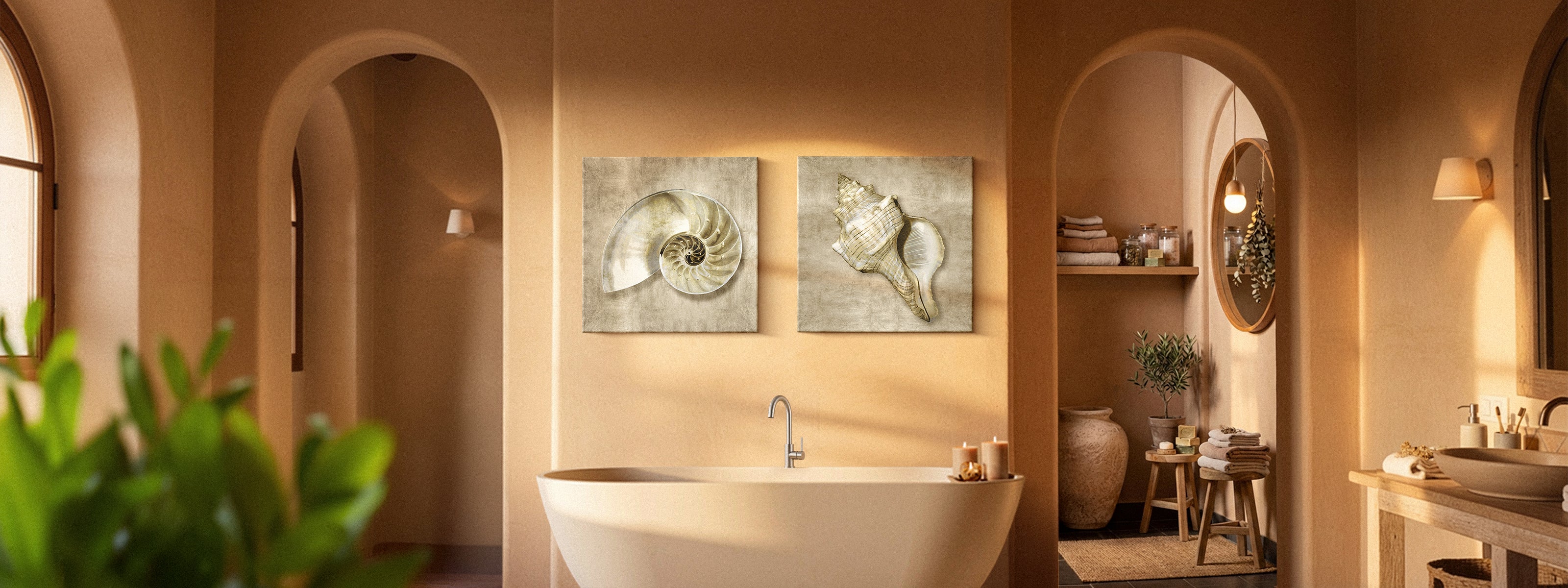
| Above a vanity or sink (24–36″) | 20×20 or 24×24 | Spa-scaled to a small wall |
| Open accent wall (away from splash) | 24×24 or 30×20 | A calm focal point with room to breathe |
See the full bathroom wall art guide for styles, placement, and moisture tips.
Kids’ room
| Placement | Recommended size | Why |
|---|---|---|
| Above a bed (36–60″) | 48×32 or 36×24 | A fun statement, sized for energy |
| Play or activity wall | 36×24 | Big enough to read across the room |
Browse kids’ room art by style.
Family room
| Placement | Recommended size | Why |
|---|---|---|
| Above a sofa (60–84″) | 48×32 (60×40 for a statement) | Same rule as the living room |
| Above a media or TV wall (80″+) | 60×40 | Holds its own next to a large TV |
Browse family room art by style.
Guest bedroom
| Placement | Recommended size | Why |
|---|---|---|
| Above a bed (60″) | 36×24 or 48×32 | Welcoming, not overwhelming |
Browse guest bedroom art by style.
All available canvas sizes
Every piece is made-to-order in the sizes below. The four formats — canvas, framed canvas, rolled print, and framed print — all share these overall dimensions, so you can pick the look you want without losing the size you need.
| Orientation | Available sizes (inches) |
|---|---|
| Square | 16×16, 20×20, 24×24, 30×30, 36×36, 48×48 |
| Horizontal | 18×12, 24×16, 30×20, 36×24, 48×32, 60×40 |
| Vertical | 12×18, 16×24, 20×30, 24×36, 32×48, 40×60 |
How to measure your wall
Five minutes with a tape measure saves a return. Here is the method.
- Measure the furniture width (or the wall width, for an open wall with no furniture below).
- Multiply by 0.6 and 0.75. Your ideal art width falls in that range — a 72″ sofa gives 43–54 inches, so reach for a 48″-wide piece.
- Plan the height: hang the piece 6 to 12 inches above the top of the furniture.
- Center at eye level. For an open wall, the center of the piece should sit about 57 to 60 inches from the floor.
- Mock it up. Cut the size out of painter’s tape or paper, tape it to the wall, and live with it for a day before you commit.
- Going wide? A pair or a set of three can span a wall a single piece can’t — keep 2 to 4 inches between pieces and treat the whole group as one shape.
The most common sizing mistakes
- Going too small. This is the number-one mistake — a piece that floats undersized over a wide sofa. When in doubt, size up.
- Hanging too high. The center should land around 57–60 inches, not up near the ceiling. Art belongs in relationship to the furniture, not the crown molding.
- The wrong orientation. A tall vertical over a wide sofa looks unanchored. Match the shape to the furniture below.
- Eyeballing it. Guessing almost always lands too small. Measure, take 60–75%, and trust the number.
Frequently asked questions
What size canvas goes above a sofa?
Choose a piece that spans 60–75% of the sofa width, hung 6 to 12 inches above the back. For a standard 72-inch sofa, a 48×32 canvas is the sweet spot; for a large or sectional sofa (84 inches or more), step up to 60×40.
How big should art be over a bed?
Aim to span most of the headboard. Over a queen bed (60 inches), a 48×32 works well; over a king (76 inches), a 60×40. Hang it 6 to 12 inches above the headboard, centered on the bed.
How high should you hang wall art?
Center the piece around eye level — roughly 57 to 60 inches from the floor. When it hangs above furniture, keep 6 to 12 inches between the bottom of the art and the top of the furniture.
Should wall art be wider or narrower than the sofa?
Narrower. Art should span about 60–75% of the sofa width, not the full width. A piece as wide as the sofa looks heavy and crowds the ends; two-thirds of the width looks intentional.
What is the most common art sizing mistake?
Going too small. An undersized piece floats and makes the wall look unfinished. The 60–75% rule almost always points bigger than people expect, so when you’re between two sizes, choose the larger one.
Are Fine Art Canvas pieces made to order, and what if the size isn’t right?
Yes. Every piece is handcrafted and made-to-order, designed in California, and nothing sits in a warehouse waiting. If the size isn’t right for your space, you have 90-day free returns, plus a 1-year peace-of-mind warranty — so you can size up with confidence.
Now that you have the size, find the piece: explore art by room, or start with our living room, bedroom, and bathroom guides.


Leave a comment
This site is protected by hCaptcha and the hCaptcha Privacy Policy and Terms of Service apply.