
Biophilic Nature Wall Art for Living Rooms
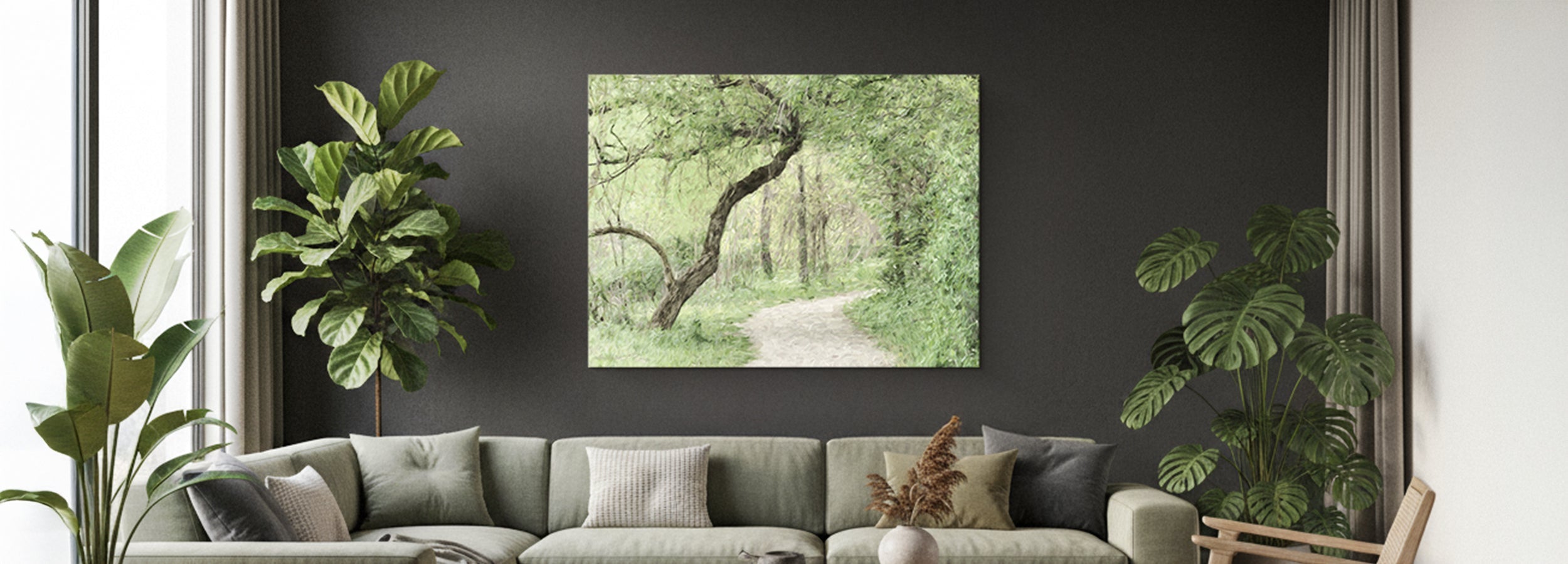
Biophilic living room wall art brings the calm of nature indoors — forests, water, botanicals, and natural light. The idea, borrowed from biophilic design, is that a visual connection to nature can help a room feel more restful, even through imagery alone. The key is restraint: one strong natural focal piece, a green-and-neutral palette, and room to breathe will do more than a wall crowded with leaf prints. It's the right style if you want a living room that feels grounding and restorative.
A biophilic living room should feel like a slow walk in the woods — calm, grounded, quietly alive. The instinct is to reach for more nature, but the restful version comes from choosing well and leaving space. This guide is about getting that balance right.
Designed in California. Hand-made to order. Fine Art Canvas has been making canvas art since 1989, and every piece comes with free 90-day returns and a 1-year warranty.

At a Glance
- Nature's calm, not its clutter — one strong focal piece over many
- Restful green-and-neutral palette — not a jungle of color
- Organic subjects: forests, water, botanicals, natural light
- Negative space — so the room can breathe
- Natural texture: soft wood tones and the grain of real canvas
Bringing nature in is about calm, not quantity. The common mistake is to treat "biophilic" as a checklist — a leaf print here, a botanical there, a fern motif on the pillows — until the room feels like a busy garden center instead of a calm one. But what actually makes a space feel connected to nature is the feeling: openness, soft light, a few living things, room to breathe. One strong natural focal piece with quiet space around it brings the outdoors in. A wall packed with greenery just brings the clutter in.
When Biophilic Nature Is the Right Answer
Once you've decided which wall you're filling — the Living Room Wall Art Guide covers that, starting with the wall, not the art — reach for biophilic when you want the room to lean restorative and grounded. The idea behind biophilic design is that a visual connection to nature can support that feeling. It's the natural fit for spaces with plants, natural light, wood, and linen, and for anyone who finds the outdoors calming and wants a little of that feeling indoors. People choose it not to decorate with nature, but to bring a sense of its quiet calm into a room they relax in.
How to Recognize It
You don't need a design vocabulary to spot it. You're probably looking at biophilic when:
The palette is built on greens, soft neutrals, and natural wood, not bright or busy color. The subjects are organic — forests, water, leaves, light — rather than graphic or man-made. The room feels calm and uncluttered, with space around the art. And natural texture carries the look: wood tones, woven materials, the grain of real canvas.
The tell is restfulness. A biophilic room feels like it's breathing; a cluttered "nature" room just feels busy.
Is This Style Right for Your Home?
Biophilic Is Ideal If…
- You want a calm, restorative, grounding room
- You love plants, natural light, and the outdoors
- Your palette leans green, neutral, and natural wood
- You want nature's feeling without a busy theme
Look at Another Style If…
- You want bold, saturated color and high energy
- You love a layered, more-is-more look
- You prefer a cool, coastal-blue palette over greens
If you want that calm pared back even further, Modern Minimalist takes the same restraint and removes nearly everything but the essential piece; and for a warmer, more grounded version of nature's palette, Warm & Earthy leans into clay and ochre over green.
How to Use It Well in a Living Room
Choose one strong focal piece. A single large forest, water, or botanical piece over the sofa brings nature in with authority. A scatter of small leaf prints just reads as clutter.
Keep a restful palette. Greens, soft neutrals, and natural wood tones — in the art and the room — hold the calm. Resist adding bright accent colors that pull the eye away from the quiet.
Leave negative space. Calm needs room. Give the art space to breathe on the wall rather than surrounding it with shelves, plants, and frames competing for attention.
Lean on natural texture. Wood tones, woven materials, and the grain of real canvas make the nature feel real and tactile rather than printed and flat.
Echo your room's light. Choose pieces with the kind of soft, natural light your room already gets, so the art feels like an extension of the space. Then get the scale right: span about two-thirds to three-quarters of the sofa's width and hang it 6–10 inches above the back. The Living Room Wall Art Guide and our Wall Art Size Guide have the full method.
A calm focal piece depends on getting the scale right, so check it first. Use View in Your Room on any product page to see the exact artwork on your wall at true size, or tape out the dimensions and live with the outline for a day before you decide.
About Fine Art Canvas. Every piece in this guide is designed in California and hand-made to order. We've been making canvas art since 1989. Every order ships with free 90-day returns and a 1-year warranty — so you can see the piece on your wall before you commit.
Available as canvas, framed canvas, or framed print. Custom sizes available on most pieces.
Why These Six Pieces Work
A few from our Biophilic Nature collection that bring the calm of nature without the clutter — each strong enough to anchor a wall on its own. Every piece is hand-made to order in your size and finish.

Majestic Timber
Carol Robinson

Serene Magnolia Light Gray
Julia Purinton

In Bloom
PI Studio

Country Pond 4
Stellar Design Studio

Autumn at Firemen's Park
Bruce Nawrocke

Red Florals I
Asia Jenson
Common Mistakes (and the Fix)
A pile of leaf prints reads as clutter, not calm. Fix: choose one strong natural focal piece and give it space.
A single uniform green can fall flat. Fix: vary the tone and lean on natural texture for depth.
Little prints get lost. Fix: one large grounding piece anchors the room far better.
Surrounding the art with shelves and plants kills the calm. Fix: leave negative space around it.
HDR-bright "nature" undercuts the calm. Fix: choose soft, natural, restful tones.
Every piece is hand-made to order in your chosen size and format.
Shop Biophilic NatureFrequently Asked Questions
What is biophilic living room wall art?
It's art that draws on biophilic design — the idea that a visual connection to nature can help a space feel calmer — using forests, water, botanicals, and natural light, usually in greens, soft neutrals, and natural wood tones. The aim is a room that feels grounded and connected to the outdoors.
How do I bring nature in without it looking cluttered?
Choose one strong natural focal piece instead of many small ones, keep a restful green-and-neutral palette, and leave space around the art. Biophilic calm comes from the feeling of nature and room to breathe — not from how many plant prints you can fit on a wall.
What colors work for a biophilic room?
Greens of every kind, grounded by soft neutrals, cream, and natural wood tones. Keep accent colors minimal so the palette stays calm and the room feels restful rather than busy.
How big should the art be above the sofa?
Span about two-thirds to three-quarters of the sofa's width and hang it 6–10 inches above the back, centered around 57–60 inches from the floor. Biophilic rooms reward one large, grounding piece over a scatter of small ones. The Living Room and Size guides have the full method.
Is biophilic art just leaves and plants?
No. It's any organic subject that brings nature's calm — forests, water, light, landscapes, and natural texture all count. Leaves are one option, not the whole style, and leaning only on leaf motifs is what tips a room into clutter.
Does biophilic style work without real plants?
Yes. The art, palette, and natural texture do the work, so a biophilic room reads as calm and connected to nature even with few or no live plants. Real greenery is a bonus, not a requirement.
Biophilic design brings the calm of nature indoors — not the clutter of it.


Leave a comment
This site is protected by hCaptcha and the hCaptcha Privacy Policy and Terms of Service apply.