

Coastal Wall Art for Living Rooms
Coastal living room wall art works best when it captures the feeling of the shore — soft light, open water, sandy neutrals — rather than its props. Choose airy seascapes, dune landscapes, or soft ocean-toned abstracts; warm the blues with sand and driftwood so the room reads sunlit, not cold; and go large enough to feel like a window. Skip the anchors and signs. It’s the right style if you want a calm, breezy, vacation-at-home living room.
A coastal living room should feel like a deep exhale — bright, unhurried, connected to the outdoors. The wall art is what sets that tone or breaks it. Get it right and the room feels like a sea breeze; get it wrong and it tips into theme-park nautical. This guide is about staying on the right side of that line.
Designed in California. Hand-made to order. Fine Art Canvas has been making canvas art since 1989, and every piece comes with free 90-day returns and a 1-year warranty.

At a Glance
- Soft horizon colors: sky blue, seafoam, sandy neutrals
- Warmth in the mix — sand, cream, driftwood, so it isn’t all cold blue
- One large, airy piece — not a crowd of small ones
- Natural texture: driftwood, dune grass, weathered wood, real canvas
- Atmosphere over objects — light and calm, not anchors and signs
Coastal is a calm you capture, not a theme you add. The fastest way to cheapen a coastal room is to decorate it with beach objects — anchors, rope, “Seas the Day” signs, a shelf of shells — which reads as a gift shop within a year. The rooms that actually feel like the coast capture its atmosphere instead: the soft light, the open horizon, the sandy neutrals, the weathered texture of driftwood. Choose art for the feeling of the shore, and the room ages like a sea view. Choose it for the props, and it dates like a souvenir.
When Coastal Is the Right Answer
Once you’ve decided which wall you’re filling — the Living Room Wall Art Guide walks through that, starting with the wall, not the art — reach for coastal when you want the room to feel light, open, and calm. It’s the natural fit for spaces with good natural light, a palette that already leans blue, white, or sandy neutral, and natural materials like linen, rattan, jute, and light wood. People choose coastal not to build a literal beach room, but to bring the unhurried, vacation-at-home calm of the shore into a space they use every day.
How to Recognize It
You don’t need design vocabulary to spot it. You’re probably looking at coastal when:
The room feels bright and airy, like a held breath, before you notice any single object. The palette is soft blues, sandy neutrals, and whites, grounded by natural wood. The art reads as light and horizon — seascapes, dunes, soft ocean-toned abstracts — not literal beach props. And natural texture carries the look: driftwood, jute, linen, weathered wood, the grain of real canvas.
The tell is atmosphere, not iconography. A coastal room whispers the ocean through light and color; it doesn’t shout it with anchors.
Is This Style Right for Your Home?
Coastal Is Ideal If…
- You have good natural light, or want the room to feel like it does
- You love a calm, airy, vacation-at-home feel
- Your palette already leans blue, white, or sandy neutral
- You want nature in the room without a literal theme
Look at Another Style If…
- You love saturated color and bold pattern
- Your room is dark and you want drama, not airy calm
- You prefer a warm, grounded palette over cool blues
On the warmer or quieter side of that line, two neighbors fit better: if you love the calm but not the literal sea, Modern Minimalist gives you the same airy restraint without the blue; and if you’d rather trade cool tones for something grounded and cozy, Warm & Earthy is the move.
How to Use It Well in a Living Room
Capture the light, not the props. Choose art that holds the feeling of the coast — soft horizons, hazy light, open water — over literal anchors, signs, or shells. Atmosphere ages well; theme dates in a year.
Warm the blue so it isn’t cold. An all-blue room reads chilly. Bring in sandy neutrals, cream, and driftwood tones — in the art and the room — so the space feels sunlit, not submerged.
Go big and let it breathe. One large, airy piece over the sofa does more than a cluster of small ones. Coastal lives on openness; crowd the wall and you lose the calm.
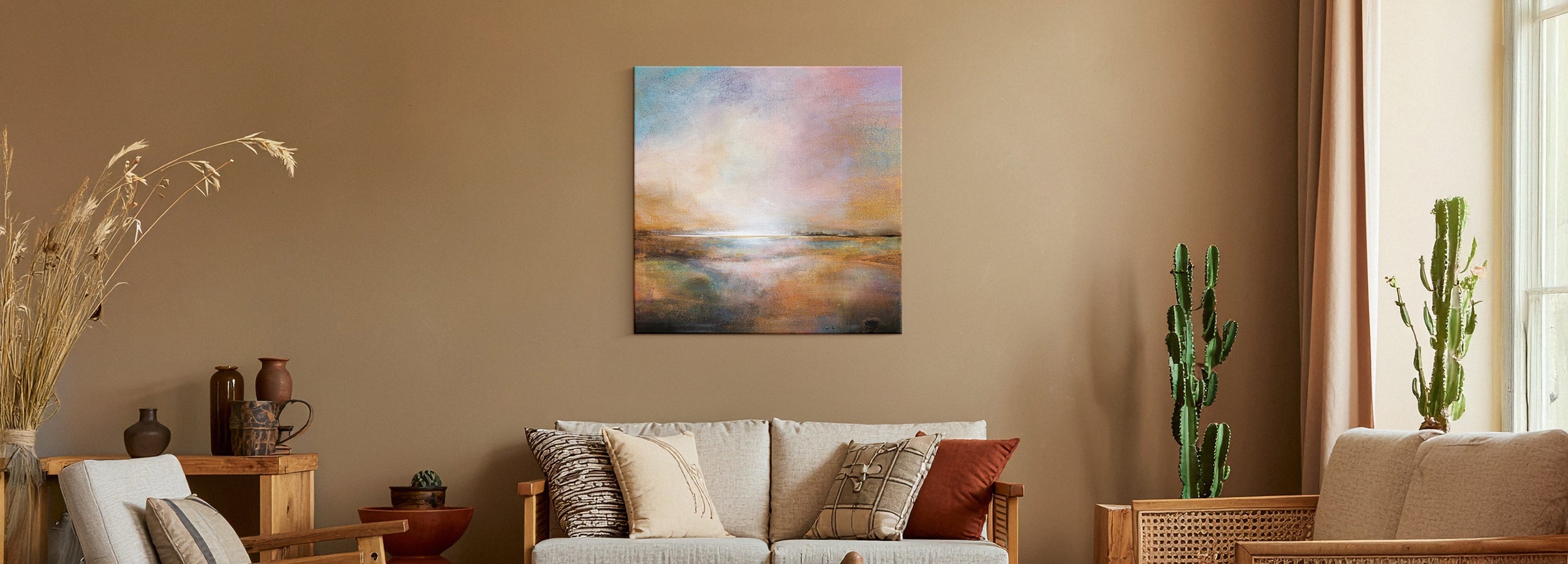
Lean on natural texture. Driftwood, dune grass, weathered wood, and the grain of real canvas are what make coastal feel authentic rather than printed. A soft, ocean-toned abstract on textured canvas is the most sophisticated version of the look.
Don’t fight the view. If the room has a window or a view, keep the art soft and complementary so it frames the outdoors rather than competing with the best picture in the room. Then get the scale right: span about two-thirds to three-quarters of the sofa’s width and hang it 6–10 inches above the back. The Living Room Wall Art Guide and our Wall Art Size Guide have the full method.
Coastal pieces live or die on scale and light, so check both first. Use View in Your Room on any product page to see the exact piece on your wall at true size, or tape out the dimensions and live with the outline for a day before you decide.
About Fine Art Canvas. Every piece in this guide is designed in California and hand-made to order. We’ve been making canvas art since 1989. Every order ships with free 90-day returns and a 1-year warranty — so you can see the piece on your wall before you commit.
Available as canvas, framed canvas, or framed print. Custom sizes available on most pieces.
Why These Six Pieces Work
A few from our Coastal collection that capture the calm without the cliché — each chosen for what it does in the room, not just how it looks. Every piece is hand-made to order in your size and finish.

Beach Driftwood
Nan

Pathway Through the Dunes
Georgia Janisse

Symphony of the Sea
Nan

Soothing Sunset
Mary Lou Johnson

Seaside Cliffs
Scott Brems

Old Rowboat
Georgia Janisse
Common Mistakes (and the Fix)
Anchors, rope, and “beach” signs date fast. Fix: let light, color, and texture tell the story; skip the props.
A wall of cool blue feels chilly. Fix: warm it with sand, cream, and driftwood tones.
A little print on a big wall looks lost. Fix: one large, airy piece spanning two-thirds of the sofa.
Busy art near a window fights the best picture in the room. Fix: keep pieces soft and complementary.
Loud teal and coral read theme-y. Fix: soft, sun-washed tones feel calmer and more sophisticated.
Every piece is hand-made to order in your chosen size and format.
Shop Coastal Wall ArtFrequently Asked Questions
What is coastal living room wall art?
It’s art that brings the calm and light of the shore into a living room — airy seascapes, dune and beach landscapes, and soft ocean-toned abstracts, usually in soft blues, sandy neutrals, and whites. The best coastal art captures the atmosphere of the coast rather than depicting literal beach objects.
Is coastal the same as nautical?
Not quite. Nautical leans on literal maritime objects — boats, anchors, rope, navy-and-white stripes. Coastal calm is broader and softer: it’s about light, open water, sandy neutrals, and natural texture. A little nautical can work as an accent, but a whole room of it tips into theme.
How do I make coastal art look sophisticated, not kitschy?
Choose atmosphere over props. Skip anchors, rope, and beach signs, and reach for soft horizons, hazy light, and natural texture like driftwood and weathered wood. Warm the blues with sandy neutrals, keep the palette restrained, and let one larger piece breathe.
What colors work in a coastal living room?
Soft blues and seafoam, grounded by sandy neutrals, cream, and white, with natural wood tones. The key is warmth in the mix — an all-blue palette reads cold, while sand and driftwood make it feel sunlit and relaxed.
How big should coastal art be above the sofa?
Span about two-thirds to three-quarters of the sofa’s width and hang it 6–10 inches above the back, centered around 57–60 inches from the floor. Coastal rewards going large — one airy piece reads like a window. The Living Room and Size guides have the full method.
Does coastal work in a home with no ocean view?
Yes. Coastal style is about light and calm, not a literal view, so it works just as well inland. A large, airy seascape or dune landscape brings the openness of the coast into the room and can make a space feel brighter than it is.
The best coastal rooms feel connected to nature — not decorated with it.


Leave a comment
This site is protected by hCaptcha and the hCaptcha Privacy Policy and Terms of Service apply.