
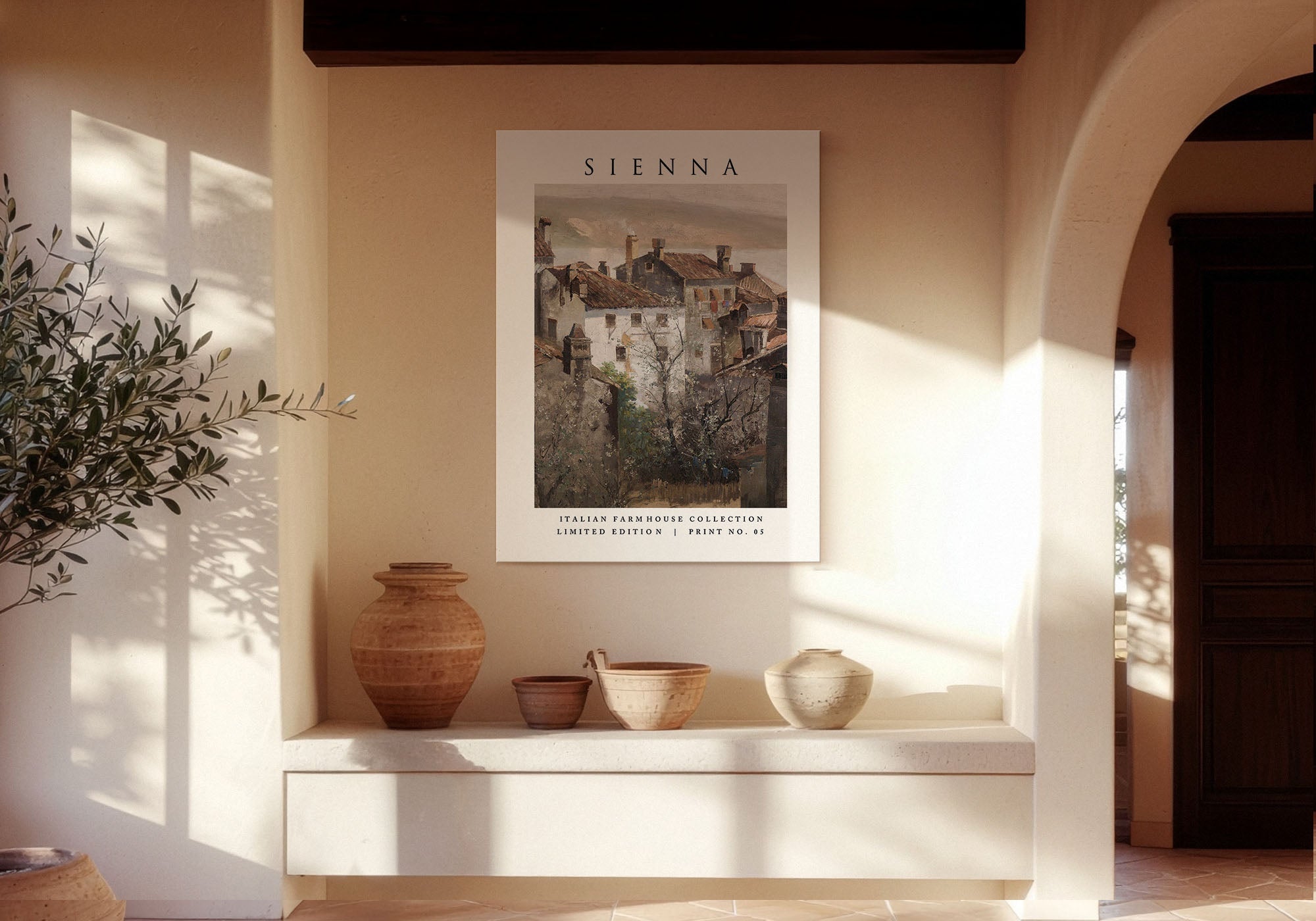
Travel Adventure Entryway Wall Art: Choose the Place for the Feeling, Not the Passport Stamp
Travel art works at a threshold because both are about the journey — you cross one to leave, you hang the other to remember. But the decision is not which country or city looks best on a wall. It is which place carries the feeling you want to meet every time you walk through the door. Choose the place for what it gives you, not for the passport stamp, and it will still be the right piece a decade from now.
People who hang travel art in an entry often start with the place they love most — which is the right instinct — and then choose the image that shows it most accurately, which is where it goes sideways. A topographically correct view of Venice or a faithful photograph of the Amalfi coast is a record. What you want on a wall you pass every day is a feeling.
The better question is not "where did we go?" but "what did that place give us?" Calm, freedom, wonder, romance — that is what the art should carry. Choose for the feeling, and the place will show up in the image. Choose for the image alone, and the feeling might not follow.
Everything here is Designed in California and hand-made to order by Fine Art Canvas — making canvas art since 1989, with free 90-day returns and a 1-year warranty on every piece.

Travel Adventure at a Glance
- What it is really about: Choosing the place for the feeling it gives you — calm, wonder, freedom, romance — not for the passport stamp
- Works best in: Entries you want to feel like an arrival, or a quiet reminder of somewhere that matters to you
- The core decision: A piece that carries the feeling of the place vs. a piece that records what it looks like
- What to look for: Painterly, illustrated, or watercolor renderings that interpret a place rather than document it
- What to avoid: Choosing for accuracy over feeling, covering the wall in everywhere you have been, and documentary photos that record without emotion
When Travel Art Is the Right Answer
This is the right direction when you want the entry to feel like somewhere — a sense of elsewhere that lifts the everyday. It suits people who travel, people who love maps and itineraries, and people who want the first thing guests see to open a conversation about somewhere they love.
It is also the right answer when the place carries a memory your family shares. A canvas of the lake where every summer happened, or the Italian village from the honeymoon, is not really about the place — it is about what the place holds. That is the version that stays interesting for decades. For togetherness as the main subject, see Family Moments. For a mood before a subject, see Welcoming Vibes, Elegant Entry, or Modern Simplicity.
✓ Works Well When
- You want the entry to feel like somewhere — a sense of elsewhere or arrival
- You have a place that carries a feeling or a memory you want to live with
- You want a wall that opens a conversation about somewhere you love
- You are drawn to maps, watercolors, or painterly renderings of places
✗ Consider Something Else If
- You want warmth and a cozy hello — see Welcoming Vibes
- You want composed and tonal — see Elegant Entry
- You want the wall to be about the people first — see Family Moments
If you want both a place and a feeling, start with the feeling and find the place within it. A warm, sunlit rendering of a Tuscan village belongs in Welcoming Vibes; a quiet, tonal watercolor of a coastal town belongs in Elegant Entry; a clean graphic map belongs in Modern Simplicity.
How to Recognize a Piece That Works
Travel art earns its place at a threshold when it passes three tests, all of which you can apply quickly.
1. Does it give off the feeling, not just show the place?
A painterly or illustrated rendering carries emotion in a way a documentary photograph usually does not. Look for pieces that interpret the place rather than record it.
2. Will it still be right in ten years?
A piece chosen for the feeling it gives rather than the accuracy of its view has a much longer life on the wall. If it is the feeling you are drawn to, you will keep being drawn to it.
3. Does it share something with the rooms on either side?
A travel piece that coheres with the palette of the living room or dining room it opens onto looks chosen; one that fights every adjacent color looks placed.
A piece that carries the feeling, passes the decade test, and shares a tone with the room next door is the right piece, whatever the destination.
Before you choose, close your eyes and think of the place. Is it warm or cool? Open or intimate? Loud or quiet? That sensation — not the view from the hotel window — is what you are looking for in the art. The piece that gives you that sensation in three seconds is the right one for your door.
Five Moves That Work
1. Choose the feeling, then find the place
Decide whether you want the entry to feel calm, romantic, free, or wondering. Then find a piece that carries that, set in the place you love. The feeling is the brief; the place is the subject.
2. Lean toward painterly over photographic
A watercolor, an illustration, or an impressionistic rendering carries emotion in a way a sharp photograph often does not. Feeling reads better in paint than in pixels.
3. One place, one piece (or a very deliberate series)
A single well-chosen destination is stronger than a gallery of everywhere you have been. If you want a series, keep it one visual style and one part of the world.
4. Share one tone with the rooms on either side
Pull a color from the destination piece — the ochre of an Italian wall, the blue of a Greek sea — and check it against the rooms the entry opens onto. One shared tone is all it takes to belong.
5. Size it for standing eyes
Art spans roughly two-thirds of the wall or the furniture below it, hung a touch higher than a seated room because an entry is met standing. See the Wall Art Size Guide for the full method.
| Your entry wall | A good approach |
|---|---|
| Slim wall beside the door | One upright scene — a painterly city view or a vertical coastline — sized to hold the wall on its own. |
| Above a console or bench | A wider, horizontal landscape or a panoramic view spanning about two-thirds of the furniture. |
| Bare entry wall, no furniture | Go larger, or hang a deliberate pair in one visual style. Resist the temptation to cover the wall in every destination. |
| Long hallway | A paced series in one palette — three or four places from one trip or one part of the world, treated consistently. |
Six Travel Pieces Worth Hanging
Every piece below is hand-made to order from the Travel Adventure collection — each chosen for the feeling it carries, not just the place it shows. Each is available as gallery-wrapped canvas, framed canvas, or framed print, with pricing live at each product page.


Common Mistakes and the Fix
A topographically accurate view is a record, not a feeling. Fix: ask what the place gave you — calm, wonder, freedom — and find the piece that carries that. The place will follow.
Sharp travel photos record places; they rarely carry the warmth an entry needs. Fix: lean toward painterly, illustrated, or watercolor renderings, which carry feeling in a way a photograph usually does not.
A gallery of every destination becomes visual noise. Fix: one well-chosen destination is stronger than a gallery of everywhere — if you want a series, keep it one visual style and one part of the world.
A travel piece that fights every adjacent color looks placed, not chosen. Fix: pull one color from the piece and check it against the rooms next door — one shared tone is all it takes to belong.
A small travel piece reads as decorative rather than deliberate. Fix: travel art earns its place at scale — size it to hold the wall, and the feeling it carries will hold the room.
Choose the Feeling, Not the Stamp
Browse the full Travel Adventure collection — hand-made to order, Designed in California, with free 90-day returns on every piece.
Shop Travel Adventure ArtFrequently Asked Questions
What travel art works best in an entryway?
Art that carries the feeling of the place, not just its likeness. Painterly, illustrated, or watercolor renderings tend to work better than documentary photographs because they interpret the place rather than record it — and interpretation is what carries emotion. Choose the piece that gives you the feeling of the place in a few seconds, at the scale the wall needs to hold it.
How do I choose between the places I love?
Choose for the feeling, not the place. Ask which destination gives you the feeling you most want to meet at your door — calm, wonder, romance, freedom — and choose the piece that carries that. The right place will be obvious once the feeling is the brief.
Should travel art in an entry be a painting or a photograph?
Usually a painting or illustrated rendering, for an entryway. Photographs record places; paintings interpret them, and interpretation carries more feeling in a space that is passed rather than studied. That said, a strong, atmospheric travel photograph with a warm, painterly quality can work well — the question is whether it carries the feeling you want, not which medium it is.
Can I hang a map in an entryway?
Yes, and a clean graphic map can be a strong choice, especially in a modern or minimal entry. A map works best when it carries some visual warmth or graphic interest — an illustrated or sketched style over a technical chart — and when it is sized to hold the wall with intention. A map that is too small reads as decorative rather than deliberate.
What size art for a travel-themed entryway?
Generally about two-thirds of the wall or the furniture beneath it, hung a touch higher than a seated room because an entry is met standing. Travel art especially rewards scale — a landscape or a city scene needs room to breathe and to carry the feeling it is meant to deliver. See the Wall Art Size Guide for the full measuring method.
How do I make travel art feel cohesive with the rest of the home?
Share one color or tone between the travel piece and the rooms the entry opens onto. Pull the ochre from an Italian landscape, the teal from a Greek coast, or the warm neutral from a desert scene, and check it against the palette next door. One shared tone is what turns a travel piece into a design choice rather than a souvenir on the wall.
Travel art belongs on a threshold because both are about the journey — so choose the place for the feeling it brings, not the passport stamp.



Leave a comment
This site is protected by hCaptcha and the hCaptcha Privacy Policy and Terms of Service apply.