
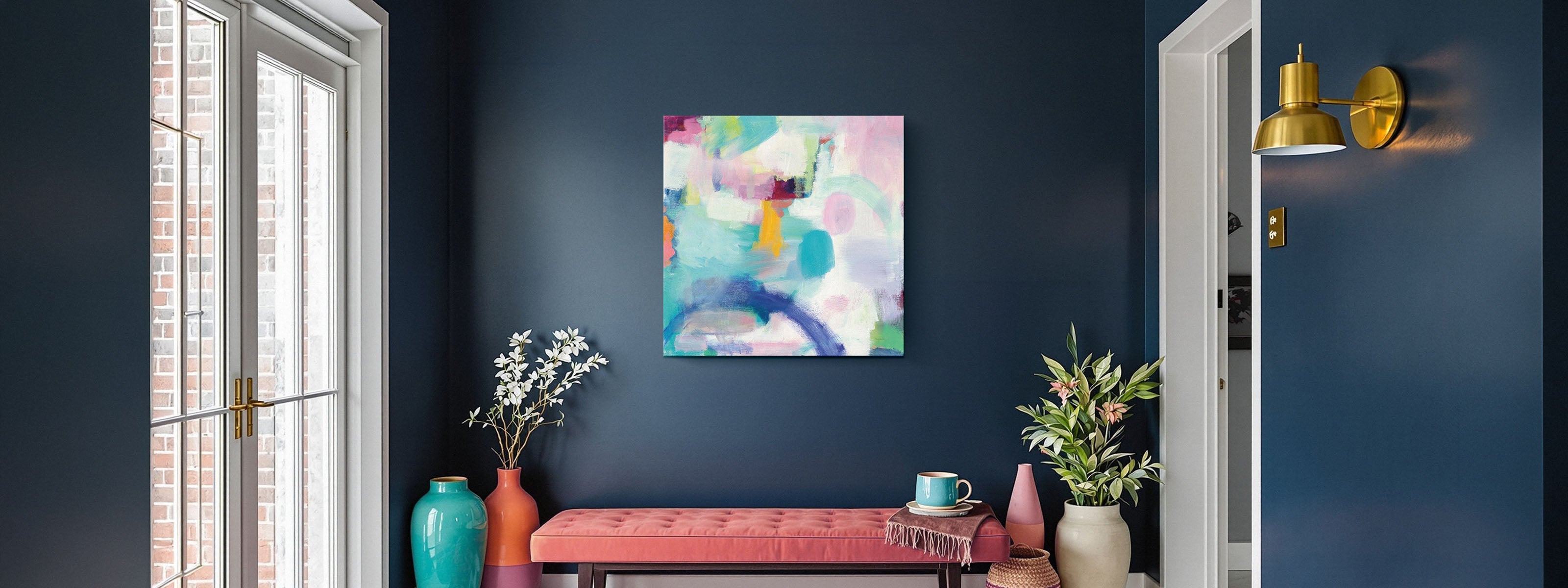
Entryway & Hallway Wall Art: A Complete Guide to the Spaces Between Your Rooms
The best entryway or hallway art starts with the rooms on either side of the wall, not the wall itself. Match the mood and palette of the spaces it connects, work around your real constraints (a console or no console, a narrow corridor, art seen while standing and moving), then choose by combining two things: the feeling you want — welcoming, elegant, or pared-back and modern — and the subject you want, like family or travel. Settle those, and the piece almost chooses itself.
An entryway or hallway is the most-walked, least-decided wall in the house. It is easy to leave it blank as "just a hallway," or to overcorrect and fill it like a showroom that has nothing to do with the rooms it opens onto. Both miss what the wall actually is.
It is a seam — the join between two spaces — and the art that belongs here is the art that makes the move from one room to the next feel deliberate. A piece chosen for a room you sit in can be wrong for a wall you move through, and that one idea does most of the work.
Everything here is Designed in California and hand-made to order by Fine Art Canvas — making canvas art since 1989, with free 90-day returns and a 1-year warranty on every piece.

Six Directions at a Glance
- Welcoming Vibes — warmth at the door, soft color, the sense of an invitation as you step in
- Statement Art — a bold anchor for the space, one piece that sets the tone for the whole home
- Family Moments — art that says whose home this is the moment someone walks in
- Travel Adventure — places loved or longed for, movement and story for a wall about passing through
- Elegant Entry — composed and quietly refined, a first impression built on restraint
- Modern Simplicity — clean lines and a pared-back palette that lets the architecture breathe
Start with the Rooms on Either Side
The single most useful word customers use for a hallway or entry is cohesive. They rarely say they want it to "pop." They say they want it to feel connected to the rest of the home. That instinct is right, and it is the fastest route to a confident choice.
Stand in the space and look both ways. An entryway usually opens onto the living room; a hallway often runs between bedrooms, or carries you from a living space toward them. Notice the two or three colors already doing the most work in those rooms — the wall color, the largest piece of furniture, the existing art — and the overall temperature: warm and soft, cool and calm, or crisp and modern.
Your art does not have to match those rooms. It has to belong with them. A piece that shares even one anchor — a repeated color, a consistent level of contrast, a matching warmth — reads as part of the home rather than a detour. This is why the same artwork can be right in one hallway and wrong in another: the wall is never deciding on its own.
Once you have those anchors in hand, you have already ruled out most of the wrong choices. Everything from here is narrowing, not searching.
Work with the Wall You Have
Once the rooms point you in a direction, the wall itself sets the terms. Entryways and hallways are the same decision with different constraints — solve the constraint, and the style choices narrow on their own.
✓ Wall with a console, bench, or table
- You have an anchor — the art hangs in relationship to it
- Treat the furniture and the art as one arrangement
- Size the art to roughly two-thirds of the furniture width
✗ Bare wall, no furniture
- The art has to hold the space on its own
- Go a little larger, or group pieces so the wall reads as finished
- A single small piece will look lost on a bare wall
Nobody sits and studies a hallway. You catch it at a glance, on your feet, passing through. That rewards art that reads clearly and quickly — a legible subject, enough contrast to register in low light — over anything fine-detailed that needs a long, close look.
Find Your Style
Six directions — all designed for the transitional spaces of a home. Each one links to the full collection.


Now for the Art Itself
With the rooms and the wall behind you, the rest is the part you will enjoy. Two things shape it: how you want the space to feel, and what you want to see on the wall. Most people want both at once, and that is exactly right — a welcoming entry that happens to be full of family, an elegant hallway lined with the places you have traveled. The feeling sets the mood; the subject gives it something to say.
Choose by the feeling you want
Choose by the subject you want
Most entries and hallways want a little of both axes. Start with the feeling — welcoming, elegant, or modern — and then layer in the subject you care about. A welcoming entry full of family, an elegant hallway lined with places you have traveled. The two dimensions work together, not against each other.
Want to Make It Bolder?
Bold is not a separate style — it is a dial you can turn up on any of the choices above. A single dramatic piece can anchor a long hallway that would otherwise feel like a pass-through, or turn a small entry into the moment that sets the tone for the whole house. If you want more presence, browse the Statement Art collection — then bring that boldness back to the feeling and subject you have already chosen.
Photograph the room your entry or hallway opens onto, then shop with that photo open on your phone. The piece that looks like it could have come from that room — without matching it exactly — is almost always the right one. You will feel it before you can explain it.
How Big, and How High?
For the full method — measuring your wall, choosing a single piece versus a set, the two-thirds rule — use our Wall Art Size Guide. Three things, though, are specific to entryways and hallways.
Hang it for standing eyes, not seated ones
The usual advice centers a piece around 57 to 60 inches from the floor — eye level for a room you sit in. A hallway is viewed standing and moving, so you can hang a touch higher, nearer standing eye level, especially above a console where the furniture already lifts the visual baseline.
Pace a long corridor; do not strand one piece in it
In a long hall, rhythm beats size. A series of similarly sized pieces, spaced evenly — every three to four feet is a good starting point — turns the length of the wall into an asset. One small piece floating alone in the middle of a long wall is the most common hallway misstep.
Plan around doorways and switches
Hallway walls are rarely uninterrupted — doorways, light switches, a thermostat, and outlets break the run. Treat each clean segment between interruptions as its own small composition rather than fighting the architecture.
| The wall you have | A good approach |
|---|---|
| Entry wall with a console or bench | One piece (or a pair) sized to span roughly two-thirds of the furniture's width, hung above the raised baseline. |
| Bare entry wall, no furniture | Go larger than you think, or group a tight set so the wall reads as finished on its own. |
| Short hallway | One confident piece or a clean pair; resist crowding a small run. |
| Long corridor | A paced series of matching pieces, evenly spaced, reading as one rhythm down the wall. |
| Doorway-interrupted wall | One small composition per clean segment; let the architecture set the breaks. |
Pieces That Work in a Transitional Space
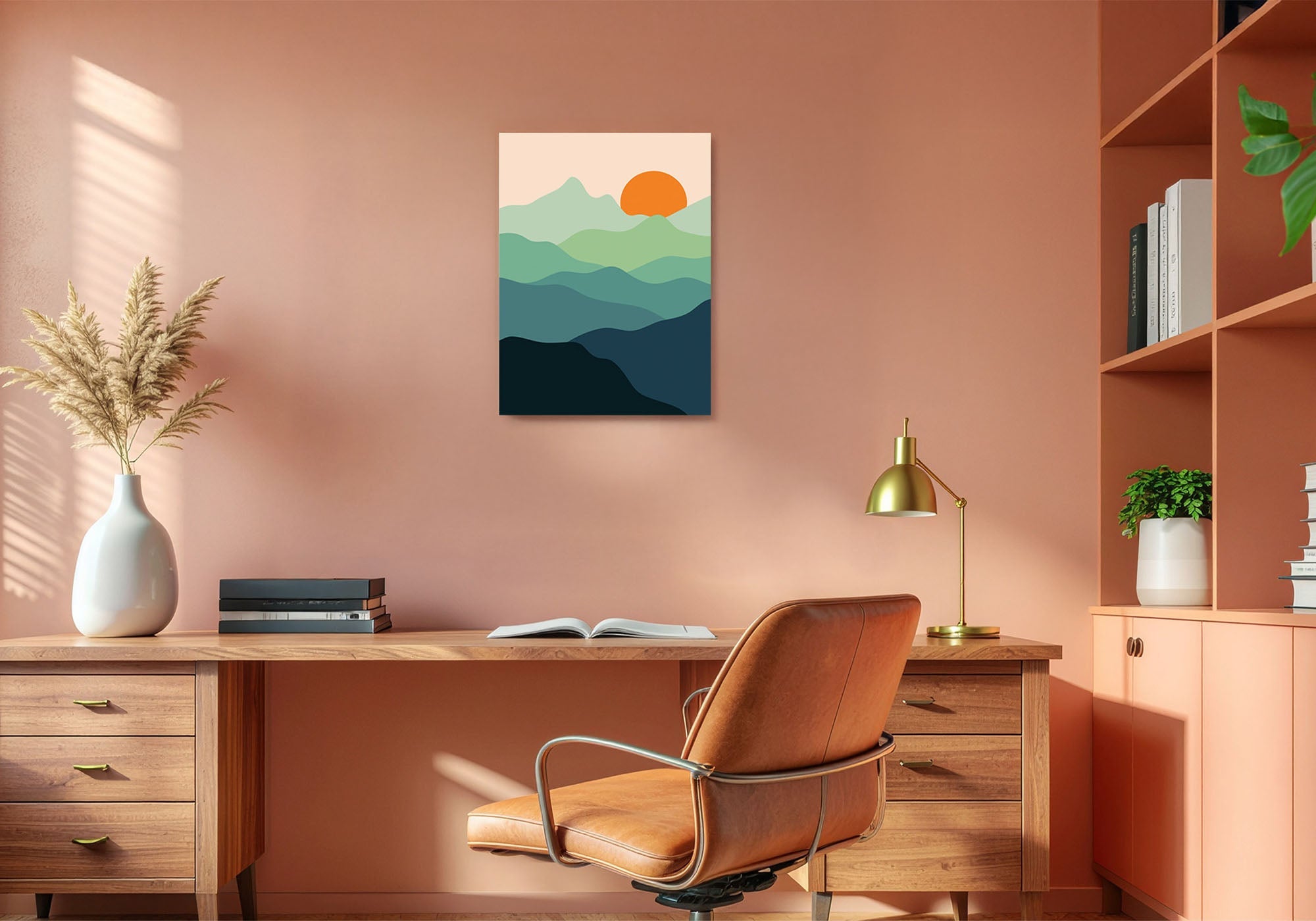
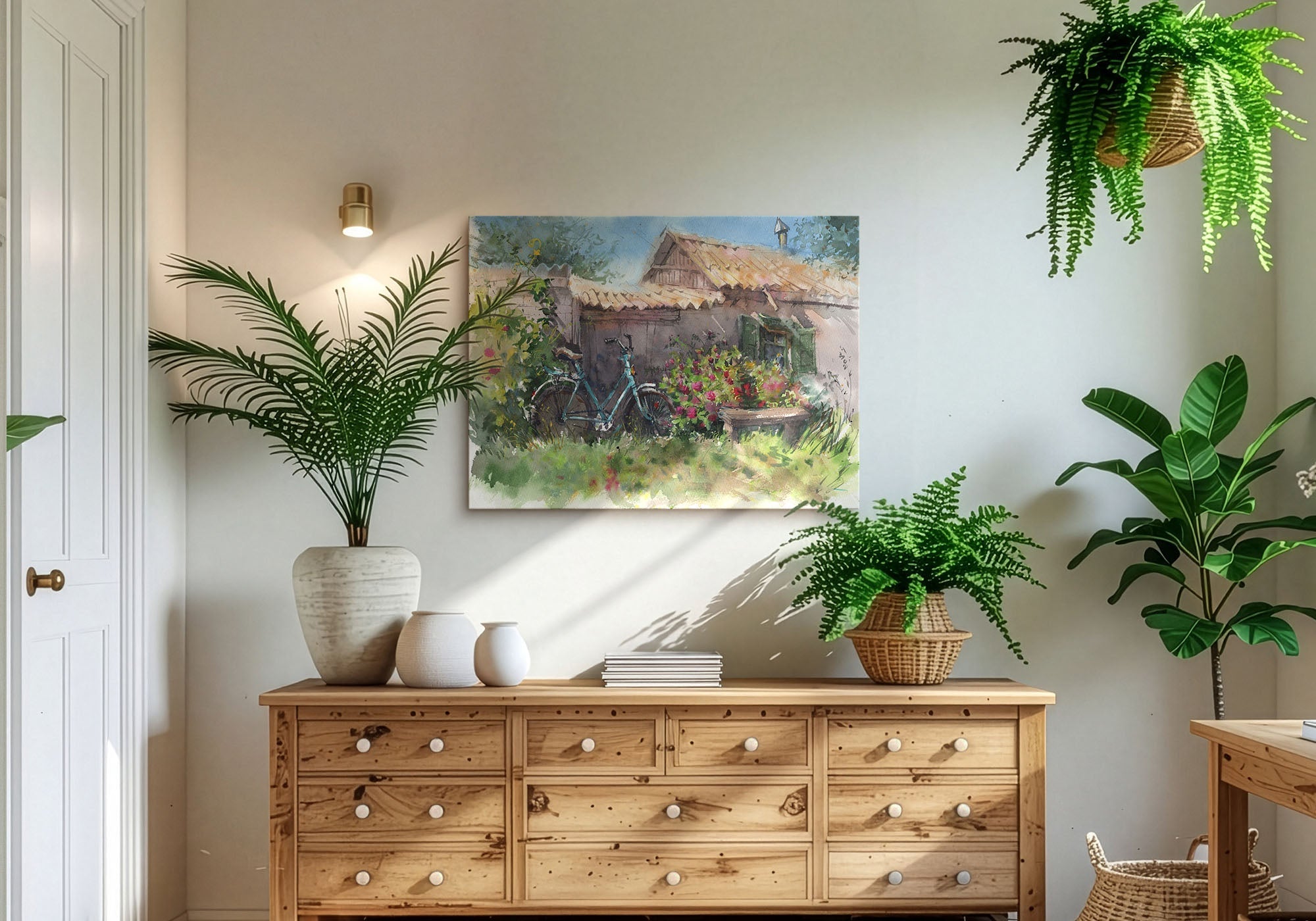
A few pieces that show the range — one for each direction above. Each is hand-made to order, so the size is yours to choose.


Shop All Entryway & Hallway Art
Common Mistakes and the Fix
An empty transitional wall leaves the home feeling unfinished between rooms. Fix: give it one piece that belongs with the rooms on either side, and the wall is done.
A piece chosen in isolation can feel like a detour from the rest of the home. Fix: borrow one anchor — a color, a level of contrast — from next door, and the wall instantly belongs.
A single stranded frame in a long hall reads as an accident. Fix: pace a sequence and let the length of the wall work for you.
Nobody stops to study a hallway. Fix: pick something legible at a glance, with enough contrast to register as you pass.
A piece chosen for impact alone can clash with the rooms it connects. Fix: bold is a dial on your chosen style — not a different house.
Find Art for the Space Between
Explore all entryway and hallway wall art — hand-made to order, Designed in California, with free 90-day returns on every piece.
Shop Entryway & Hallway ArtFrequently Asked Questions
What kind of art should I put in an entryway or hallway?
Start with the rooms the wall connects, not the wall itself. Choose a piece that shares an anchor — a color, a warmth, a level of contrast — with the spaces on either side, so it reads as part of the home. Then layer the feeling you want (welcoming, elegant, or modern) with a subject you love (family, travel, or simply a calm abstract).
How do I choose hallway art that matches the rest of my house?
It does not need to match — it needs to belong. Pull one or two colors from the adjoining rooms and a consistent level of contrast, and the piece will feel connected without being a copy. Most customers describe the goal in one word: cohesive.
What size art is best for a hallway?
It depends on the run. A short wall takes one confident piece or a tight pair; a long corridor reads best as a paced series of similarly sized pieces. For full measuring guidance, see our Wall Art Size Guide — then apply the standing-height and pacing notes specific to hallways above.
How high should I hang art in a hallway?
A little higher than in a seated room. The common 57-to-60-inch center suits living and dining rooms, where you sit; a hallway is seen standing and moving, so nudge toward standing eye level — especially above a console, where the furniture already raises the baseline.
What should I hang on a long hallway wall?
A sequence, not a single stranded piece. A series of matching pieces spaced evenly (every three to four feet is a good start) turns the length into rhythm. Where doorways or switches interrupt the wall, treat each clean segment as its own small composition.
Can I make a bold statement in a hallway?
Yes — and bold works best as a dial on the style you have already chosen, not a separate one. A single striking piece can anchor a long hall or elevate a small entry. Browse the Statement Art collection, then bring that presence back to your chosen feeling and subject.
An entryway or hallway is not a wall to decorate — it is a seam to connect. Choose the piece that belongs with the rooms on either side.


Leave a comment
This site is protected by hCaptcha and the hCaptcha Privacy Policy and Terms of Service apply.