
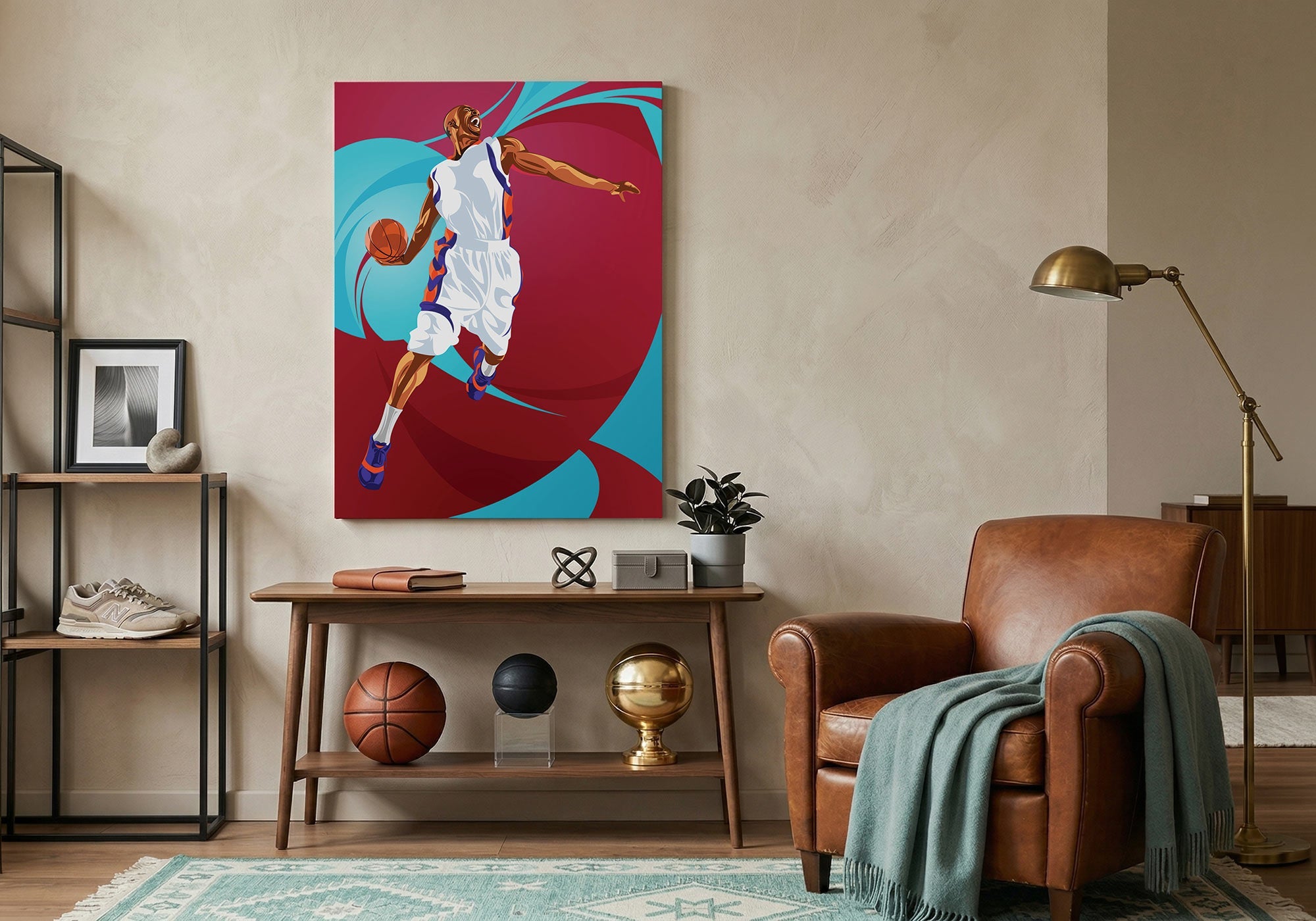
Sports Legends Wall Art for Man Caves: How to Build a Fan's Den, Not a Sports Store
Sports Legends Wall Art
The short answer: A sports room that commits to one team, one athlete, or one sport looks like a fan's den. A sports room that tries to represent everything looks like a merchandise store. The decorating decision isn't which sport you love — it's how committed you're willing to be to telling that story with conviction.
In This Guide

Walk into one sports room and you know immediately whose den it is. The team colors run through every detail. The art on the wall doesn't just show a sport — it shows a specific team, a specific era, a specific level of commitment. You could describe the owner without meeting them.
Walk into another sports room and you see six teams, four sports, three eras, and a wall covered in whatever was available. It's enthusiastic. It's full of things the owner genuinely loves. But it doesn't feel like anyone in particular.
The difference isn't passion. It's point of view.
The Difference Between a Fan's Den and a Sports Store
A sports store displays inventory. It has to represent everything because it's selling to everyone. The more comprehensive it is, the better it does its job.
A fan's den is the opposite. It represents one person's specific history with a sport — one team, one athlete, one era that means something. The more committed it is, the more it feels like a real space rather than a generic one.
Adding a piece for every team you follow, every sport you watch, every athlete you admire results in a room that looks assembled rather than designed. Pieces fight each other for attention. Nothing reads as the point of the room. The fan becomes invisible behind the collection.
The editing test is simple: if a stranger walked into your sports room, could they name your team? If the answer is no, the room has an accumulation problem, not a passion problem.
Stand in the middle of your sports room (or imagine it fully decorated). If a stranger walked in and couldn't identify your primary team or sport within ten seconds, the room is representing everything and communicating nothing. Great sports rooms make a stranger feel like they know you.
Three Ways to Build a Committed Sports Room
Commitment doesn't mean you can only love one thing. It means you choose one thing as the dominant story and let everything else support it. There are three reliable approaches:
Team — Build Around One Franchise
The strongest sports rooms are often the simplest: one team, expressed with conviction. Not just a jersey on the wall — an actual aesthetic built around the team's colors, era, and visual language.
The difference between a team room that looks great and one that looks like a fan store is scale and restraint. A 48-inch stadium panoramic above the bar is one piece doing enormous work. Fourteen smaller pieces covering every surface is a collection, not a room.
Pick two or three pieces that represent the team at its best — the stadium, the championship era, the defining moment — and give each one enough wall space to breathe. The negative space is what makes each piece register as intentional.
Place — Build Around a Stadium or Course
Stadium and venue photography works especially well in man caves because it connects to lived experience. You've been there, or you've watched from that angle a thousand times. The image carries memory, not just subject matter.
Fenway Park at dusk. The 18th hole at Pebble Beach. These aren't generic sports images — they're specific places with specific weight. A fan who has watched a thousand games at Fenway will feel something from a well-made Fenway panoramic that a generic baseball print can't replicate.
Build around the place rather than the team logo, and you get something more sophisticated: a room that communicates deep familiarity rather than surface-level fandom.
Athlete — Build Around a Figure Who Means Something
Athlete art works when the connection is specific — not "I like basketball" but "this player represents something I actually believe in." Ali in the ring at his peak. Messi in the moment before everything changed. A golfer mid-swing at a tournament that mattered.
The risk with athlete art is generic reverence — a poster of whoever is famous right now rather than a figure whose story resonates with yours. Choose the athlete the way you'd choose the subject of a book you'd want to read again: not because they're famous, but because the story still means something.
You don't have to choose just one. The strongest sports rooms often layer approaches: a stadium panoramic as the primary anchor, one athlete portrait as a focal piece, team colors carried through the smaller details. What they don't do is mix primary pieces from multiple unrelated subjects — a Fenway panoramic, a Lakers portrait, and a boxing canvas don't tell the same story, even if you love all three.
Three Questions Before You Browse
Before You Browse Sports Art
- What's the one commitment? One team, one sport, one athlete, one era. Not a list of everything you follow. The room needs a primary story — choose it before you choose art.
- What era matters most? The 1970s dynasty? The championship years? The current roster? Your answer shapes whether you want stadium photography, vintage-style prints, or contemporary athlete art.
- What's the anchor piece? Start with the primary wall. What single image will anchor the room? Everything else is supporting art once you've answered this.
Featured Sports Art
These are among the strongest-selling pieces in the Sports Legends collection — each one built to anchor a zone, not just fill a wall.


Every piece is handcrafted to order — Designed in California. Hand-made to order. We've been making canvas art since 1989, with free 90-day returns and a 1-year warranty on every piece.
Size Guide for Sports Wall Art
Sports art lives or dies on scale. The panoramic shot of a stadium that looks impressive at 48 inches becomes generic at 20. The athlete portrait that commands a wall at 40 inches becomes a decoration at 16. Scale is the difference between art that makes you stop and art that fills space.
| Format | Best Size | Best Use |
|---|---|---|
| Stadium / venue panoramic | 40–60 inches wide | Primary wall anchor — above a bar or main seating area |
| Stadium panoramic (wide format) | 60+ inches wide | Feature wall in a large basement or garage — fills the space without competing |
| Athlete portrait (vertical) | 24–40 inches tall | Flanking a primary piece, or as a solo focal point on a narrower wall |
| Secondary or supporting piece | 16–24 inches | Corner zones, above shelving — never competing with the primary anchor |
The general rule for sports art: when in doubt, go one size larger than instinct suggests. What looks right in your living room often disappears in a basement or garage. For room-specific sizing guidance, see the Wall Art Size Guide.
Frequently Asked Questions
What sports wall art looks best in a man cave?
Art that commits to one story. Stadium panoramics work well as anchor pieces because they carry specific memory — you've watched from that angle, been to that stadium, followed that team. Athlete portraits work when the connection is personal, not just famous. The best sports art for a man cave tells a specific story rather than representing the sport in general.
How do I make my sports room look designed instead of cluttered?
One focal point per zone and enough wall space for each piece to breathe. The rooms that read as designed have three to five excellent pieces with space between them. The rooms that read as cluttered have fifteen pieces with no space between them. Restraint isn't minimalism — it's what makes each piece you do display register as intentional.
Can I mix multiple sports or teams in the same room?
Yes, but give one a clear dominant position. If you love football and golf equally, choose one as the anchor story — the piece that commands the primary wall — and let the other live in a supporting zone. When two primary stories share equal wall space, neither reads as primary and the room looks assembled rather than designed.
What size sports art should I use in a man cave?
Larger than instinct suggests. A stadium panoramic that looks great in a living room often disappears against a basement or garage wall. For a primary focal wall, start at 40 inches wide — 48 or 60 inches for feature walls with high ceilings. Scale the anchor piece to the furniture beneath it (roughly two-thirds the width of the bar or media unit it's above) and let everything else be smaller.
Is golf art right for a man cave?
Absolutely — especially venue photography. Pebble Beach, Augusta, Torrey Pines: these are iconic places that carry weight beyond the sport itself. They read as sophisticated rather than athletic, which makes them work well in rooms that lean toward a lounge aesthetic rather than a classic fan cave. If you're building around golf, treat the course as you'd treat a stadium — one excellent panoramic as the anchor, scaled to command the wall.
Find your anchor piece. Every canvas is handcrafted to order — Designed in California. Hand-made to order.
Shop Sports Legends Art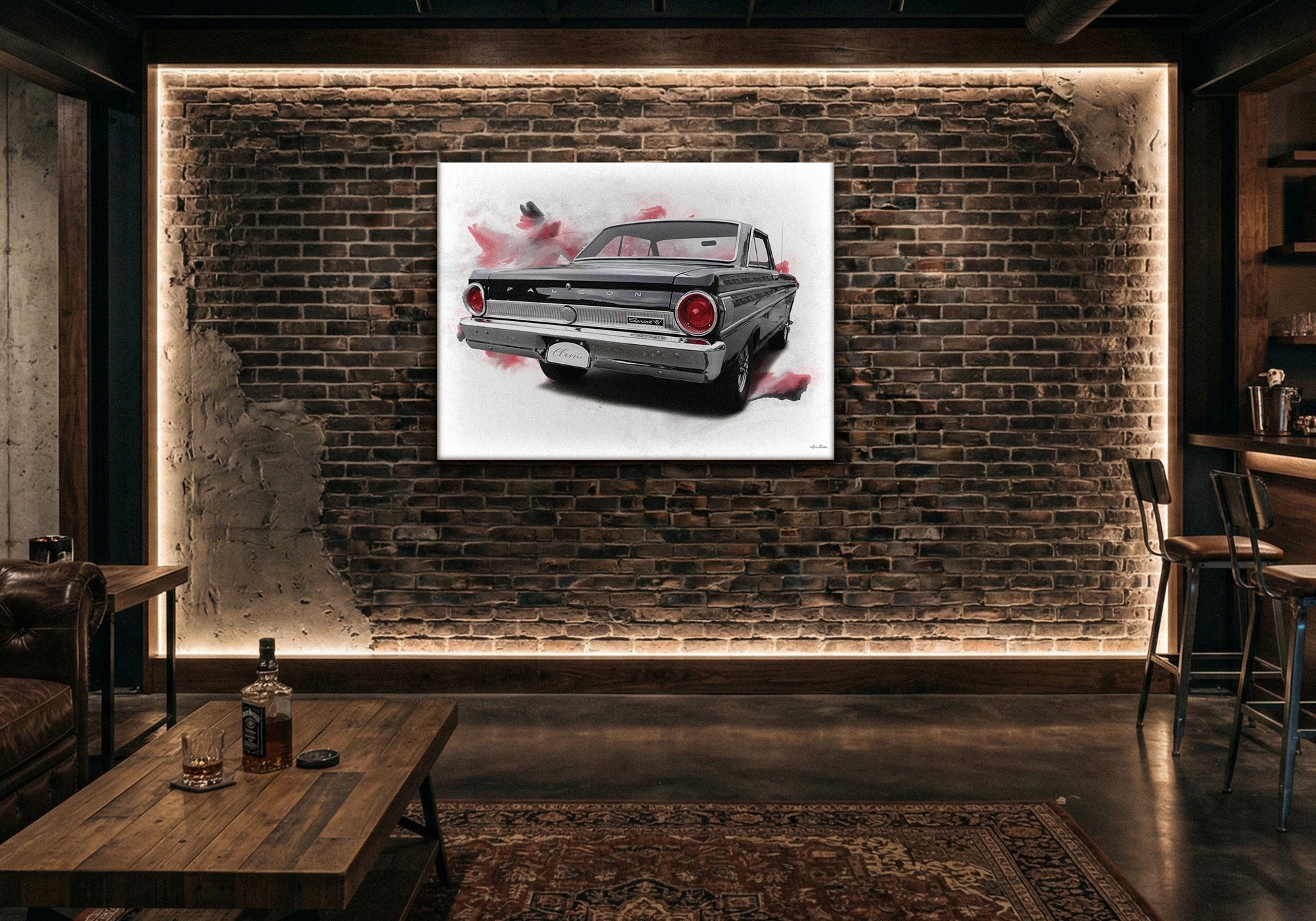



Leave a comment
This site is protected by hCaptcha and the hCaptcha Privacy Policy and Terms of Service apply.