

Man Cave Wall Art: How to Choose Art That Makes the Room Feel Like Yours
Man Cave & Garage Wall Art
The short answer: A man cave earns its name through ownership — one room in a shared home that reflects one person's passions without compromise. The wall art works when it tells a single, committed story. It falls flat when it accumulates every interest at once. Choose one dominant story, then let every piece strengthen it. The subjects are the vocabulary. The editing is what makes it a statement instead of a list.
In This Guide

Many personal retreats begin the same way. A favorite team banner. A framed car poster picked up at a show. A neon beer sign that felt right at the time. A few collectibles pulled from storage, finally given a wall.
None of those pieces are wrong. The problem begins when every wall tells a different story — and the room starts to look like a storage unit for passions rather than a space that reflects one person.
This guide is about the difference between those two outcomes. Not which subjects to choose. How to build a room that feels genuinely yours.
Why Ownership Is the Point
Most rooms in a home are built through negotiation. What goes on the living room wall. What color the kitchen is. How the bedroom is arranged. Even in the most collaborative households, shared spaces tend toward consensus — which means they tend toward compromise.
A man cave exists because some rooms shouldn't be consensus spaces. It's the one room in the house designed to reflect one person's passions, memories, and identity without apology. Not the family's identity. Not the neighborhood's idea of what a man cave should look like. One person's actual story.
That changes what the wall art has to do. In a living room, the art needs to work for everyone who uses the room. In a man cave, it needs to work for one person — and that person should be able to walk in, look around, and feel that the room actually knows them. The subjects on the wall — the cars, the sports, the music, the bar art — are the vocabulary. Whether they add up to a coherent statement or a scattered inventory is the only decorating decision that matters here.
The Two Mistakes Most Man Caves Make
Piling in everything that represents a passion — every sport, every era, every interest — until the room looks like inventory. The result is a space full of things you love that somehow doesn't feel like you. Everything competes; nothing lands.
Trying to recreate a commercial space — a sports bar, a pub, a garage showroom, an arcade — rather than building a personal sanctuary. The distinction that matters: you don't want a sports bar. You want how a sports bar makes you feel. You don't want a garage aesthetic. You want what working on cars represents — freedom, craft, mastery, nostalgia. Chase the feeling, not the commercial template.
Both mistakes produce the same result: a room that looks assembled, not designed. The fix is the same in both cases — start with who you are, not what category you're decorating.
Why Some Rooms Feel Designed and Others Don't
Two sports fans, same team, same level of passion. One has jerseys, pennants, signed photos, bobbleheads, stadium cups, and a neon sign on three different walls. The other has one large stadium photograph above the bar, one framed jersey in a display case, and clean walls everywhere else.
The second room looks designed. The first looks accumulated. Neither has more or less passion for the team — the difference is how much the pieces compete with each other for attention.
Great rooms don't contain more personality. They contain less competition.
The same principle holds across every subject in a man cave. Here's what it looks like in practice:
One focal point per zone. Pick a primary wall for each area — the bar, the seating, the games corner — and give it one strong piece, correctly scaled. When every wall has equal coverage, nothing registers as the point of the room. When one wall anchors each zone, the room feels organized even if it isn't especially tidy.
Size over quantity. A single 48-inch canvas commands a wall. Four 12-inch prints sharing that same wall look like a waiting room. The decorating instinct is often to add more pieces; the design instinct is to use fewer, larger ones. A piece that holds the wall on its own reads as intentional. A wall covered in pieces reads as filled.
Commit to one era or one story per subject. The automotive room built around 1960s American muscle — the shapes, the chrome, the color palette of that era — feels like a private collection. The automotive room with pieces from every decade of every country looks like a calendar. The sports bar built around one team, with one consistent aesthetic, looks like a fan's den. The bar with six teams' colors fighting each other looks like a sports store. The narrower the commitment, the stronger the room reads.
Give each passion its own zone. If the room has a bar area, a TV zone, and a games table, plan which passion lives in which zone — rather than spreading everything across every surface. Automotive art at the bar, music in the seating area, vintage pieces near the games table. When each interest has defined territory, even a room with several passions feels cohesive rather than crowded.
Supporting interests are welcome when they serve the same atmosphere. Vintage motorcycles, blues music, and worn leather can coexist in the same room — because they tell the same story about craft and era. A jazz poster next to a football jersey next to a car hood ornament compete because they're telling three different stories at once. The question isn't how many interests — it's whether they speak the same language.
How to Choose: The Four-Question Framework
Before You Browse by Subject
- Who are you? Not who you want the room to perform for — who you actually are. The passions, the eras, the experiences that matter to you specifically.
- How do you want this room to make you feel? Energized? Calm? Nostalgic? Proud? The feeling comes first. The subject is how you get there.
- Which passions best tell that story? Choose one dominant narrative. Let supporting interests reinforce it rather than compete with it.
- Which artwork supports it? Now browse by subject. Products are the last decision, not the first.
That sequence — who, feeling, story, artwork — is what separates a room that reads as intentional from one that reads as accumulated. The subject category is simply the vocabulary you use to tell the story you've already decided on.
Browse by Passion
Each category below has its own guide — not to help you choose between subjects, but to show you how to execute your subject well. How to make the automotive room feel like a private collector's gallery instead of a garage wall. How to make the sports room feel like a fan's den instead of a merchandise store. How to make the bar feel like a cocktail lounge instead of a college basement.

Automotive
Iconic design. Unmatched legacy. Timeless silhouettes and bold aesthetics that fuel your passion for the road.
Shop the Collection
Industrial Style
Rare raw texture. Unrefined character. Weathered forms and structural elements that bring depth to any space.
Shop the Collection
Sports Legends
Elite greatness. Timeless legacy. Iconic moments and legendary figures captured in bold detail.
Shop the Collection
Bar & Lounge
Refined taste. Effortless atmosphere. Art that turns a basement corner into a cocktail lounge.
Shop the Collection
Music Icons
Soundtracks of a generation. Legendary portraits and the spirit of rock, pop, and jazz come alive.
Shop the Collection
Retro & Vintage
Nostalgic style. Reclaimed character. Classic aesthetics and mid-century charm that add timeless warmth.
Shop the CollectionExplore the Guides
Automotive
One era. One story. The difference between a garage wall and a private collector's gallery is how much you're willing to edit.
Read the guide →Industrial Style
Raw materials with intention — not a warehouse, but an urban loft. Cohesion of texture and tone is what makes industrial art feel designed rather than accidental.
Read the guide →Sports Legends
One team. Carried through every detail. The room that commits to a team looks intentional. The room that represents every team looks like a sports store.
Read the guide →Bar & Lounge
You don't want a bar. You want how a bar makes you feel. Restraint on display, quality of pour — that's what turns a basement corner into a cocktail lounge.
Read the guide →Music Icons
One genre. One era. Soulful rather than scattered. The difference between a poster shop and a listening lounge is commitment to a single musical world.
Read the guide →Retro & Vintage
Deliberately collected, not randomly nostalgic. An era chosen with intention reads as a curated collection. Pieces from every decade reads as a flea market.
Read the guide →A Few Pieces Worth Considering
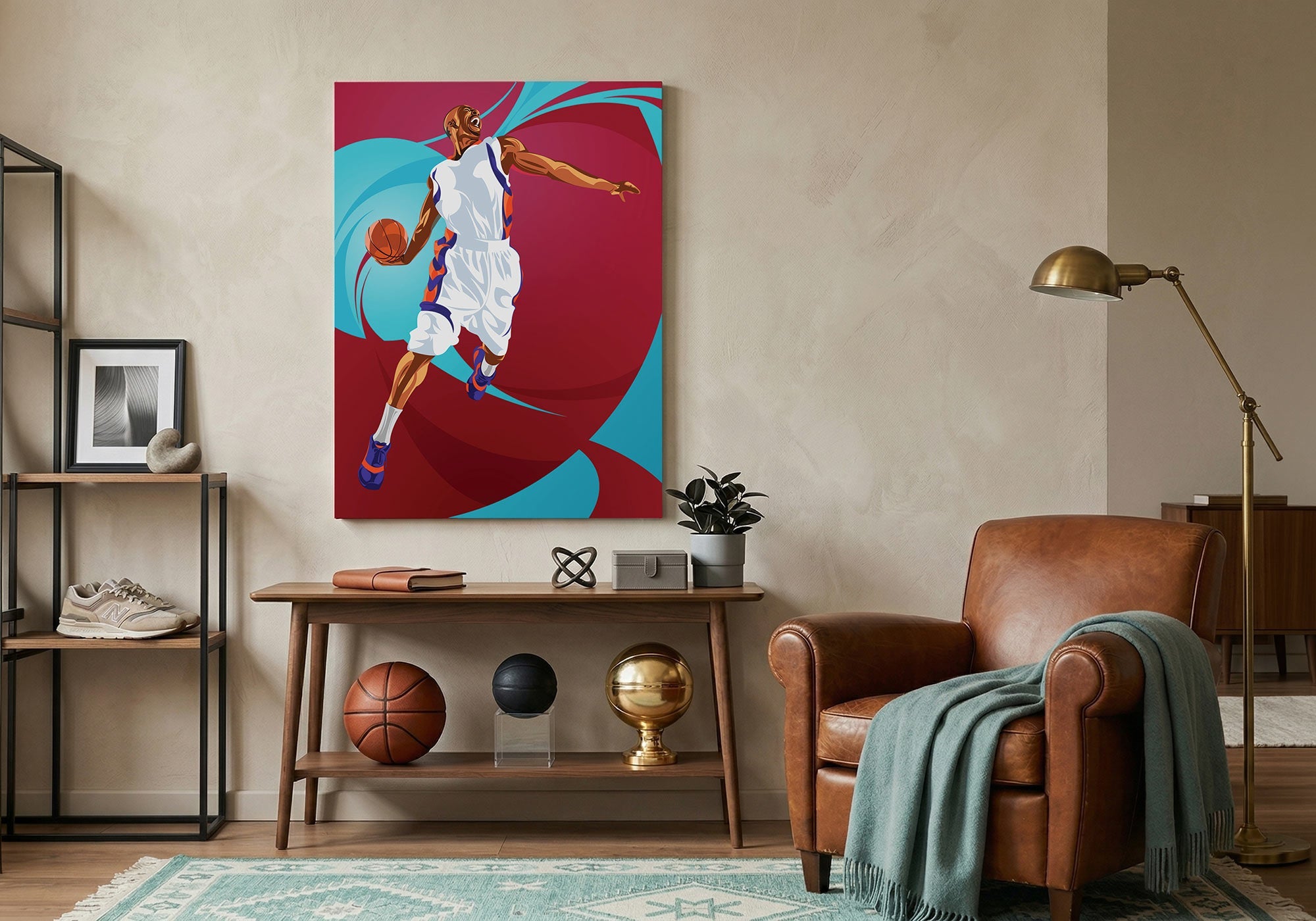
These examples show how different passions can anchor a distinct zone within the room — each chosen to make a statement, not simply fill a wall.


Every piece is handcrafted to order at Fine Art Canvas — Designed in California. Hand-made to order. We've been making canvas art since 1989.
Size Guide for Man Caves and Garages
Scale matters more in a man cave than most rooms. A piece that reads correctly in a living room often disappears against a garage wall or a full basement. The general principle: go larger than instinct suggests.
| Wall / Zone | Recommended Size | Why |
|---|---|---|
| Primary focal wall (behind bar, above main seating) | 40–60 inches wide | Has to hold its own against furniture, screens, and the volume of the room |
| Above a bar or drinks station | 30–48 inches wide | Wide enough to anchor the zone; leave breathing room on either side |
| Garage wall (high ceilings, open space) | 48 inches or larger | High ceilings make standard sizes look tentative; scale up |
| Corner or secondary zone | 20–30 inches wide | Supporting piece; let it complement the primary focal piece, not compete |
| Gallery arrangement (planned, not scattered) | Mix one 30–40" anchor with two to three 16–24" pieces | Treat as a composed unit; consistent frame style is what holds it together |
The rule that holds across every zone: size to the furniture beneath, not the wall around it. A piece above a bar should be roughly two-thirds the width of the bar. Negative space around a single focal piece is what makes it land — not framing it wall-to-wall. For room-specific sizing guidance, see the Wall Art Size Guide.
Frequently Asked Questions
What wall art looks good in a man cave?
Art that tells one story well — not art that covers every interest. The strongest man cave art is scaled to command the room (40 inches or wider for primary walls), committed to a specific subject or era, and given enough breathing room to read as intentional. One excellent anchor piece does more work than a wall covered in smaller prints.
How do I decorate a man cave without it looking cheap or like a dorm room?
Two things separate an adult, deliberate space from a dorm room: material quality and editing. Quality canvas art — gallery-wrapped, well-made — reads as intentional. Thin posters with tape read as temporary. Editing means choosing fewer, stronger pieces rather than filling every surface. A room with three excellent pieces looks designed; a room with twenty pieces that don't relate looks cluttered, regardless of budget.
How do I choose a theme for my man cave?
Start with the feeling, not the category. Ask how you want the room to make you feel — energized, calm, proud, nostalgic — then identify which of your passions gets closest to that feeling. Choose one dominant story and let every other element reinforce it. Supporting interests are welcome when they strengthen the primary story; they become a problem when they compete with it.
What size art should I use in a man cave?
Larger than you think. Man caves and garages have more wall space and often higher ceilings than standard rooms, which makes standard-sized art look tentative. For a primary focal wall, start at 40 inches wide. Above a bar or media setup, 30–48 inches. In garages with high ceilings, go 48 inches or larger. Scale to the furniture beneath the piece, not the full wall around it — and leave negative space so the anchor reads clearly.
How much wall art is too much in a man cave?
When it starts to compete with itself. One focal point per zone is the practical rule — one strong piece that anchors the bar area, one that anchors the seating area, and so on. If every wall is equally covered, nothing stands out and the room reads as accumulated rather than designed. Great rooms don't contain more personality — they contain less competition.
What is the difference between garage wall art and man cave wall art?
Mostly context and scale. Garage art tends toward the automotive, industrial, and retro-signage end of the spectrum, and benefits from larger sizing given the scale of most garage walls. Man cave art spans the full range — sports, music, bar, vintage — and is often working with a finished basement or dedicated room. The editorial principles are identical: one committed story, correct scale, restraint over accumulation.
Find the piece that anchors your room. Every canvas is handcrafted to order — Designed in California. Hand-made to order.
Shop Man Cave & Garage Art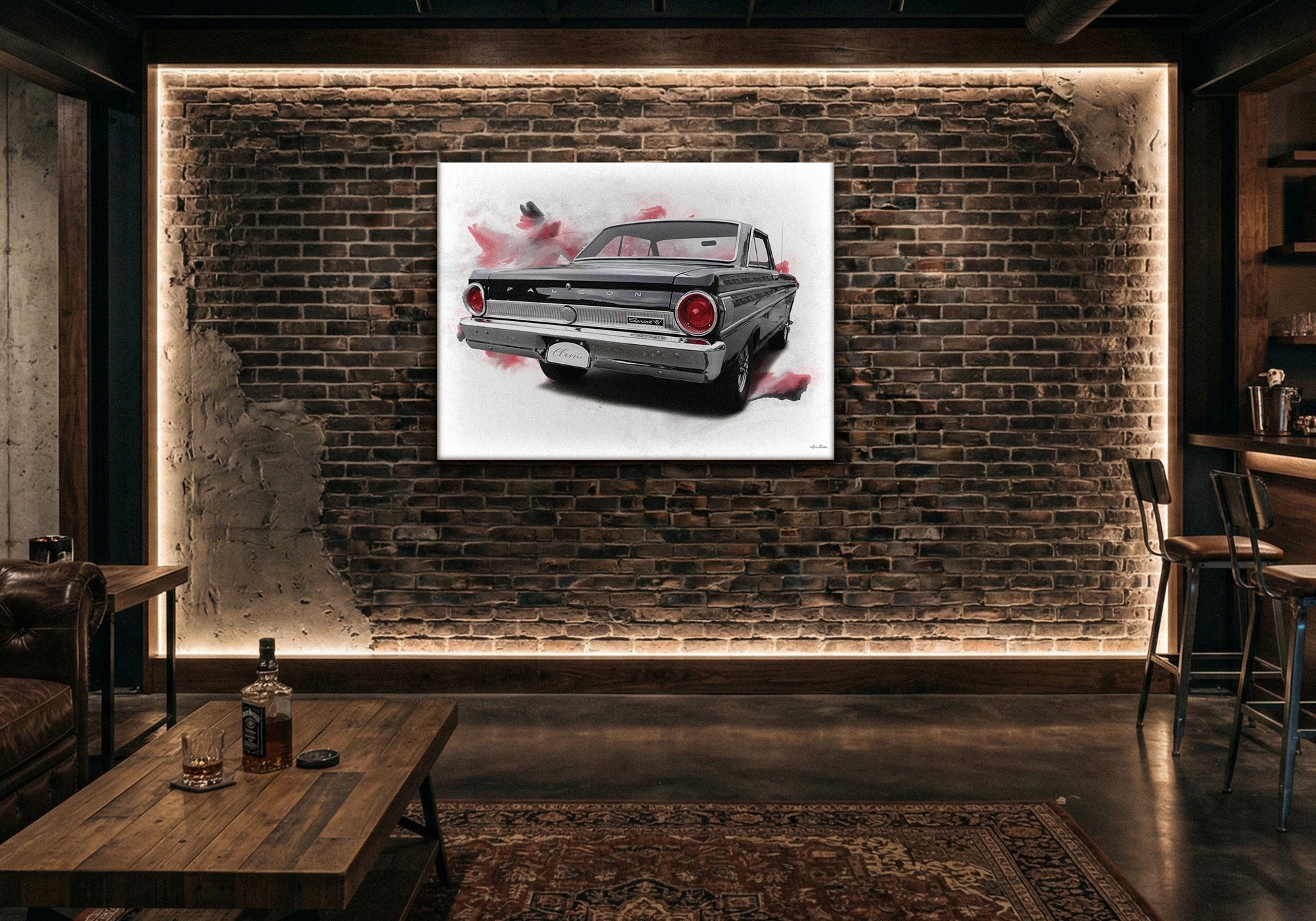


Leave a comment
This site is protected by hCaptcha and the hCaptcha Privacy Policy and Terms of Service apply.