
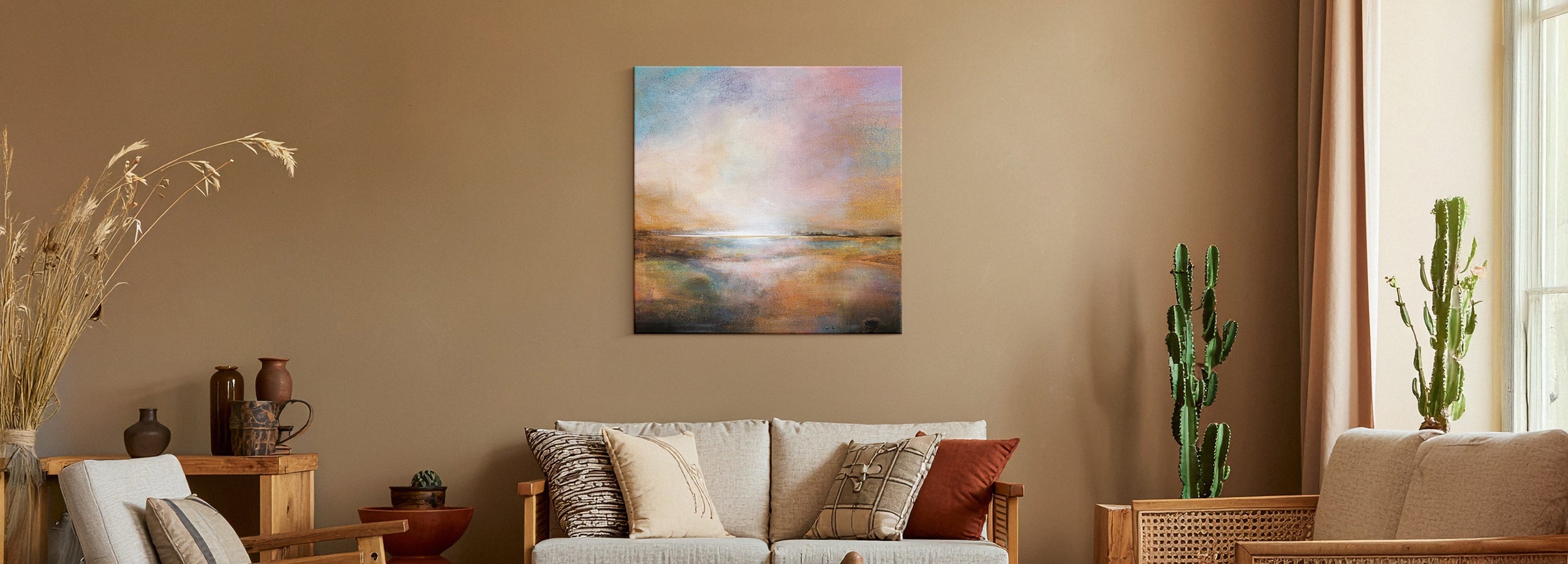
Warm & Earthy Wall Art for Living Rooms
Warm and earthy living room wall art works best when it stays warm without going heavy. Let one earthy tone lead — terracotta, ochre, rust, or clay — give it a lighter neutral like cream or sand to breathe, and choose pieces with golden, late-day light and visible texture over flat, dark scenes. The fix for a room that feels gloomy isn’t less color; it’s more light and texture. It’s the right style if you want a grounded, cozy, nature-warm living room.
A warm, earthy living room should feel like the last hour of daylight — grounded, golden, and calm. The palette does a lot of the work, but it’s also where the style most often goes wrong: too much depth with no light and the whole room sinks. This guide is about keeping the warmth without the weight.
Designed in California. Hand-made to order. Fine Art Canvas has been making canvas art since 1989, and every piece comes with free 90-day returns and a 1-year warranty.

At a Glance
- One warm tone leads: terracotta, ochre, rust, or clay
- Cream or sand beside it — so it breathes and never goes heavy
- Golden, late-day light — over flat or muddy scenes
- Layered texture: visible brushwork, woven, wood, real canvas
- One large grounding piece — not a dark, crowded wall
Earthy goes wrong when it goes heavy. Pile on deep brown, rust, and muddy green with no relief and the room stops feeling grounded and starts feeling closed-in — dim, weighty, a little oppressive. The instinct is then to strip the color back out. That’s the wrong fix. What rescues an earthy room isn’t less color — it’s light and texture: one warm tone leading, a breathing neutral beside it, golden late-day light in the art, and enough visible texture that the warmth reads rich instead of flat. Get that balance and the room feels like late afternoon. Miss it and it feels like dusk with the lights off.
When Warm & Earthy Is the Right Answer
Once you’ve settled which wall you’re filling — the Living Room Wall Art Guide covers that, starting with the wall, not the art — reach for warm and earthy when you want the room to feel grounded and cozy rather than bright and airy. It’s the natural fit for spaces with wood furniture, leather, linen, and natural materials, and for palettes that already lean toward beige, clay, ochre, or terracotta. People choose it to bring the calm, rooted warmth of nature indoors — the feeling of stone, sunbaked clay, and autumn light.
How to Recognize It
You don’t need a design vocabulary to spot it. You’re probably looking at warm and earthy when:
The palette is built on warm browns, terracotta, ochre, rust, and sandy neutrals, with muted greens for relief. Every color has a warm undertone — nothing in the room leans cool or grey. The art reads as nature and warm light — landscapes, golden-hour scenes, organic abstracts — rather than bright or high-contrast imagery. And texture carries the look: visible brushwork, woven and wood tones, the grain of real canvas.
The tell is warmth with light in it. A good earthy room glows; a heavy one just darkens.
Is This Style Right for Your Home?
Warm & Earthy Is Ideal If…
- You want the room to feel grounded, cozy, and rooted
- You have wood, leather, linen, or other natural materials
- Your palette already leans beige, clay, ochre, or terracotta
- You love nature and warm light over bright, cool color
Look at Another Style If…
- You want a bright, airy, light-filled feel
- Your room is already dark and you can’t add much light
- You prefer cool tones, crisp whites, or high contrast
If you love the warmth but want it quieter and lighter, Modern Minimalist gets you a warm-neutral calm with more restraint — the same grounded feeling, dialed down. And if you’re drawn to nature’s palette but lean green rather than clay, Biophilic Nature is the cooler, leafier cousin.
How to Use It Well in a Living Room
Let one warm tone lead. Pick a single dominant earthy color — terracotta, ochre, rust, clay — and let the rest of the room answer to it. Earthy goes muddy when five warm tones compete for the lead.
Give it a breathing neutral. Balance the richness with cream, sand, or warm white in the art and the room, so the space reads layered and warm rather than closed-in. The lighter neutral is what keeps depth from tipping into heaviness.
Choose light, not just dark color. The warmth that ages well comes from light — a golden, late-afternoon glow — more than from piling on deep browns. A sunlit scene warms a room; a dark one weighs it down.
Layer texture. Visible brushwork, woven and wood tones, and the grain of real canvas are what make an earthy room feel rich and intentional instead of flat or gloomy. Texture is the difference between “warm” and “muddy.”
Go big and ground the room. One large, warm piece over the sofa anchors the space far better than a crowd of small dark frames. Span about two-thirds to three-quarters of the sofa’s width and hang it 6–10 inches above the back. The Living Room Wall Art Guide and our Wall Art Size Guide have the full method.
Warm tones shift a lot with a room’s light, so check the piece in your space first. Use View in Your Room on any product page to see the exact artwork on your wall at true size, or tape out the dimensions and live with the outline for a day before you decide.
About Fine Art Canvas. Every piece in this guide is designed in California and hand-made to order. We’ve been making canvas art since 1989. Every order ships with free 90-day returns and a 1-year warranty — so you can see the piece on your wall before you commit.
Available as canvas, framed canvas, or framed print. Custom sizes available on most pieces.
Why These Six Pieces Work
A few from our Warm & Earthy collection that stay warm without going heavy — each chosen for what it does in the room, not just how it looks. Every piece is hand-made to order in your size and finish.

First Light I
Julia Purinton

August Morning
Katie Swatland

Tuscan Villa
Joseph Cates

Appalachian Trail
Michael Creese

Wondering Beyond the Fence
PBurchettPhoto

Autumn Breeze II
Studio Arts
Common Mistakes (and the Fix)
Deep tones with nothing to lift them read gloomy. Fix: add a breathing neutral (cream or sand) and choose art with golden light.
Five earthy tones fighting for attention turns muddy. Fix: let one warm tone lead and let the rest support it.
Warmth with no texture can look dull. Fix: choose visible brushwork or texture so the color reads rich.
A little dark print disappears. Fix: one large, warm, light-filled piece spanning two-thirds of the sofa.
It doesn’t. Fix: earthy is a palette, not a theme — it spans modern abstracts to landscapes, not just farmhouse.
Every piece is hand-made to order in your chosen size and format.
Shop Warm & Earthy Wall ArtFrequently Asked Questions
What is warm and earthy living room wall art?
It’s art built on nature’s warm palette — terracotta, ochre, rust, clay, sandy neutrals, and muted greens — usually landscapes, golden-hour scenes, or organic abstracts. The goal is a grounded, cozy room that feels connected to nature and warmed by light.
How do I keep an earthy room from feeling dark and heavy?
Add light, not less color. Let one warm tone lead, pair it with a lighter neutral like cream or sand so it can breathe, and choose art with golden, late-day light and visible texture. Heaviness comes from depth with no relief — light and texture are the relief.
What colors count as warm and earthy?
Warm browns, terracotta, clay, rust, ochre, and burnt orange, plus sandy beige and cream, with muted or olive greens for balance. The common thread is a warm undertone — nothing in the palette leans cool or grey.
How big should the art be above the sofa?
Span about two-thirds to three-quarters of the sofa’s width and hang it 6–10 inches above the back, centered around 57–60 inches from the floor. Earthy rooms reward one large, grounding piece over a scatter of small ones. The Living Room and Size guides have the full method.
Does earthy style have to be rustic or farmhouse?
No. Earthy is a color palette, not a decorating theme. It works just as well with modern, organic abstracts as with landscapes — the warm tones are what matter, not a rustic look.
What kind of art works best in a warm, earthy room?
Warm landscapes, golden-hour and sunrise scenes, and organic or textured abstracts in earthy tones. Look for pieces with light in them and visible texture — both are what keep the warmth feeling rich rather than dark.
An earthy room should feel like late-afternoon light — grounded, warm, and never heavy.


Leave a comment
This site is protected by hCaptcha and the hCaptcha Privacy Policy and Terms of Service apply.