
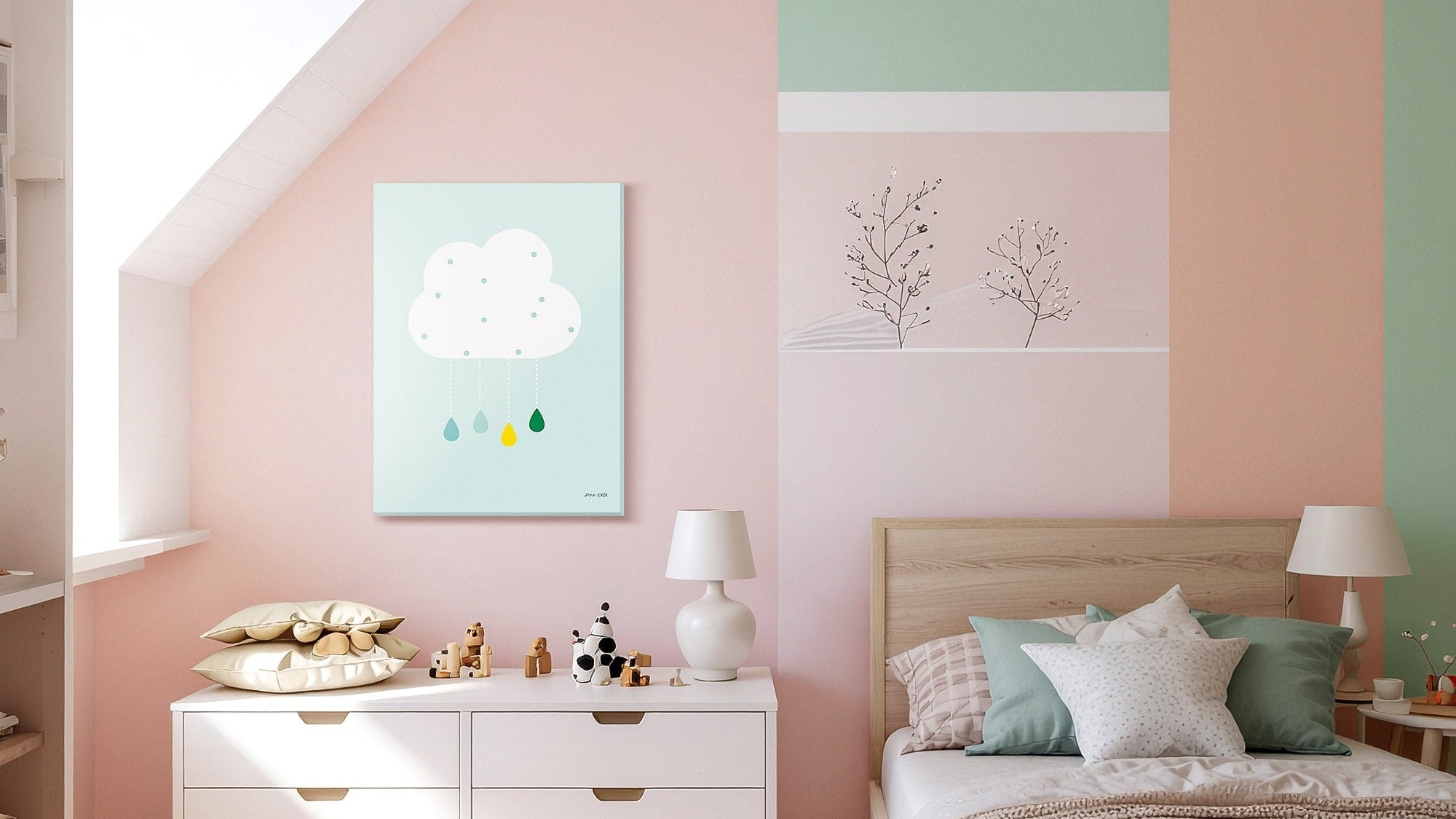
Gentle & Calm Nursery Wall Art
Gentle, calming nursery art is built from three things: a soft, low-contrast palette, a single restful subject — a sleeping animal, a moon, a quiet sky — and plenty of breathing room around it. In a room whose first job is sleep, the goal isn't to fill the wall; it's to settle it. Lead with one calm piece over the crib, keep it soft, and you'll have art that soothes now and still suits a big-kid room later.
You've decided this room's first job is rest. This is how you choose art that protects the calm — for the baby, and for whoever's up at 3 a.m.
A nursery is the one room you decorate for sleep. That single fact should steer every choice on the wall. Bright, busy, high-contrast art has its place — just not in the room built for naps and night feeds. Here, calm is the whole assignment.
Every piece is designed in California and hand-made to order by Fine Art Canvas, making canvas art since 1989. Free U.S. shipping over $100, 90-day returns, and a 1-year warranty on every order.

Gentle & Calm Nursery — At a Glance
- Best for: Nurseries and any sleep-first room — including a sensitive sleeper's bedroom
- Mood: Soothing, restful, low-stimulation
- Palette: Soft and low-contrast — muted pastels, warm neutrals, gentle blues and greens
- Subjects: Sleeping or resting animals, moons and stars, soft skies, gentle woodland
- Avoid: High-contrast, busy, or high-energy pieces — save those for the playroom
When Gentle, Calming Art Is the Right Call
Reach for this style whenever the room's primary job is rest. That's every nursery, but also a toddler's room if they're a light sleeper, and any bedroom where winding down is the daily struggle. A newborn can barely focus on the wall for the first few months, so early on the art isn't there to teach or stimulate the baby — it's there to make the room feel settled for sleep, and calm for the adult holding them. If you've ever rocked a baby at 2 a.m., you already know the test: choose the thing you'd want to look at then.
How to Recognize Calming Art
Calm isn't a subject; it's a set of qualities. Two pieces of the same sleepy fox can read completely differently depending on these:
Soft contrast. The values sit close together — no stark black-on-white. Low contrast reads as quiet.
A simple composition. One clear subject, not a crowded scene. The eye lands and rests instead of darting around.
Breathing room. Generous negative space around the subject. Empty space is doing real work here — it's what makes a wall feel calm rather than busy.
A gentle palette. Muted, warm, or pastel tones over bright primaries. Saturation is energy; this room wants less of it.
✓ This Is Your Style If…
- The room's first job is sleep — a nursery or a light sleeper's room
- You want the space to feel calm and uncluttered
- You want art that won't read as "baby" in a few years
✗ Consider Another Route If…
- You're designing an energetic playroom — see Storybook & Whimsical
- Your child wants adventure and big ideas — see Adventure & Imagination
- You're not sure which room you're really solving — start at the Nursery & Kids' Room guide
Five Moves That Keep a Nursery Calm
1. Lead with One Calm Anchor
Over the crib or the dresser, hang a single piece you love — not a busy gallery wall. One restful image does more for a sleep room than six competing ones.
2. Keep the Palette Soft and Low-Contrast
Let the tones sit close together. If a piece has one loud, saturated element, it'll pull focus in a dim room at bedtime.
3. Choose a Restful Subject
A sleeping animal, a moon, a quiet sky, a soft woodland scene. The subject should feel like it's exhaling.
4. Leave Breathing Room
Don't crowd the wall. The space around the art is part of the calm — resist the urge to fill every gap.
5. Check It by Lamplight
You'll see this wall most in low light, during night feeds. A palette that's gentle by day and still soft under a dim lamp is the one to keep.
Size it right: aim for a piece — or a small grouping read as one shape — that spans about two-thirds to three-quarters of the crib or dresser below it, centered roughly 57 to 60 inches from the floor (a touch lower in a toddler room invites them in). For exact measurements, see the Wall Art Size Guide.
Every piece is designed in California and hand-made to order on gallery-wrapped canvas — lightweight, with no glass to worry about over a crib. Free U.S. shipping on orders over $100, 90-day hassle-free returns, and a 1-year warranty on every order.
Calm Pieces to Start From
Six gentle pieces that show the qualities above — soft palettes, single restful subjects, room to breathe.


Common Mistakes (and the Fix)
Treating the nursery like a gallery to stimulate the baby. A newborn doesn't need a busy wall, and a busy wall works against sleep. Fix: Lead with calm; move the high-energy art to the playroom.
Reaching for high-contrast black-and-white. Babies are drawn to contrast, which is exactly why it energizes — the opposite of what a sleep room wants. Fix: If you love a contrasty piece, place it away from the crib or in a play zone.
Matching a loud nursery theme. A fully coordinated bright theme fights the calm and dates fast. Fix: Let one soft piece lead instead.
Going too small. The most common sizing error. A little piece floating over a wide crib looks like an afterthought. Fix: Size up to two-thirds of the furniture below.
Hanging heavy framed glass over the crib. Skip the glass directly above where the baby sleeps. Fix: A lightweight gallery-wrapped canvas solves this, and a non-crib wall is safer still.
Every piece is designed in California and hand-made to order. Find the calm that fits your nursery.
Shop Nursery ArtYour Questions, Answered
What colors are most calming for a nursery?
Soft, low-contrast tones: muted pastels, warm neutrals, and gentle blues, greens, and creams. The key is less saturation and less contrast, not a specific color — a quiet sage and a quiet blush both work, while bright primaries tend to energize.
Is high-contrast black-and-white art good for a nursery?
Newborns are visually drawn to high contrast, which makes it stimulating — useful in a play area, but at odds with a room meant for sleep. If you love a black-and-white piece, hang it where playtime happens or away from the crib, and keep the sleep wall soft.
What subjects feel calmest?
A single resting subject with room around it: a sleeping animal, a moon, a soft sky, a gentle woodland scene. One quiet subject reads calmer than a crowded illustration, no matter how sweet the details.
Is calming art safe to hang over the crib?
Choose a lightweight gallery-wrapped canvas with no glass, and it's a sound choice over a crib. Safer still is placing the art on a wall the crib doesn't sit against. Whatever you hang, anchor it firmly to the wall.
Will soft, simple art feel boring as my child grows?
No — soft and simple ages far better than bright and themed. A gentle animal or a quiet sky still looks right in a big-kid room, where a cartoon character or baby motif would have aged out. Calm is the version that lasts.
What size should go over the crib?
Aim for a piece, or a grouping read as one shape, that spans about two-thirds to three-quarters of the width of the crib or dresser below it, centered around 57 to 60 inches from the floor. Most nurseries err too small; sizing up almost always looks better.
In a room built for rest, the best wall is the one that asks nothing of you at 3 a.m. — choose the piece you'd want to fall asleep under.


Leave a comment
This site is protected by hCaptcha and the hCaptcha Privacy Policy and Terms of Service apply.