
Nursery & Kids' Room Wall Art: The Complete Guide
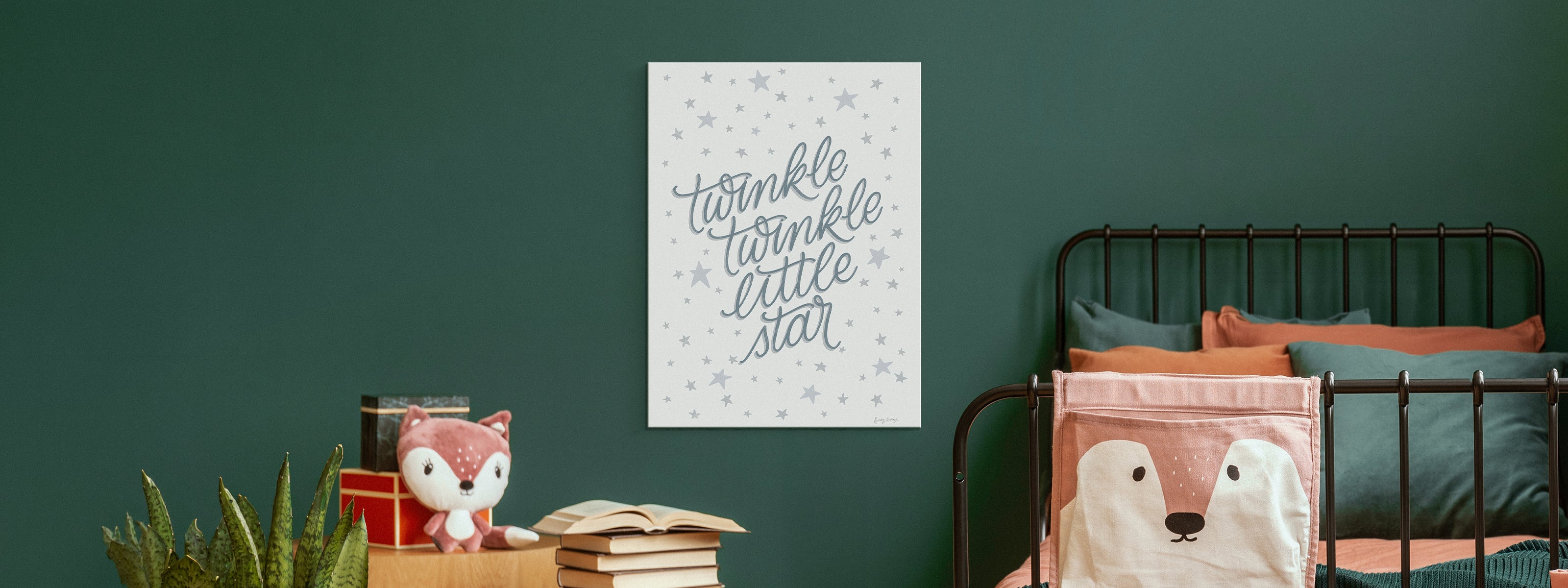
Choose nursery and kids’ room wall art in three steps: start with what the room is for, then choose for the child who lives there, then pick a subject they won’t outgrow. A nursery is a sleep room first, so lead with calm. A child’s bedroom is about identity, so let it reflect who they are. Favor real, lasting subjects — animals, nature, the night sky, places, story — over passing themes, and the room grows with the child instead of against them.
Decorating a child’s room is the one decorating decision where the person choosing the art isn’t the person who lives with it — and the occupant changes faster than in any other room in the house. That’s what makes it feel high-stakes. The good news: you don’t have to predict who your child becomes. You just need a way to decide. Here’s the one we use.
Every piece is designed in California and hand-made to order by Fine Art Canvas, making canvas art since 1989. Free U.S. shipping over $100, 90-day returns, and a 1-year warranty on every order.

Kids’ Room Wall Art — At a Glance
- Room first: A nursery is a sleep room — lead with calm. A child’s bedroom is about identity — let it reflect who they are. A playroom is where energy belongs.
- Child, not theme: Choose for the child who lives there — the dreamer, the explorer, the athlete — not for a matched set or a trending theme.
- Subject over phase: A real animal, a real place, a real sky lasts; a cartoon character or baby motif does not. Pick the subject, and the room grows with the child.
- One anchor: Start with one piece you genuinely love, and let the room build around it — not around a kit.
- Safe and sized: Span about two-thirds of the furniture below, and keep heavy framed glass off the wall directly above a crib.
- Seven guides below: Gentle & Calm, Storybook & Whimsical, Adventure & Imagination, Educational, Sports, Boys’ Room, and Girls’ Room — each one a different route to a room that fits.
In This Guide
Which Child Is This? Start Here
“The room’s first job is sleep — a nursery or a sensitive sleeper.”
Start with Gentle & Calm Nursery. Calm, dreamy, soft-colored art for sleep-first rooms — gentle animals, moons and stars, quiet skies.
“My child lives in stories and imagination.”
Start with Storybook & Whimsical. Storybook scenes, gentle whimsy, a little magic — art that grows into a reader’s imagination.
“My child is curious about the real world — maps, mountains, the outdoors.”
Start with Adventure & Imagination. Real places, real landscapes, real wonder — for the child who wants to see what’s out there.
“My child loves discovering how things work.”
Start with Educational. Alphabets, numbers, world maps, the night sky — learning that looks like art, not homework.
“My child is energized by movement and the joy of play.”
Start with Sports. The sport they love, captured as real art — a subject that carries from a kid’s room to a teen’s.
“I’m searching by boys’ room or girls’ room.”
A useful door — but the room works best when it’s built around the child’s interests, not the label. Start here, then route to what they love. Girls’ Room guide · Boys’ Room guide
Shopping by “boys’ room” or “girls’ room”? Those are useful doors, but they’re not the real axis. A girl who loves dinosaurs belongs in Adventure; a boy who loves the night sky belongs in the soothing, story-led pieces. Pick the interest above that sounds like your child, and let the label fall away — that’s the choice that still fits in five years.

Gentle & Calm
Sleep-first art — soft palettes, gentle animals, moons and stars for nurseries and sensitive sleepers.
Explore Gentle & Calm →
Storybook & Whimsical
Story-led scenes, gentle whimsy, and a little magic for the child who lives in stories.
Explore Storybook & Whimsical →
Adventure & Imagination
Real places, real landscapes, and real wonder — maps, mountains, the wide outdoors.
Explore Adventure & Imagination →
Educational
Curiosity-first art — alphabets, world maps, the night sky — learning that looks like art.
Explore Educational →
Sports
The sport they love, captured as real art — movement, joy, and values on the wall.
Explore Sports →

Boys’ & Girls’ Room
Start with the label, then route to interests. The room fits best when it reflects who they are.
Boys’ Room → · Girls’ Room →Start with the Room’s Purpose
Most guides jump straight to themes — safari, woodland, boho. Start one step earlier. Ask what the room is actually for, because that decides whether the art should soothe or energize before you ever pick a subject.
The Nursery Is a Sleep Room — for the Baby and for You
A newborn can barely focus on the wall for the first few months, so early on the art’s real job isn’t to stimulate the baby. It’s to settle the room: for naps, for bedtime, and for you during 3 a.m. feeds. That points to calm. Soft palettes, gentle subjects, low visual noise. Save the bright, busy, high-energy pieces for the playroom, where stimulation belongs. If you want one rule for a nursery, it’s this: choose the thing you’d want to look at while rocking a baby back to sleep.
A Child’s Bedroom Is About Identity
Once it’s a big-kid bedroom, the job flips. Now the room is where a child builds a sense of self — independence, imagination, the first things they’d call “mine.” Here the art should reflect them, and they should have a say. This is the room where their interests lead.
Shared Rooms and Playrooms Have Their Own Logic
In a shared room, give each child one piece that’s clearly theirs over their own bed, then let a neutral subject tie the room together. In a playroom, you finally have permission to go bright and busy — it’s the one kids’ space built for energy, not rest. Neither needs a matched set; it needs a clear focal point per zone.
Choose for the Child, Not the Trend
Here’s the quiet truth behind every “they grow up so fast” worry: the routes above aren’t really styles. They’re children. Find the one that sounds like yours, and the style takes care of itself — each links to the full guide for that kind of child.
Choose What Will Last
This is where “they’ll just outgrow it” gets solved — not by spending less and swapping more, but by choosing better in the first place. The trick is to separate the subject from the phase.
A phase is a baby motif, a cartoon character, a trend color — it has an expiration date built in. A subject is a thing the child actually loves: a real fox, a sailboat, the planets, a horse, a forest. Subjects don’t expire. A genuinely good piece of art about a real subject works over the crib at one, over the desk at seven, and — moved down the hall — in a hallway or guest room at sixteen. The same elephant that watched over the nursery can hang in a teen’s room without anyone calling it babyish, because it was never “baby art.” It was just good art a child happened to love.
That’s the whole reframe: you’re not decorating a baby’s room. You’re choosing the first art a person grows up with. Choose the subject, and the room grows with the child by default.
The kids’ room artwork checklist: Room first — is this room for sleep, identity, or play? Child, not theme — does this piece point to who my child is becoming, or just match the bedding? Subject over phase — will the thing it depicts still feel right in five years? One anchor, not a matched set — do I have one piece I genuinely love? Their voice (when they have one) — is my child old enough to help choose? Safe and sized — is it the right size for the wall, and safe for where it hangs?
Pieces That Show the Idea
Six pieces, one for each kind of child — each chosen as real art with a lasting subject, not a baby version of it. That’s the standard to shop by.


Size and Crib Safety
Size is where good intentions go wrong — almost always by going too small. A simple rule covers most walls.
| Where It Hangs | What to Aim For |
|---|---|
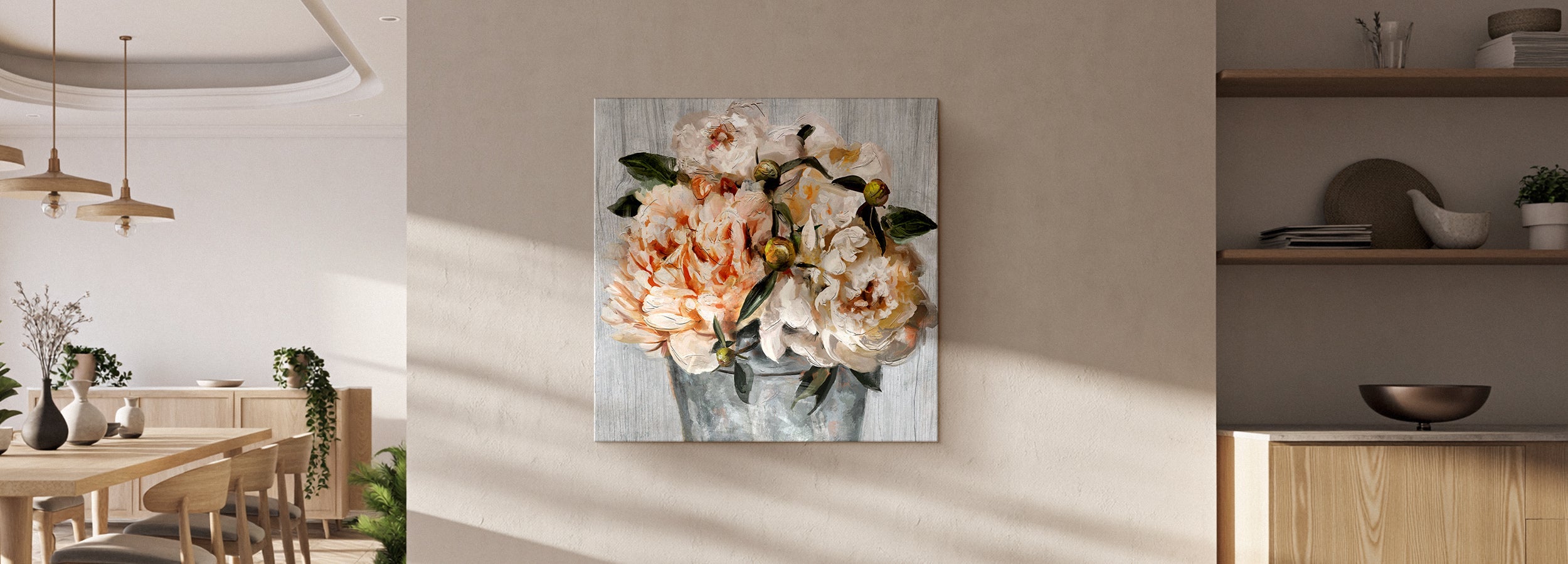
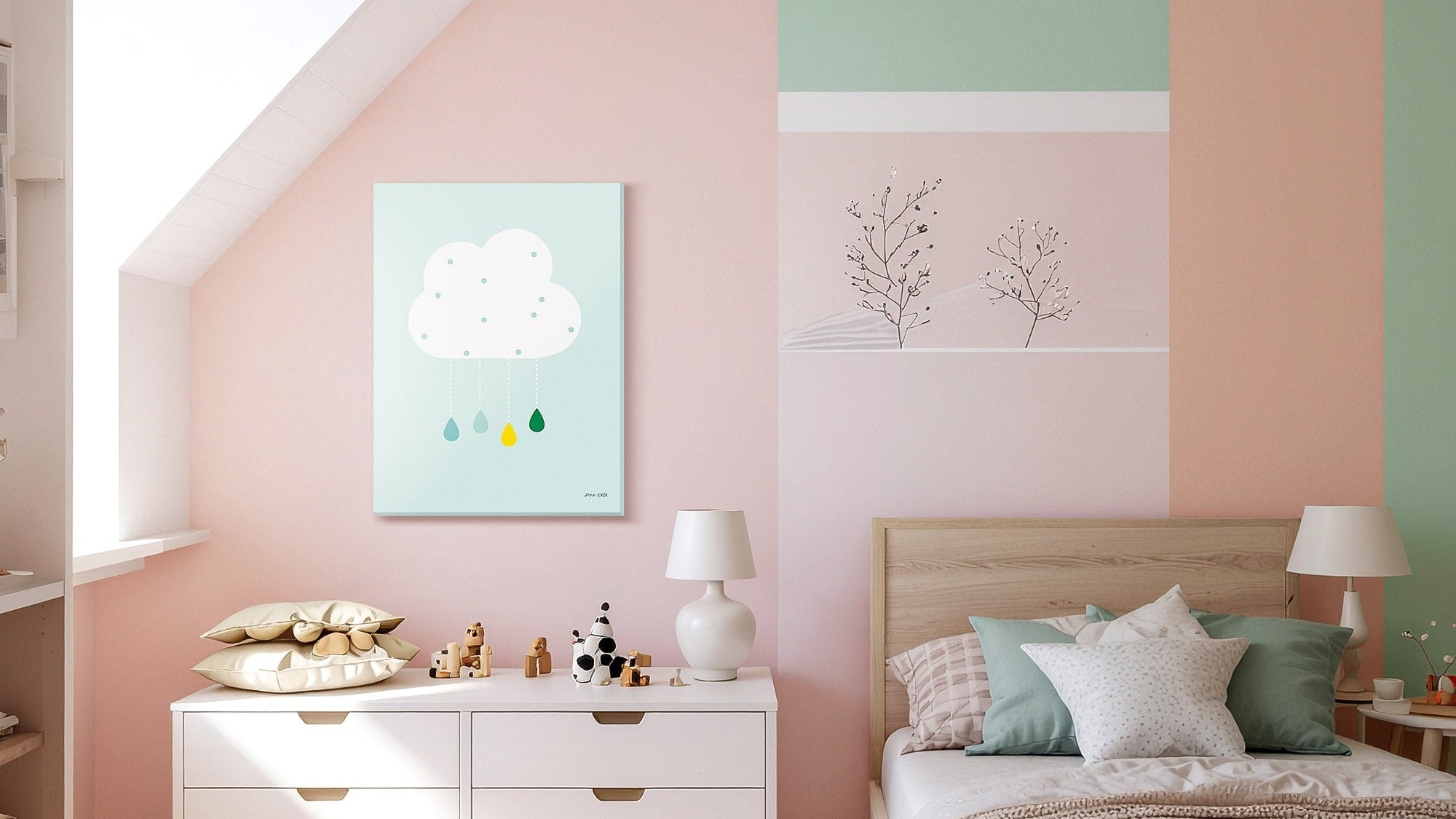
| Over a crib, dresser, or bed | Art that spans roughly two-thirds to three-quarters of the furniture’s width. A piece that’s too small floats and looks like an afterthought. |
| Hanging height | Center the art about 57 to 60 inches from the floor for a standard wall. In a toddler or big-kid room, hanging a touch lower — nearer their eye level — invites them in. |
| Gallery instead of one piece | Treat the whole grouping as a single shape and apply the same two-thirds rule to that shape’s outer width. |
For room-by-room measurements and a printable approach, see our Wall Art Size Guide.
Keep heavy framed glass off the wall directly above a crib. A gallery-wrapped canvas is a sound choice here for exactly this reason: it’s lightweight and has no glass to worry about. Better still, place the art on a feature wall the crib doesn’t sit against, and secure anything you hang firmly to the wall.
Common Mistakes (and the Fix)
Decorating for the baby-shower photo. The room is lived in for years, not photographed once. Fix: Choose for the daily life of the room, not the first picture of it.
Matching everything to a theme. A fully matched set dates all at once. Fix: Let one piece you love lead, and let the rest of the room flex around it.
Treating the nursery like a gallery to stimulate a newborn. It’s a sleep room first. Fix: Lead with calm; move the high-energy art to the playroom.
Buying disposable because “they’ll outgrow it.” Cheap and disposable is what makes art disposable. Fix: One good piece outlasts a dozen swaps — and costs less in the end.
Going too small. The most common sizing error by far. Fix: Size up to two-thirds of the wall or furniture below it.
Every piece is designed in California and hand-made to order. Browse the full collection and find the one that fits.
Shop Kids’ & Nursery ArtYour Questions, Answered
Will this artwork feel too babyish in a few years?
Only if it’s tied to a phase rather than a subject. A cartoon character or a “baby” motif ages out; a real animal, a landscape, or a night sky doesn’t. Choose the subject your child loves rendered as genuine art, and it reads as their taste maturing, not as leftover baby decor.
Will my child outgrow it?
Their interests will shift — that’s certain. The art doesn’t have to. A piece chosen around an enduring subject keeps working as they grow, and if a specific passion fades, a good canvas simply moves to another room rather than the donate pile.
Is it safe to hang art above a crib?
Keep heavy framed glass off the wall directly above the crib. A lightweight gallery-wrapped canvas with no glass is the safer choice, and the safest layout of all puts the art on a wall the crib doesn’t sit against. Whatever you hang, anchor it firmly.
Should I let my child help choose the art?
Yes, once they’re old enough to have an opinion — usually around three or four. Giving them a real say (from a short list you’re happy with) builds ownership, and a room a child helped choose is a room they keep loving. For a nursery, the choice is yours, made for calm.
Does the wall art have to match the bedding or theme?
No — and chasing a perfect match is what dates a room. Aim for art that shares a mood or a color or two with the room, not a piece that disappears into a matched set. One strong, slightly independent piece looks more considered than everything coordinating.
What size art should go above a crib or kids’ bed?
Aim for a piece — or a grouping — that spans about two-thirds to three-quarters of the width of the crib, bed, or dresser below it, centered around 57 to 60 inches from the floor. Most kids’ rooms err too small; sizing up almost always looks better.
The best children’s art isn’t chosen for the child your baby is today — it’s chosen for the person they’re growing into, around a subject that grows with them.


Leave a comment
This site is protected by hCaptcha and the hCaptcha Privacy Policy and Terms of Service apply.