
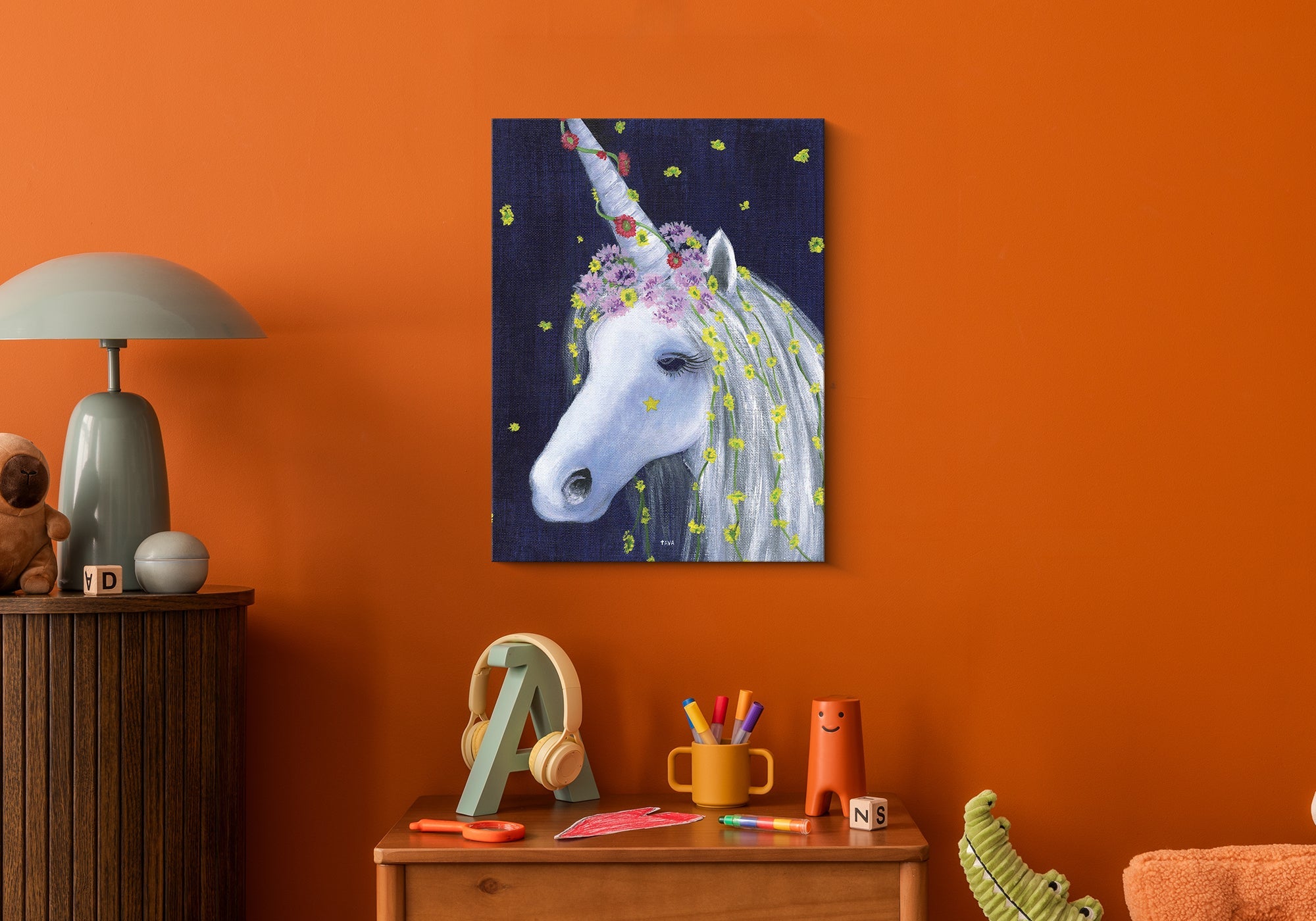
Storybook & Whimsical Wall Art for Kids
Storybook and whimsical art is for the child who lives in stories. The single best move is to choose an open, imaginative world — a tale-like scene, a dreaming creature, a playful character of no particular brand — over a licensed cartoon of the moment. Open worlds keep feeding a child's imagination as it grows; a branded character expires the day the obsession does. Pick the warmth that matches your child, anchor the room with one piece, and let the story stay open.
You're not choosing a decorating style here. You're choosing art for a child who lives in stories — and the goal is to feed that imagination without locking it to one passing character.
Some kids narrate their whole day. They make up worlds at the bottom of the stairs, name every animal, and ask for one more chapter every single night. If that's your child, this is their art. Storybook and whimsical pieces aren't two separate styles to choose between — they're one idea seen two ways: art that hands a child a world and says, "what happens next is up to you."
Every piece is designed in California and hand-made to order by Fine Art Canvas, making canvas art since 1989. Free U.S. shipping over $100, 90-day returns, and a 1-year warranty on every order.

Storybook & Whimsical — At a Glance
- Best for: The child who lives in stories — readers, world-builders, pretend-players
- Mood: Imaginative, warm, a little magic
- Palette: Warm and inviting — soft and dreamy, or bright and playful, to match the child
- Subjects: Tale-like scenes, dreaming creatures, enchanted villages, whimsical characters
- Avoid: Licensed cartoon characters of the moment — they date the day the phase passes
When Your Child Lives in Stories
Reach for storybook and whimsical art when the child is a dreamer first — when imagination is the thing you most want the room to protect. This isn't tied to one age. A toddler who loves being read to and an eight-year-old writing their own comics are the same child a few years apart, and the same kind of art serves both: open enough to grow into, warm enough to love now. The room becomes less a backdrop and more a place where stories start.
Storybook or Whimsical: How to Tell Them Apart
People search for these as two styles, so here's the honest distinction — then the reason it barely matters.
Storybook leans narrative. There's a scene, a sense that something is happening or about to: an enchanted village, a creature on a journey, a once-upon-a-time moment frozen mid-tale.
Whimsical leans playful. It's quirky and lighthearted — a dog dreaming of bones, a cow over the moon, a burst of joyful color — less a story than a wink.
Both do the same job: they feed imagination. So don't agonize over the label. Choose the warmth that fits your child — the cozy dreamer or the playful jokester — and you've chosen correctly.
✓ This Is Your Child If…
- They live in stories — making up worlds, loving to be read to, drawing their own characters
- You want the room to feed a vivid imagination
- You want art that grows with a reader, not a single obsession
✗ Consider Another Route If…
- The room's first job is sleep — see Gentle & Calm
- Your child is all action and exploration — see Adventure & Imagination
- They're curious about the real world — see Educational
Five Moves for a Dreamer's Room
1. Choose an Open World, Not a Closed Character
This is the whole game. A tale-like scene invites a child to step in and keep the story going. A branded character hands them someone else's story — and ends it the moment the phase passes. Open worlds are why a dreamer's room still works in three years.
2. Let One Storybook Scene Anchor the Room
Pick a single piece with the most story in it and build around that. One rich imaginative image beats a wall of small ones.
3. Match the Warmth to the Child
A gentle dreamer wants soft, cozy, slightly hushed art. A playful kid wants brighter, funnier, more energetic pieces. Same idea, dialed to temperament.
4. Leave Room for the Story to Change
Resist the fully themed character set. A child's favorite world shifts; art that's about imagination itself, rather than one franchise, keeps up.
5. Hang It Where the Stories Happen
Over the bed or above the reading nook, a little nearer a child's eye level than an adult's — so it belongs to them, not to the room's grown-ups.
Size it right: aim for a piece — or a small grouping read as one shape — that spans about two-thirds to three-quarters of the bed, headboard, or reading nook below it, centered roughly 57 to 60 inches from the floor (lower over a low reading corner). For exact measurements, see the Wall Art Size Guide.
Every piece is designed in California and hand-made to order on gallery-wrapped canvas — lightweight, with no glass to worry about. Free U.S. shipping on orders over $100, 90-day hassle-free returns, and a 1-year warranty on every order.
Story-Led Pieces to Start From
Six imaginative pieces — storybook scenes and whimsical wonders alike — each an open world rather than a closed character.


Shop Storybook Dreams Shop Whimsical & Playful
Common Mistakes (and the Fix)
Buying the character of the month. A licensed cartoon is the fastest-dating thing you can hang — it's tied to a phase that will pass. Fix: Choose an open imaginative world that feeds the same love of story and outlasts the obsession.
Going fully themed. A wall-to-wall single-world set leaves no room for the child's imagination to wander. Fix: Anchor with one piece and let the rest breathe.
Mistaking babyish for imaginative. Imaginative art doesn't have to be cutesy. Fix: Choose pieces with real craft and you'll get art a school-age reader still loves.
Picking the label over the child. Don't choose "storybook" or "whimsical" because of the category name. Fix: Choose the warmth — cozy or playful — that matches who your child is.
Going too small. The most common sizing error. A small piece floating over a bed reads as an afterthought. Fix: Size up to two-thirds of the furniture below.
Every piece is designed in California and hand-made to order. Find the story that fits.
Shop Storybook DreamsYour Questions, Answered
What's the difference between storybook and whimsical art?
Storybook art is narrative — tale-like scenes and characters that feel mid-story. Whimsical art is playful — quirky, lighthearted, more a wink than a plot. Both feed imagination, so choose by temperament: the cozy dreamer leans storybook, the playful jokester leans whimsical, and plenty of kids love both.
Should I buy art of my child's favorite movie or TV character?
It's the fastest-dating choice in the room. A licensed character is tied to a specific obsession, and obsessions pass — often within a year. Art that captures an open, imaginative world feeds the same love of story but keeps working long after the favorite show changes. If you want the room to last, choose the world, not the character.
Is storybook art only for little kids?
No. Choose imaginative pieces with genuine craft rather than babyish ones, and they grow with a reader well into the school years. A rich storybook scene reads as imaginative at four and still at ten; it's cartoonish, branded art that ages out.
How do I choose between cozy and lively pieces?
Match the child and the room. A gentle dreamer, or a room you want calm at bedtime, wants softer, cozier pieces. A high-energy kid, or a playroom, wants brighter and funnier. Same imaginative idea, dialed up or down.
Will this work in a shared room?
Well — give each child their own story piece over their own bed, then let a shared warmth or palette tie the room together. Two different worlds, one cohesive room, and each child gets something that's clearly theirs.
What size should go over a bed or reading nook?
Aim for a piece, or a grouping read as one shape, that spans about two-thirds to three-quarters of the width of the bed or nook below it, centered around 57 to 60 inches from the floor — a little lower over a low reading corner so it sits at the child's level.
You're not choosing a storybook style — you're choosing art for a child who lives in stories, and the best of it leaves the story open for them to finish.


Leave a comment
This site is protected by hCaptcha and the hCaptcha Privacy Policy and Terms of Service apply.