
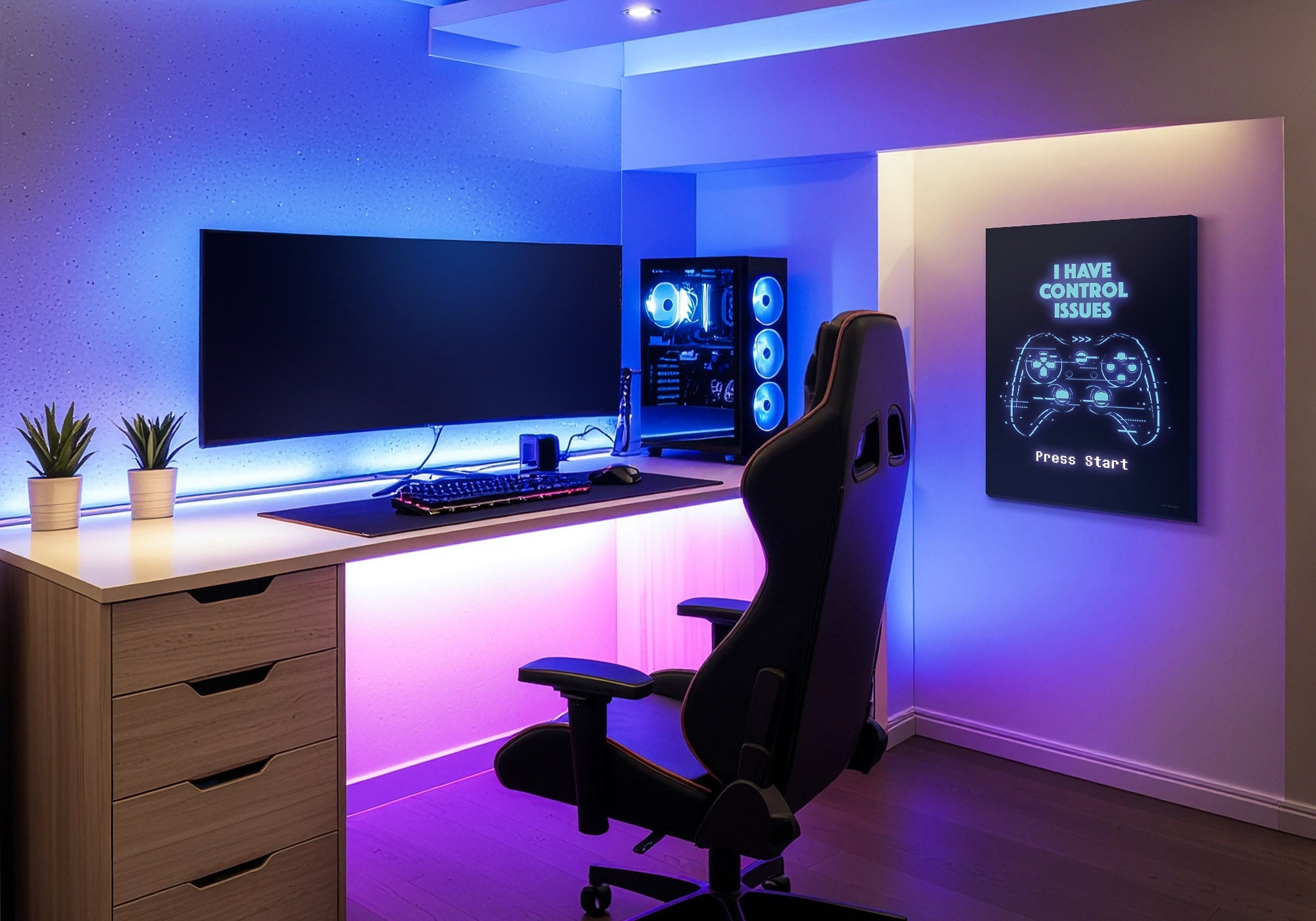
Gamer Aesthetic Wall Art - Energy and Identity for Gaming Setups
The best gamer aesthetic wall art gives the gaming space a visual identity that holds its own against the equipment. Skip the obvious choices - neon signs, branded controller posters, RGB-everything - and choose pieces with genuine visual weight that make the room feel designed rather than assembled. Equipment builds a setup. Design builds a room.
Gaming setups get built piece by piece. The desk arrives, then the monitors, then the peripherals, then the chair. Each decision gets made for performance reasons, and the room gradually becomes more capable - but it rarely becomes more intentional. By the time the walls come up, the equipment is already in place, and the instinct is to reach for whatever most obviously announces the space: neon signs, branded gaming posters, LED-framed controller prints.
The result is a room that looks assembled, not designed. The gear is great. The walls are an afterthought that describes the gear. And the space never quite crosses from setup to room.
This guide is about crossing that line. Not with gaming decor, but with art that gives the space a visual identity independent of the equipment - pieces with enough presence to hold their own against dual monitors, ambient lighting, and a premium desk setup. Everything here is Designed in California and hand-made to order by Fine Art Canvas - making canvas art since 1989, with free 90-day returns and a 1-year warranty on every piece.

Gamer Aesthetic at a Glance
- Emotional destination: Focused immersion, elevated setup
- Works best in: Dedicated gaming rooms, streaming setups, home office gaming hybrids, entertainment rooms with a gaming primary use
- The core decision: Art that gives the room visual identity vs. art that describes the equipment
- What to look for: Bold compositions with visual weight, strong color contrast that reads well in ambient/gaming lighting, pieces that feel current without being brand-dependent
- What to avoid: Novelty gaming signs, branded peripheral art, LED neon signs that compete with the setup's existing lighting
The Setup vs. the Room
There is a meaningful difference between a gaming setup and a gaming room. A setup is a collection of hardware and peripherals organized for play. A room is a space that has been designed - where the decisions about what goes on the walls, how the lighting works, and how everything fits together were made with the whole space in mind, not just the desk.
Most gaming spaces stop at the setup. The walls either stay empty or get the most available signals: a neon sign, a poster of a game controller, some branded merchandise hung as decoration. These choices are not wrong - they just describe the setup rather than extending it. The room gets defined by its equipment instead of by a design sensibility.
If someone walked into this room without knowing you were a gamer, would the art make the space feel considered? Or would it only make sense in context - once they saw the monitors and the desk? Art that works in the room regardless of the setup is doing design work. Art that needs the setup to make sense is doing description work. Both can live in the same space, but the piece anchoring the room should be the first kind.
The pieces that elevate gaming spaces are not usually the most obviously gaming ones. They are pieces with genuine visual weight - bold compositions, strong color presence, the kind of scale and confidence that holds a wall when the monitors are off and the room is just a room. Gaming culture has a distinctive visual language: dynamic energy, high contrast, bold subject matter. That language can be expressed through genuine art that happens to speak to it, rather than through merchandise that labels it.
When Gamer Aesthetic Is the Right Direction
This approach works for any gaming space where the goal is a room that feels permanent and intentional - not a temporary setup that might get disassembled. The distinction matters because the art choices are different depending on that intent.
✓ Works Well When
- The gaming space is a dedicated room or a significant portion of a room - the setup is permanent, not portable
- You want the space to feel elevated and designed, not just functional - the room should make an impression beyond the equipment
- The setup already has strong visual elements (desk, monitors, ambient lighting) and the walls need to hold their own against those rather than disappear next to them
- You play, stream, or create in the space regularly and want the room to reflect that seriousness of purpose
- You're drawn to gaming culture's visual language - dynamic energy, bold contrast, subject matter with cultural weight - but want that expressed through art rather than merchandise
✗ Consider Something Else If
- The setup is in a shared room where gaming is one of several uses - the art needs to serve the whole room, not signal a single activity. See the Entertainment Room guide for that approach
- The nostalgia angle matters more than the current gaming identity - if you're drawn to the analog era and classic game culture, Retro Arcade serves that emotional register better
- The room's primary entertainment use is film or cinema rather than gaming - the atmosphere needs are different
The hardest thing to get right in a gaming space is scale. The desk, the monitors, and the chair create a lot of visual mass at seated height. Art hung above that level - and sized too small - just floats. It reads as decoration rather than design. One piece at 36 inches wide or larger, placed on a side wall or the wall behind the seating, anchors the room in a way that a cluster of smaller pieces never will. The scale competition in this room is intense; the art has to earn its place against the setup itself.
Five Moves That Work
The practical decisions that separate a gaming space that feels designed from one that looks like equipment in a room.
1. Choose visual identity over literal gaming reference
The most effective pieces in a gaming space are often not explicitly about gaming. A bold character study - a figure rendered with genuine artistic confidence - has more presence on a wall than a print of a game controller. A high-contrast abstract composition reads more powerfully than a neon sign in the shape of a gaming logo. The room's identity as a gaming space is established by the setup; the art's job is to establish the room's visual character. When the art describes the setup, the room has no character of its own.
2. Think about what the art competes with
Gaming setups generate a lot of visual energy: screen glow, ambient lighting, RGB effects, the geometry of monitors and peripherals. Art placed in this environment has to hold its own against all of that. Detailed, intricate pieces get lost in the visual noise. Muted or pastel pieces disappear against dark walls and bright screens. The pieces that succeed have strong compositional simplicity - a bold focal point, high contrast, a clear color presence - that reads from across the room even when the setup is active.
3. Place art on side walls, not above the primary screen
The wall directly above or behind a gaming monitor is already dominated by the screen. Placing art there creates a visual competition that the art will lose every time the monitor is active. Side walls - particularly the wall the player faces when swiveling away from the setup - are where art works best in gaming rooms. They frame the space without interfering with the active use zone. A large-format piece on the side wall makes the room feel finished; the same piece above the screen makes it feel cluttered.
4. Let the art work in the dark
Gaming rooms often operate with ambient or task lighting rather than full overhead light. Art needs to function in those conditions. High-contrast pieces - dark backgrounds with bright focal points, or bold color against neutral grounds - hold up much better in low-light conditions than pieces with fine detail or soft gradients. Canvas texture also matters here: gallery-wrapped canvas has a matte surface that does not create glare against screen or LED lighting, which makes it a more practical choice than framed glass prints in a gaming environment.
5. Match the room's energy, not just its subject matter
Gaming culture has a genuine visual sensibility: bold, dynamic, high-energy, with a sense of presence and intensity. Art that matches that energy - regardless of whether it depicts anything related to gaming - fits the room. A vivid portrait of a cultural icon, a bold abstract composition, a piece with dramatic scale and confidence - these work in gaming spaces because they share the room's register, not because they describe it. The art should feel like it belongs to the same visual world as the setup, not like a label applied to it.
Six Pieces From the Collection
Every piece below is hand-made to order from the Gamer Aesthetic collection. Selected for visual weight, bold contrast, and the kind of presence that holds a wall against an active gaming setup. Each is available as gallery-wrapped canvas, framed canvas, or framed print - pricing live at each product page.


Common Mistakes and the Fix
Neon signs and light-up displays have their place in gaming rooms, but they are lighting choices, not art. When they are the primary wall treatment, the room looks like a bar or a pop-up installation rather than a designed space. Fix: if you want neon energy, use canvas pieces that carry that visual register through color and composition rather than through actual light output. The Modern Neon guide covers how to do this well.
Game posters, branded peripheral packaging, and licensed merchandise are genuine expressions of gaming culture - but on a wall, they read as fan displays rather than room design. The distinction is between curating an identity and cataloguing a collection. Fix: choose pieces that capture gaming culture's visual energy through genuine artistic treatment, not through brand recognition. The art should earn its place on the wall on visual terms, not just on cultural ones.
Small prints above a gaming setup look like desk accessories hung on the wall. They are dwarfed by the monitors, the chair, and the overall mass of the setup below. Fix: scale art to the room, not to the desk. A piece 36 inches wide or larger on a side wall makes the room feel intentional. A piece 12 inches wide above a monitor just emphasises how much thought went into the equipment and how little went into the walls.
Highly detailed pieces, fine-line illustrations, and soft-palette art all lose in a room with active screen glow, ambient RGB lighting, and a visually busy desk setup. Fix: choose pieces with bold focal points, strong contrast, and clear visual hierarchy that reads at a distance. The art needs to hold its presence when the setup is in full use, not just when the room is quiet.
Ready to Finish the Room?
Browse the full Gamer Aesthetic collection - hand-made to order, Designed in California, with free returns on every piece.
Shop Gamer Aesthetic Wall ArtFrequently Asked Questions
What makes gamer aesthetic wall art different from gaming merchandise?
Gaming merchandise - branded posters, licensed character prints, peripheral packaging - expresses fandom and displays cultural loyalty. Gamer aesthetic wall art uses gaming culture's visual language (bold energy, high contrast, dynamic subject matter) to create a space that feels designed rather than collected. The best gamer aesthetic pieces earn their place on visual terms - composition, color, and presence - not just on cultural recognition.
What type of art works best in a gaming setup?
Pieces with bold compositions, strong color contrast, and clear visual hierarchy at a distance. Gaming environments generate a lot of visual competition: screen glow, ambient lighting, RGB effects. Art needs to hold its presence against all of that. Highly detailed pieces, soft palettes, and fine-line illustrations tend to get lost. Bold character studies, high-contrast abstracts, and pieces with strong focal points read well even when the setup is active.
Where should wall art be placed in a gaming room?
Side walls are the strongest placement for gaming room art. The wall directly above or behind the primary monitor is already visually dominated by the screen; art placed there competes with the monitor and loses when it is active. Side walls frame the space without interfering with the use zone. The wall the player faces when turning away from the setup is also effective - it becomes a visual anchor for the room rather than a competition with the equipment. See the Wall Art Size Guide for specific sizing guidance.
Does canvas wall art work in a gaming room with RGB lighting?
Gallery-wrapped canvas is one of the most practical formats for gaming rooms precisely because it has a matte surface - it does not create glare or reflections from screen light or LED setups, unlike framed glass prints. The canvas texture also adds visual warmth that can balance the hard-edged tech aesthetic of a gaming setup. Bold, high-contrast pieces on canvas tend to hold their visual presence in ambient lighting conditions better than pieces with fine detail or delicate palettes.
What size canvas is right for a gaming room?
Larger than you'd choose for most other rooms. A gaming setup creates significant visual mass at desk height; art hung above that level needs to scale up to compete. On a side wall, a piece 36 inches wide at minimum holds the space; 48 inches or larger makes a genuine design statement rather than just filling a gap. Multiple small pieces tend to read as decoration rather than design in rooms where the primary visual elements are already large and technical. For complete guidance, see the Wall Art Size Guide.
How is gamer aesthetic different from retro arcade wall art?
Gamer aesthetic is current and identity-driven - it reflects who plays now, in a setup that exists today. Retro arcade is nostalgic and warmth-driven - it celebrates a specific era of gaming culture through its visual language. Both serve gaming spaces, but they create different atmospheres. Gamer aesthetic aims for immersion and elevated presence; retro arcade aims for warmth and playful nostalgia. If you want the room to feel like a serious current setup, gamer aesthetic. If you want the room to feel like a love letter to a past era, see the Retro Arcade guide.
Equipment builds a setup. Design builds a room.


Leave a comment
This site is protected by hCaptcha and the hCaptcha Privacy Policy and Terms of Service apply.