
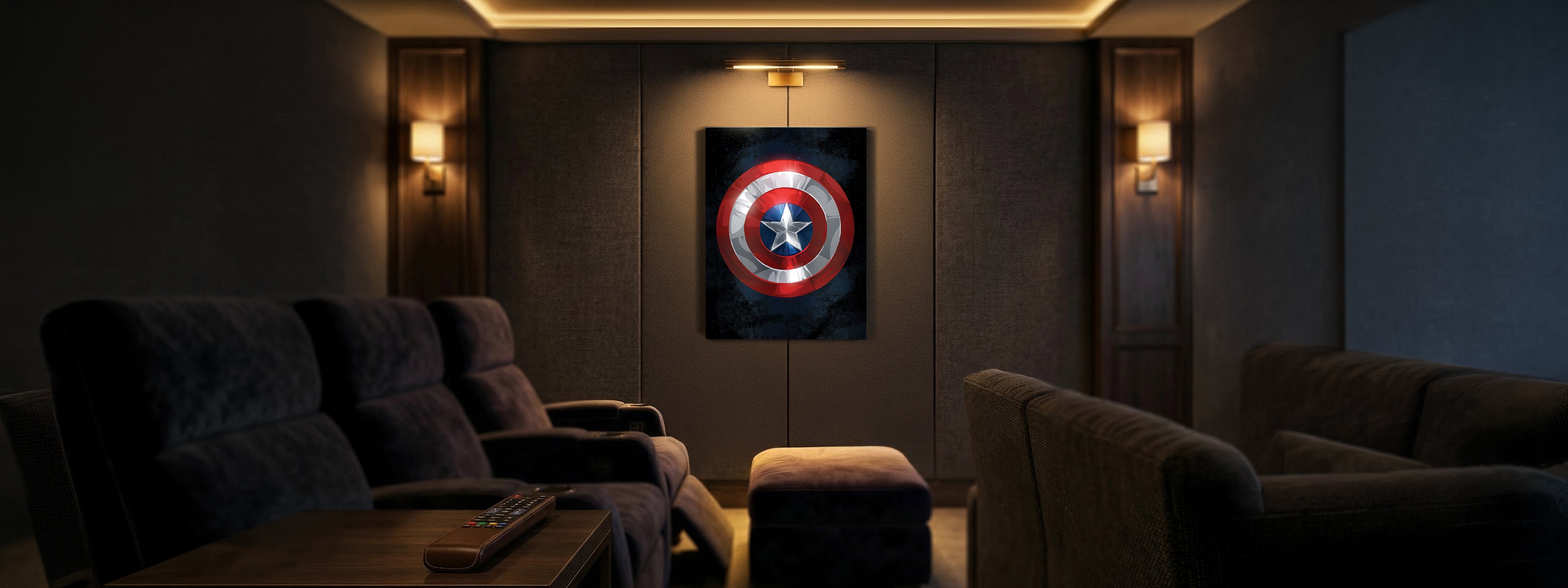
Entertainment Room Wall Art: The Complete Guide
The best entertainment room wall art sets the mood for shared experiences - not the theme for any one activity. Choose art that creates atmosphere your whole room needs rather than announcing what happens on the screen. For cinematic rooms, deep-toned dramatic pieces; for gaming setups, bold energy and identity; for social watch-party spaces, dynamic art that welcomes a crowd.
Entertainment rooms get more design attention than almost any other space in the house - and still end up with the worst walls. People spend thousands on the screen, the sound, the seating, and the lighting. Then they hang a movie-reel sign or a "GAME ROOM" LED and call it done. The walls become an afterthought to the equipment that was never supposed to be the room's whole personality.
This guide is for the entertainment room, media room, home theater, and game room - spaces that share one defining purpose: bringing people together to experience something. Whether that's a film, a match, a game night, or just a Sunday afternoon, the room exists to make that shared experience feel like it happened somewhere worth being. Wall art is what makes a room feel that way. The screen delivers the content. The walls deliver the room.
At Fine Art Canvas, we've been making canvas art since 1989 - Designed in California. Hand-made to order. These pieces are built for spaces people actually live in, not showrooms.

The Real Problem With Entertainment Room Walls
Most entertainment rooms are built in a specific order: screen first, then seating, then sound, then lighting, then - eventually, weeks or months later - the walls. By the time the walls come up, the budget is spent, the energy is spent, and the decision gets made quickly. Whatever's easiest wins.
That sequence makes sense for the equipment. It does not make sense for the room. Because the walls are not afterthoughts to the screen - they are the context the screen lives inside. A 75-inch display in a thoughtfully composed room and a 75-inch display in a bare box are genuinely different experiences, even before you hit play. The room itself shapes how immersive, how social, how welcoming the space feels. The art is doing that work every minute the room is in use - not just during the movie or the match.
The fix is not complicated. It starts with understanding what the walls are actually for.
The Two Mistakes Most People Make
Both mistakes follow naturally from building around the screen. Understanding them makes the right choice obvious.
The room is finished and fully functional before anyone thinks about what goes on the walls. The walls then get whatever is left over: nothing, or something grabbed quickly to fill the space. A room that was designed around the screen ends up feeling incomplete because the screen has a great context for what it shows, but no context for the room itself.
The customer finally turns to the walls and reaches for the most obvious answer: art that declares the room's purpose. Movie-reel signs. "GAME ROOM" lettering. Sports bar graphics. These pieces work when the screen is showing exactly that thing. The rest of the time - between games, after the movie ends, when guests are arriving - they just announce a function that isn't currently happening. The room feels like a venue instead of a home.
The underlying issue with both mistakes is the same: the art is chosen based on what the room does rather than what the room should feel like. A great entertainment room doesn't feel like a sports bar or a movie theater lobby. It feels like the best version of your home - a place people want to settle into and stay.
Before choosing any piece, ask one question: does this art set a mood the room needs, or does it describe a function the screen already handles? If the answer is "describe a function," look for something that creates atmosphere instead. The screen tells people what they're watching. The walls tell people where they are.
What the Right Art Actually Does
Entertainment rooms aren't built for watching things. They're built for experiencing them together. That distinction changes everything about how the walls should work.
A room built for shared experiences needs walls that hold the room together across every use - not just one. Movie night, game night, the watch party, the lazy afternoon, the gathering. The right art creates an atmosphere that makes all of those feel better without being specifically about any of them. It sets a mood: immersive, energetic, welcoming, playful, dramatic. That mood shapes how people feel in the room from the moment they walk in, regardless of what's on the screen.
This is not about choosing generic or neutral art. It's about choosing art that is doing real atmospheric work rather than making a literal statement. A bold cinematic canvas on a dark wall creates genuine drama. A set of dynamic sports compositions brings real energy to a watch-party room. The art is still specific and intentional - it just earns its place through atmosphere rather than through declaration.
Atmosphere, not announcement. Art that creates a feeling earns its place every day. Art that announces a purpose only works when that purpose is active.
Find Your Style: Seven Approaches
Every entertainment room is built around a primary use - the thing it does most of the time. That primary use determines the atmosphere the room needs, and the atmosphere determines what the walls should do. Here are seven distinct approaches, each with a clear rationale for readers who want to go deeper.
Which Style Is Right for Your Room?

Retro Arcade
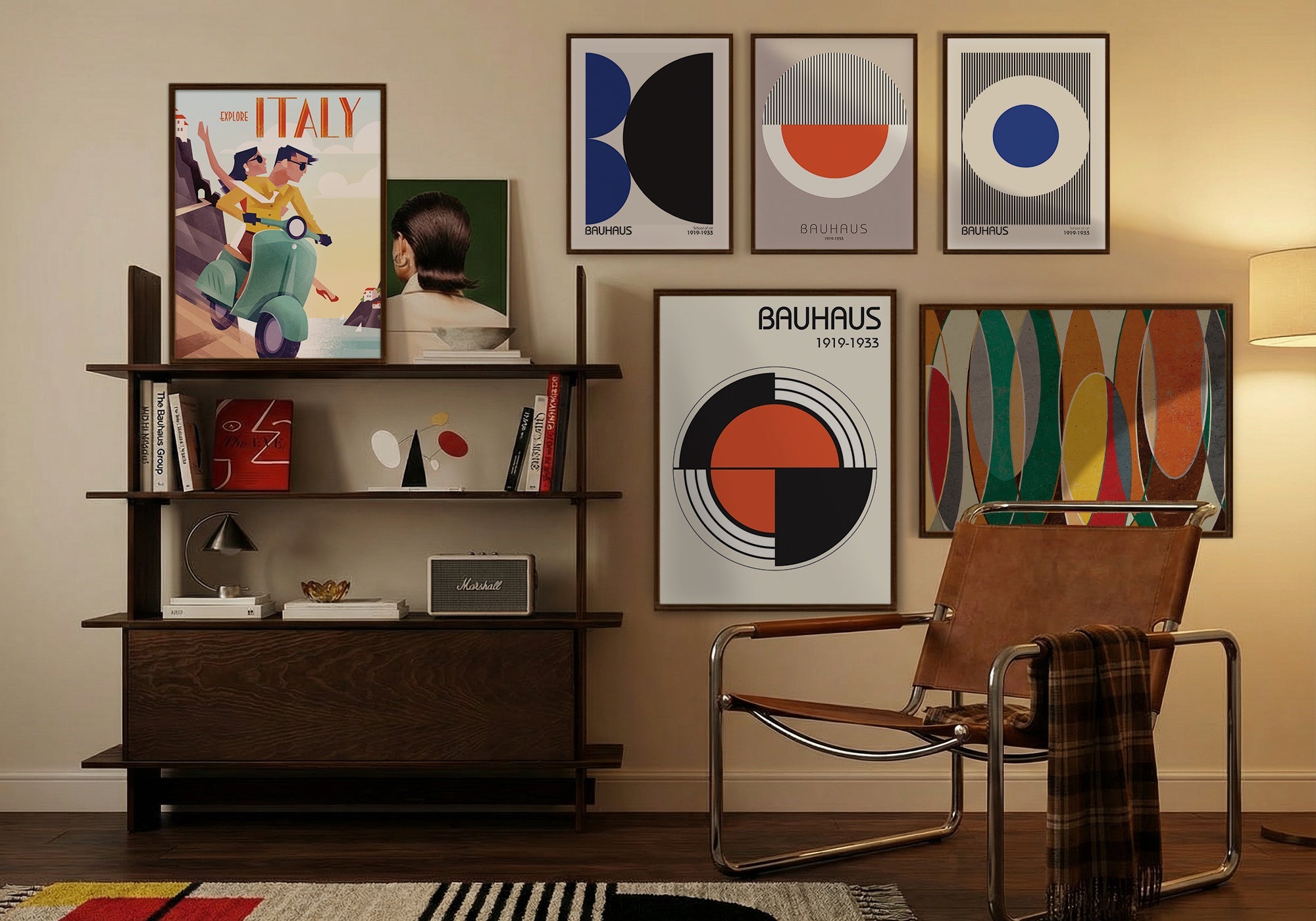
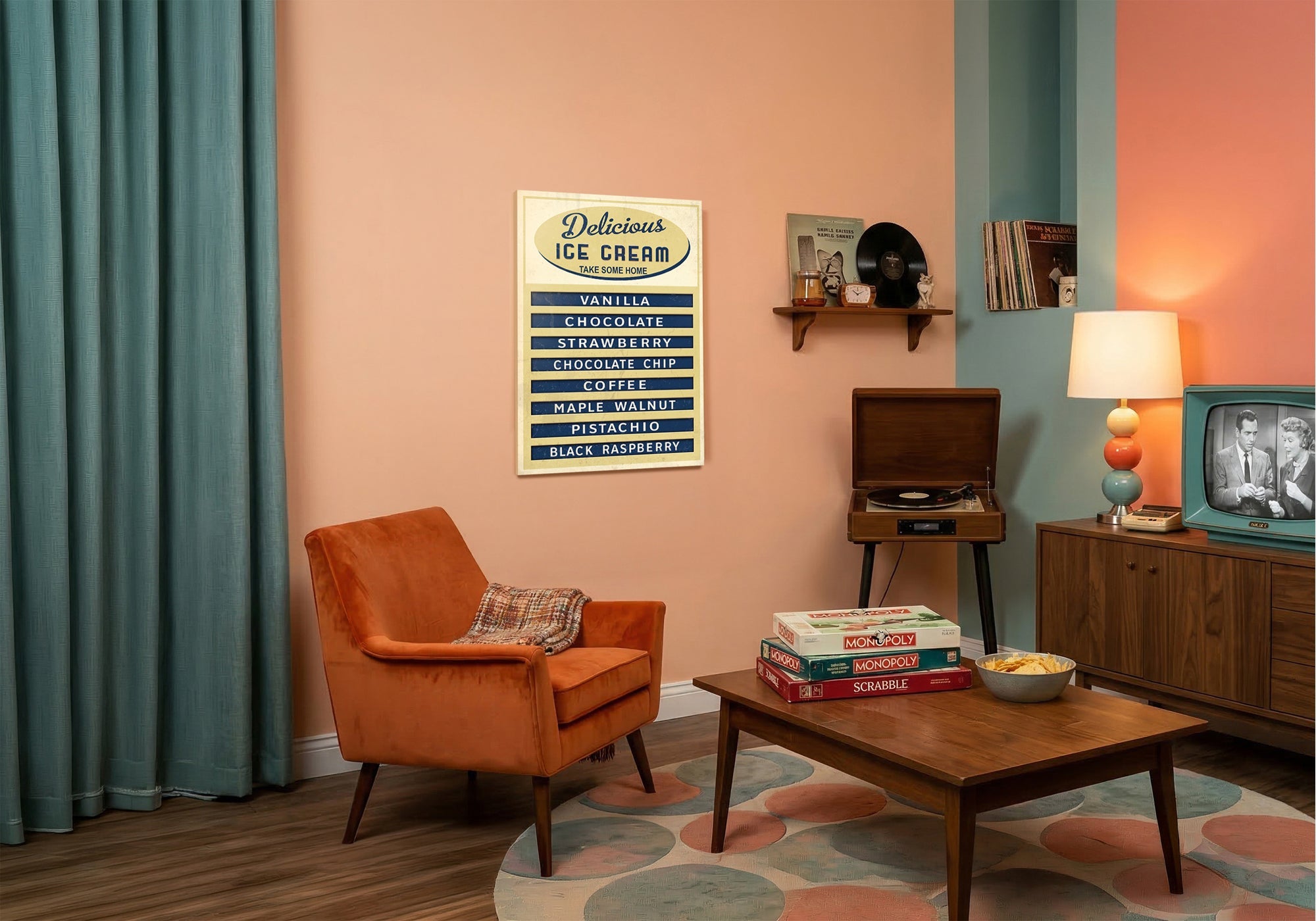
Nostalgic warmth with modern restraint. Playful and specific without being a nostalgia pile - the curated version of an era you love.
Shop the collection →
Sports Fan Zone
Social atmosphere for the watch party. Different from a personal tribute - this art makes guests feel the energy of a shared event the moment they arrive.
Shop the collection →
Gamer Aesthetic
Bold energy and identity for gaming setups. The right art elevates the room beyond its equipment and signals that this space was designed, not assembled.
Shop the collection →
Music Icons
Legendary sound and timeless style. Music art earns its place when it captures the feeling of an artist or era, not just a recognizable face.
Shop the collection →
Pop Culture
Bold graphics, vibrant energy, icons that spark conversation. Art that's specific enough to mean something and broad enough to welcome any guest.
Shop the collection →
Modern Neon
Electric atmosphere when it's handled as art, not signage. Bold color and luminous energy work best as a focused accent rather than an overload of competing light.
Shop the collection →
Cinema Style
Dramatic, moody, storytelling pieces. Works in rooms where film is the primary experience and the atmosphere should feel immersive from the moment you walk in.
Shop the collection →Not sure?
Browse the full collection across all seven styles and the broader room aesthetic.
Browse the full collection →Featured Pieces From the Collection
Every piece below is hand-made to order. These examples show how different entertainment interests can anchor a distinct zone within the room — each chosen to make a statement, not simply fill a wall.


Size and Placement for Entertainment and Media Rooms
Entertainment rooms have a challenge most other rooms don't: the screen takes up a significant portion of the wall's visual weight. Art placement has to work around - and in relationship with - that dominant element.
| Wall / Situation | Recommended Size | Notes |
|---|---|---|
| Side wall (no screen) | 36–48” wide or larger | Side walls are the primary art walls in media rooms. Go large - they need to hold their own against the visual weight of the screen across the room. |
| Above the screen | 60-75% of screen width | Art above a large TV works best when it's proportional to the screen, not competing with it. Keep it centered and 4-8 inches above the top of the display. |
| Behind seating (back wall) | Large format or gallery arrangement | The back wall is what viewers face when they look away from the screen. A single large statement piece or a curated grouping both work well here. |
| Dark / moody room | Any size - prioritize contrast | Pieces with lighter tones, strong color contrast, or high visual clarity hold up better in dim media room lighting than detailed or muted compositions. |
For a complete room-by-room sizing guide, including canvas size calculators and orientation rules, see the Wall Art Size Guide.
Common Mistakes and the Fix
Gallery walls of small frames look cluttered in rooms where the screen is already the dominant visual. Each piece loses impact, and the whole arrangement feels busy. Fix: one or two large statement pieces on the side walls, chosen for atmosphere rather than completeness.
"GAME ROOM," "NOW PLAYING," film-reel icons - these pieces tell guests what the room is for instead of making them feel something. They work as decoration for about a week before fading into visual noise. Fix: art that creates the feeling you want - energy, drama, warmth - without describing the activity.
Most entertainment rooms operate in low light. Fine-detail pieces, muted palettes, and small-scale compositions all disappear in dim conditions. Fix: choose pieces with strong visual contrast, clear subject matter, and colors that read in low light - deep tones, bold compositions, strong focal points.
A room dedicated entirely to horror movie imagery is a great home theater for horror fans - and an odd environment for a birthday party, a game night, or Sunday football with guests. Fix: choose art by atmosphere rather than by specific content. "Cinematic and dramatic" is a mood that works for many occasions. "This specific franchise" works for one.
Ready to Finish the Room?
Browse the full Entertainment & Media Room collection across cinema, gaming, sports, retro, music, pop culture, and neon styles. Designed in California. Hand-made to order.
Shop the CollectionFrequently Asked Questions
What is the best wall art for an entertainment room?
The best entertainment room wall art creates atmosphere rather than announcing a theme. Pieces that set a mood - cinematic drama, bold energy, social warmth, nostalgic playfulness - earn their place across every use the room has. Art that declares the room's purpose (movie signs, GAME ROOM lettering, novelty sports graphics) tends to feel like a themed venue rather than a home. The right choice depends on the room's primary use: see the style guides for cinema, gaming, sports, retro, and neon approaches.
What is the difference between a media room and a home theater for wall art?
A dedicated home theater is optimized for one experience - controlled lighting, immersive sound, one viewing direction. Art in that context can be more specifically cinematic, because the room itself only has one mode. A media room is multi-use: movie nights, gaming, hosting, family time. Art in a media room needs to hold its own across all of those uses, which means atmosphere over announcement is more important, not less. Both rooms benefit from strong visual contrast and bold scale because both operate in lower light.
Where should you hang wall art in a media room?
Side walls are the primary art walls in media rooms - they're the surfaces that frame the screen rather than compete with it. Large format pieces (36 inches wide and up) work well here and hold visual weight even in dim lighting. Art above the screen is possible when sized proportionally (roughly 60-75% of the screen width). The back wall - what you see when you look away from the screen - also works well for a statement piece or a curated arrangement. See the Wall Art Size Guide for full sizing guidance.
Should entertainment room art match the color of the walls?
Entertainment rooms often have dark walls - navy, charcoal, deep burgundy - chosen to reduce screen glare and create an immersive atmosphere. In those rooms, art with strong contrast and clear focal points works best: the piece needs to hold up against a dark background in dim light. Art that closely matches the wall color will disappear. Pieces with warm tones, strong color contrast, or bold subject matter read clearly even in low-light viewing conditions.
What size canvas should I use in a home theater?
In home theater and media rooms, go larger than you think. The screen commands most of the visual attention in the room, so art needs sufficient scale to register. On side walls, aim for pieces 36 inches wide at minimum; 48 inches or larger on a standard wall. On the back wall (behind seating), large-format single pieces or a carefully arranged gallery work well. For guidance on specific room dimensions and placement rules, see the Wall Art Size Guide.
Can I use canvas art in a gaming room?
Canvas wall art works well in gaming rooms because it adds atmosphere without screen glare - gallery-wrapped canvas has a matte surface that does not reflect monitor light or gaming LED setups. Bold, high-contrast pieces hold their visual presence when the room's ambient lighting shifts. For specific recommendations on art that works with gaming setups, see the Gamer Aesthetic Wall Art Guide.
Entertainment rooms aren't built for watching things. They're built for experiencing them together. The screen delivers the content - the walls deliver the room.


Leave a comment
This site is protected by hCaptcha and the hCaptcha Privacy Policy and Terms of Service apply.